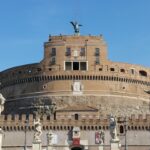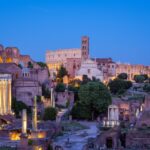
Rising between the Roman Forum and the Campus Martius, the Capitoline Hill (Campidoglio) stands as the spiritual and political heart of ancient Rome. Though the smallest of the seven hills, its importance in Roman history is unmatched. Today, it offers visitors a remarkable combination of ancient ruins, Renaissance architecture, and world-class art collections.
Why the Capitoline Hill Matters

For the ancient Romans, this hill was sacred ground. The Temple of Jupiter Optimus Maximus crowned its summit, where generals celebrated triumphs and the Senate made offerings to the gods. The very word “capital” derives from Capitolium, the Latin name for this hill.
The site witnessed pivotal moments in Roman history. According to legend, geese sacred to Juno saved Rome by alerting guards to a nighttime Gallic attack in 390 BCE. The Tarpeian Rock, on the hill’s southern cliff, was where traitors met their end in the Republic era.
In the Renaissance, Pope Paul III commissioned Michelangelo to redesign the hilltop plaza, transforming a neglected medieval space into one of the most harmonious urban designs ever created. That square, the Piazza del Campidoglio, remains one of Rome’s architectural jewels.
The Piazza del Campidoglio
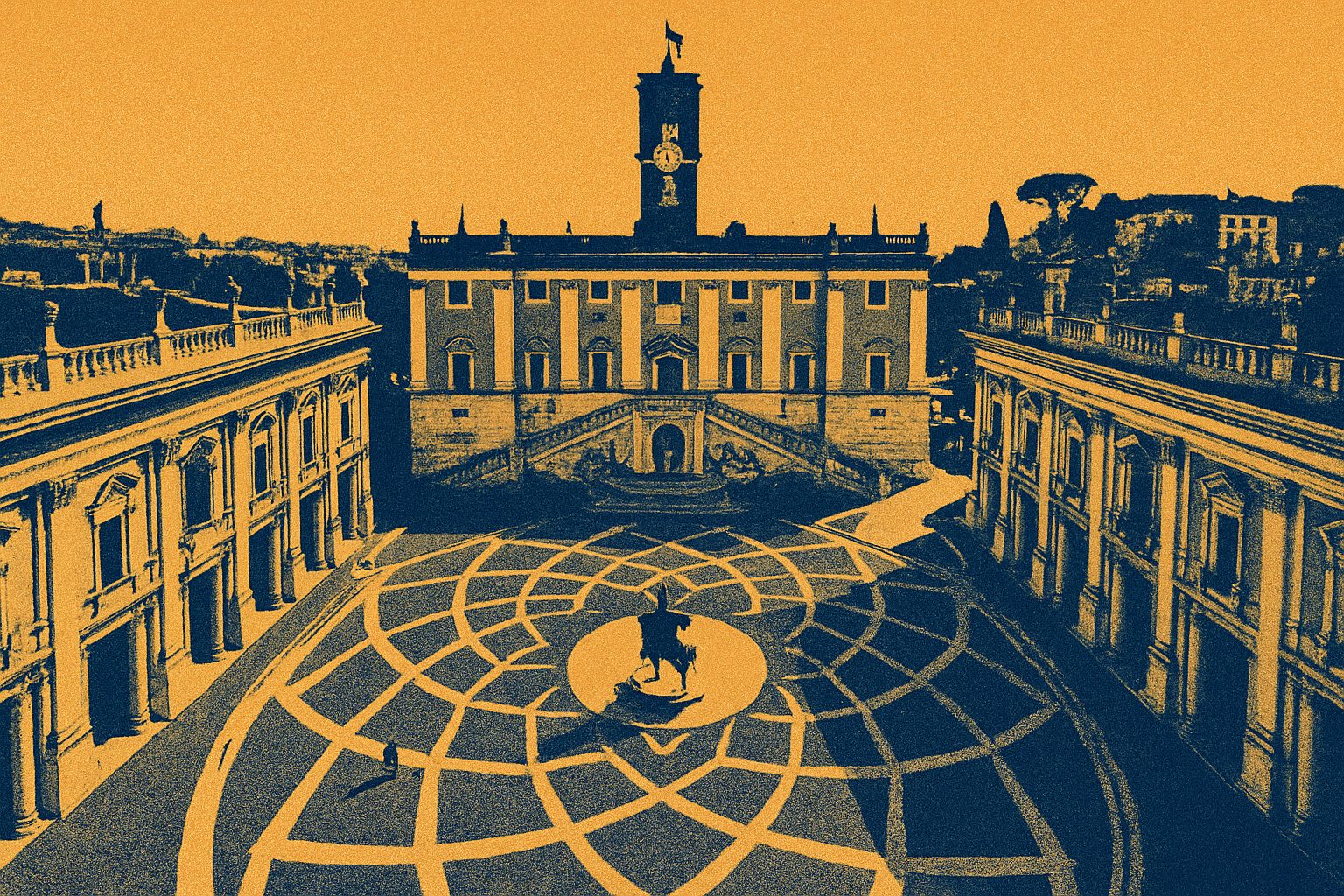
Michelangelo’s trapezoidal square demonstrates Renaissance principles of proportion and perspective. The geometric pavement design radiates from the ancient bronze equestrian statue of Marcus Aurelius at its center (the current statue is a copy; the original resides safely inside the Capitoline Museums).
Three palaces frame the piazza. The Palazzo Senatorio, Rome’s city hall, stands at the far end, built over the ancient Tabularium (state archive). Flanking the square are the twin Palazzo dei Conservatori and Palazzo Nuovo, both housing the Capitoline Museums.
The approach designed by Michelangelo, called the Cordonata, is a gentle ramp that allows visitors to ascend gradually while the architectural perspective unfolds. An alternative route, the Aracoeli staircase, climbs steeply to the adjacent church of Santa Maria in Aracoeli.
The Capitoline Museums: What to See
Founded in 1471, the Capitoline Museums claim the title of the world’s oldest public museum. The collections span ancient Roman sculpture, Renaissance paintings, and artifacts documenting the city’s evolution.
Palazzo dei Conservatori
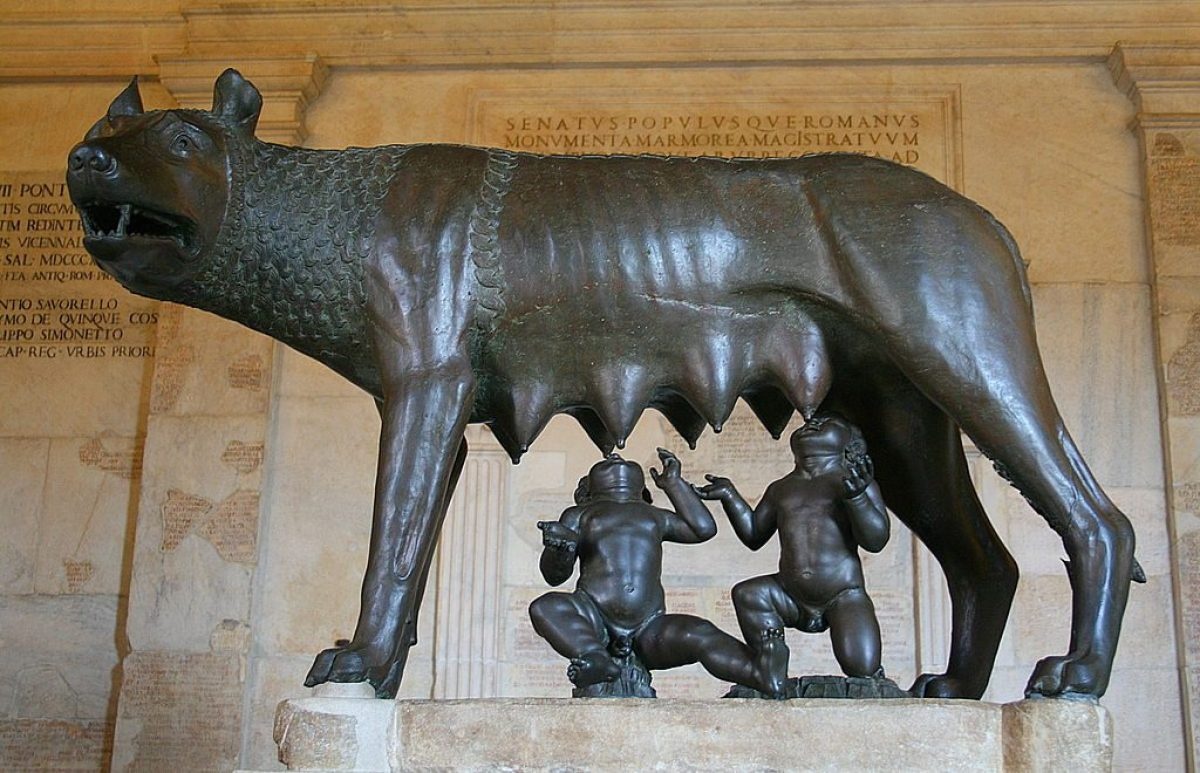
The Conservatori Palace holds some of the most iconic sculptures from antiquity. The Capitoline Wolf, a bronze she-wolf that has symbolized Rome since medieval times, stands in the museum’s Sala della Lupa. Recent scholarship dates the wolf herself to the Etruscan period, though the twin infants (Romulus and Remus) were added during the Renaissance.
In the courtyard, colossal marble fragments from a statue of Constantine—an enormous head, hand, and foot—demonstrate the superhuman scale of imperial portraiture. These pieces once formed part of a 12-meter seated figure that dominated the Basilica of Maxentius in the Forum.
The Dying Gaul, found in the gardens of Julius Caesar, captures a wounded Celtic warrior in his final moments. This Roman marble copy of a Hellenistic bronze has influenced artists for centuries with its combination of physical realism and emotional pathos.
The Capitoline Venus, discovered in the 17th century, represents the goddess of love in a moment of modest surprise. The sculpture exemplifies the Roman taste for Greek classical forms.
Palazzo Nuovo
The New Palace, across the square, contains equally remarkable works. The Hall of Emperors displays portrait busts of Roman rulers, offering an chronological gallery of changing styles and propaganda over four centuries of empire.
The Capitoline Brutus, a bronze head dating to the 4th-3rd century BCE, represents one of the finest surviving Etruscan or early Roman portraits. Its intense, individualized features contrast sharply with the idealized Greek tradition that would later dominate Roman art.
The Drunken Old Woman, a Hellenistic sculpture copied in Roman times, shows an elderly woman clutching a wine jug. It demonstrates the Hellenistic interest in depicting subjects from everyday life rather than only gods and heroes.
The Pinacoteca
The museum’s picture gallery holds significant paintings by Caravaggio, Titian, Rubens, and other masters. Two Caravaggio works deserve particular attention: the Fortune Teller, showing a gypsy woman pickpocketing a young man while reading his palm, and John the Baptist, depicting the saint as a contemplative youth with his symbolic ram.
The Tabularium and Forum Views
A covered corridor connects the two palace museums through the ancient Tabularium, the Roman state archive built in 78 BCE. The massive arched galleries, constructed from tufa blocks, once housed bronze tablets recording laws, treaties, and decrees.
Today, the Tabularium’s arcades provide one of the finest elevated perspectives over the Roman Forum. Through the arches, visitors can survey the Temple of Saturn, the Arch of Septimius Severus, and the entire Forum valley.
Santa Maria in Aracoeli
Adjacent to the Capitoline Museums, the church of Santa Maria in Aracoeli occupies the site of the ancient Temple of Juno Moneta. According to medieval legend, the Tiburtine Sibyl prophesied the birth of Christ to Emperor Augustus on this spot, pointing to the heavens where a vision of the Virgin and Child appeared—hence “Ara Coeli,” altar of heaven.
The church interior contains 22 ancient columns, no two alike, repurposed from various Roman buildings. Pinturicchio’s frescoes in the Bufalini Chapel depict scenes from the life of Saint Bernardino of Siena with architectural backgrounds showing 15th-century Rome.
When to Visit
The Capitoline Museums open Tuesday through Sunday. Morning visits, particularly on weekdays, typically encounter smaller crowds compared to late morning and afternoon hours when tour groups arrive.
The piazza itself is accessible at all hours and offers a particularly atmospheric experience in early morning or evening when the museum buildings and Marcus Aurelius statue are illuminated.
Winter months see fewer visitors overall, though the indoor museums provide comfortable viewing regardless of season. January through March can be excellent times to explore the collections with more space and time for contemplation.
What Makes the Capitoline Collections Special
Unlike the Vatican Museums, which display papal collections amassed over centuries, or the National Museum of Rome, which focuses on archaeological context, the Capitoline Museums preserve the Renaissance humanist tradition of displaying ancient art as aesthetic and moral exemplars.
Many sculptures here were gifts from popes to the city of Rome, establishing a public museum when such institutions barely existed elsewhere. The arrangement—mixing Greek and Roman works, portraits and mythological subjects—reflects centuries of collection history rather than modern archaeological categories.
For visitors interested in how the Renaissance understood and displayed antiquity, the Capitoline Museums provide insights unavailable in more recently reorganized collections.
Practical Considerations
Reserve tickets in advance through the official museum website to secure your preferred visiting time. The museums are extensive; allow at least two to three hours for a thorough visit.
Combination tickets including other municipal museums are available and can provide good value if you plan to visit multiple city-run sites during your stay.
The museum buildings have elevators, though some areas require navigating stairs. Check accessibility information when booking if mobility is a concern.
After exploring the museums, the surrounding area offers additional sites within walking distance: the Roman Forum lies immediately below, the Theatre of Marcellus and Jewish Ghetto are a short walk south, and Piazza Venezia with the Vittoriano monument is adjacent.
Planning Your Visit
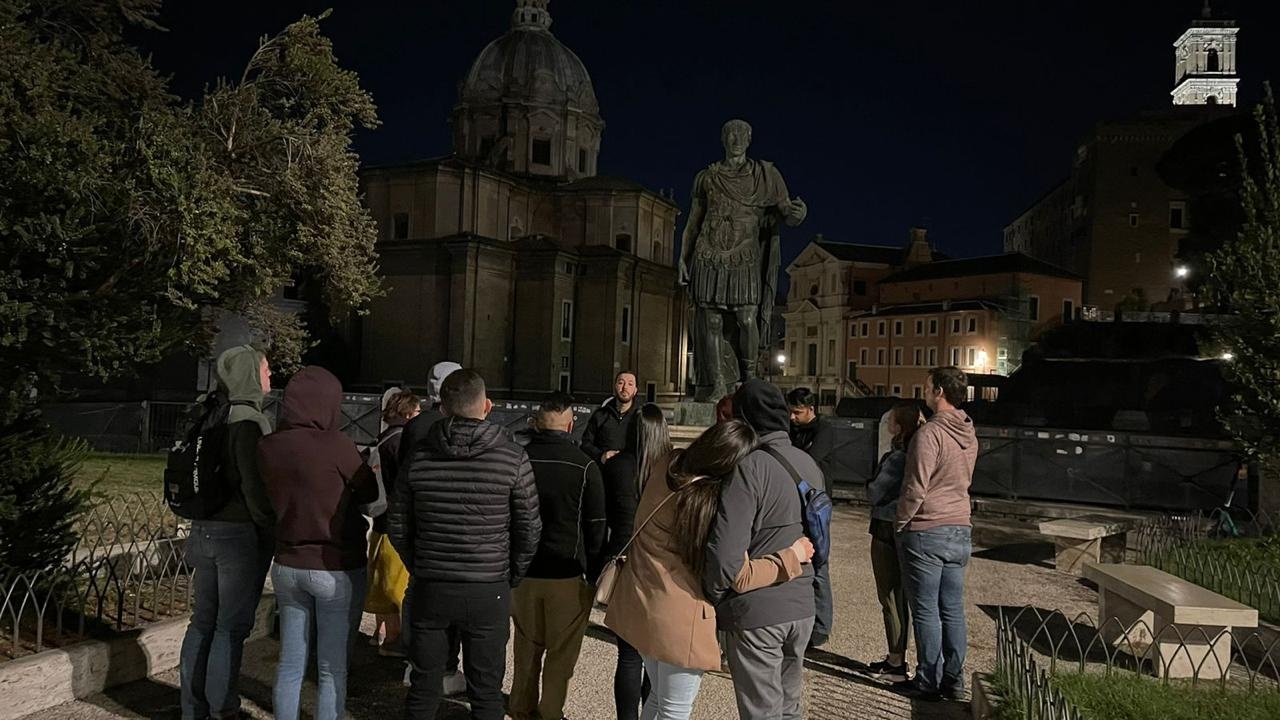
Verify current opening hours and ticket information on the official museum website before your visit, as schedules can change seasonally. Guided visits in small groups can provide valuable historical context that brings the sculptures and paintings to life, connecting individual works to broader narratives of Roman history and Renaissance collecting.
For travelers seeking to understand Rome beyond its most famous monuments, the Capitoline Hill offers layers of meaning—ancient religious sanctuary, medieval fortress, Renaissance urban design, and museum of art history—all concentrated in one walkable space at the city’s symbolic center.
If you’re planning a culturally rich visit to Rome and want expert guidance through the city’s archaeological and artistic treasures, explore the curated experiences at Trip in Art.