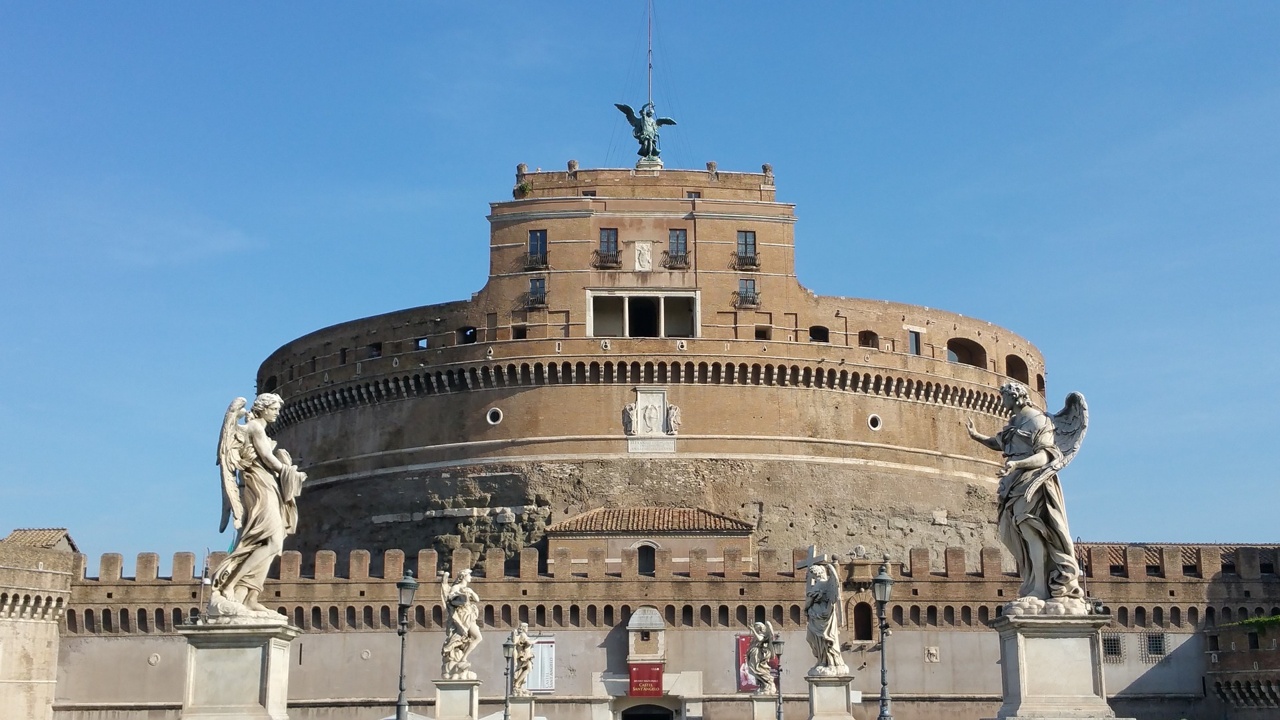
Most visitors meet Castel Sant’Angelo from a distance. It is the great round bulk on the Tiber, a short walk from St. Peter’s, and it is easy to photograph and move on. That would be a mistake. Few buildings in Rome show so many centuries in one structure: an imperial tomb, a medieval stronghold, a papal refuge, a prison and now a museum.
From emperor’s tomb to papal fortress
Hadrian’s mausoleum
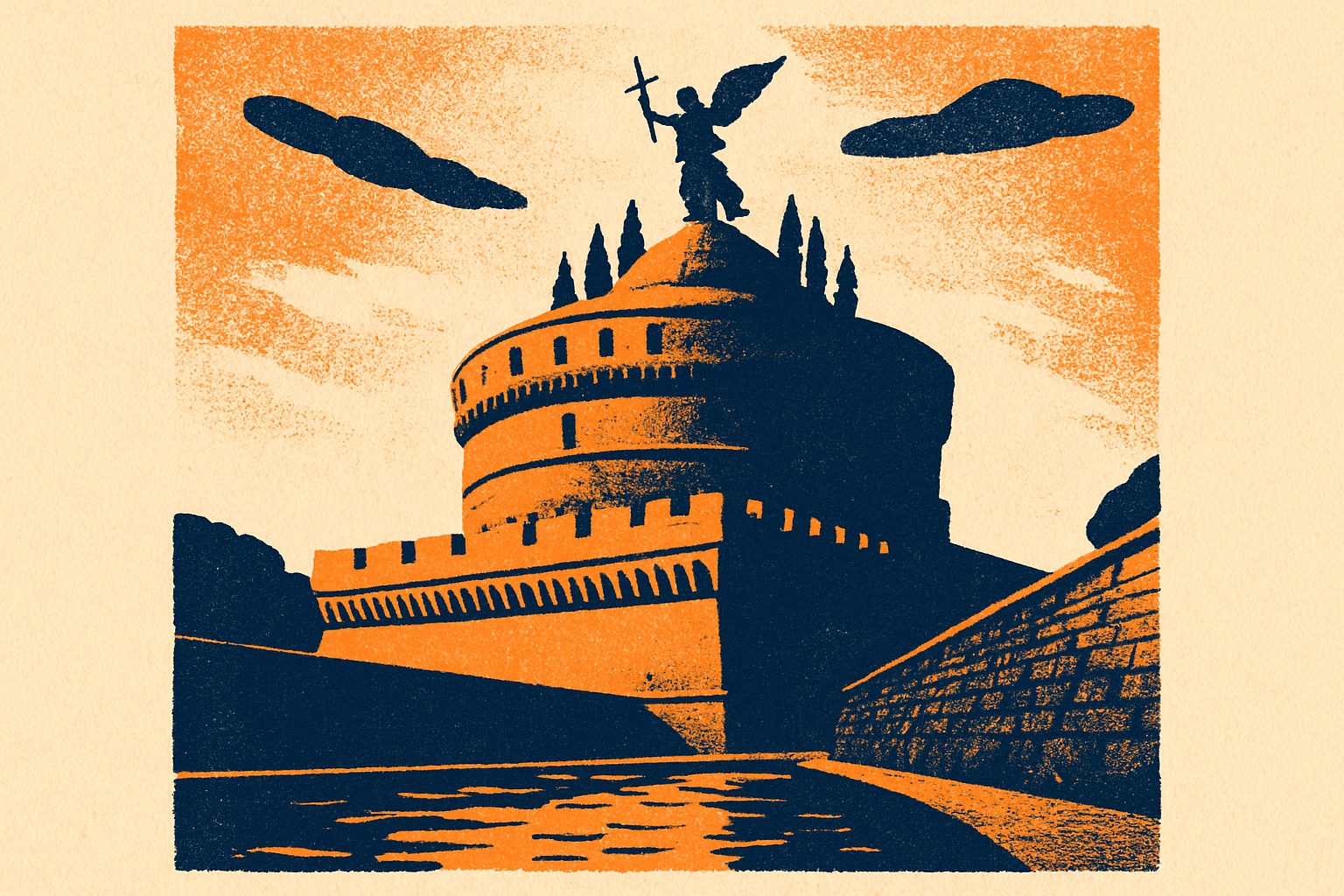
The monument began as a funerary project. Emperor Hadrian had it built on the right bank of the Tiber as a dynastic tomb for himself and his family. It was completed after his death, around 139 AD, under his successor Antoninus Pius.
The design was a massive cylindrical drum on a square base, topped by a mound of earth and planted trees, with a monumental bronze group above. Today we see the stripped-down core of that ambition. The marble facing and the sculptural decoration are long gone, but the sheer scale still reads clearly.
A fortress for the popes
As Rome’s defences changed, the tomb’s strength made it a natural stronghold. Over the Middle Ages it was absorbed into the city’s defensive system and fortified further. Later popes added bastions, a residence and decorated rooms. The building shifted from a monument to the dead into a place for the living: a refuge, an arsenal, a treasury and a prison.
The name comes from the angel. Tradition holds that in the sixth century a vision of the Archangel Michael sheathing his sword was said to have signalled the end of a plague in the city. The story was later tied to the castle, and an angel has crowned it ever since. The current bronze figure dates to the eighteenth century.
The Passetto di Borgo
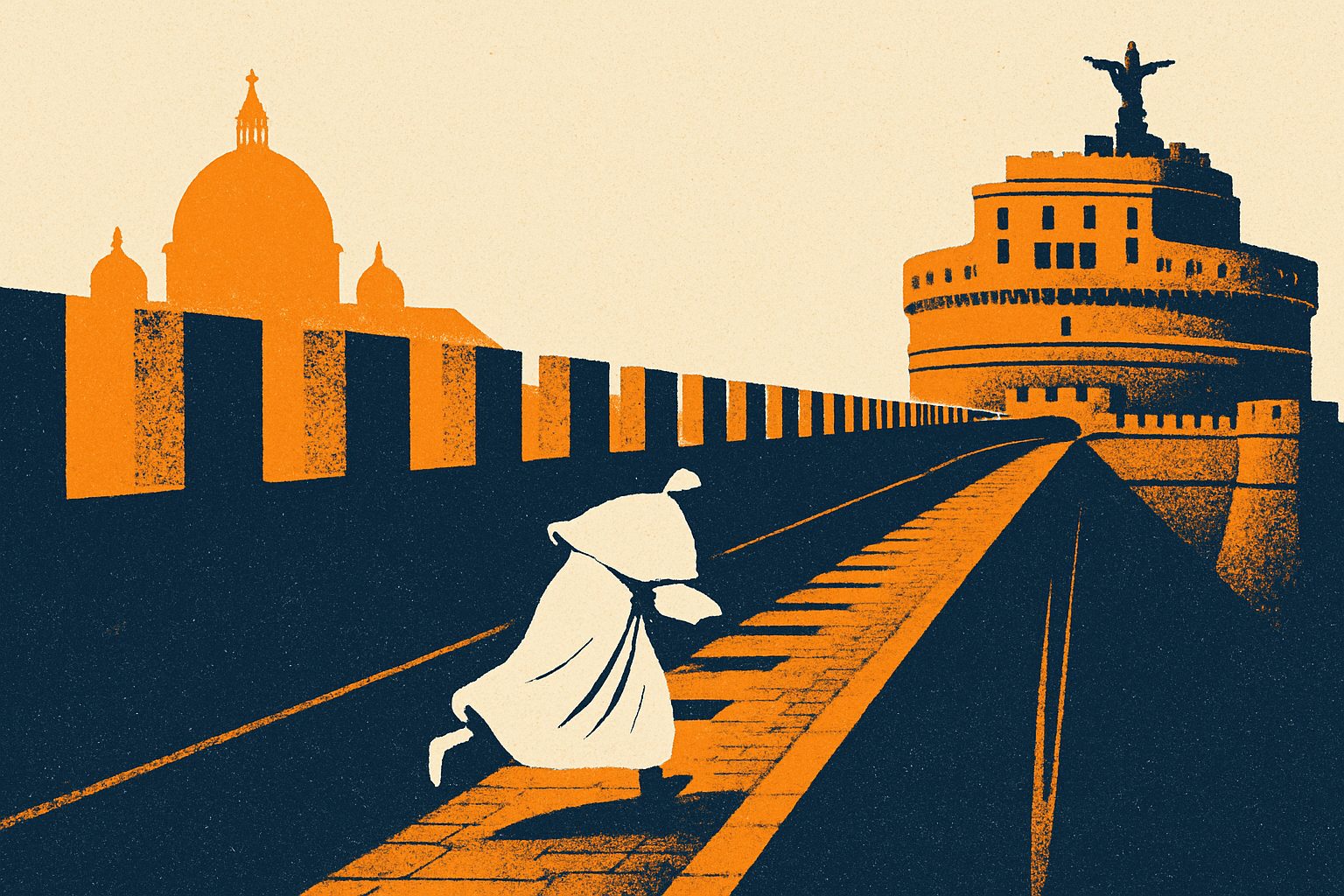
One of the most interesting features is not inside the castle at all. The Passetto di Borgo is a fortified corridor on top of a wall, linking the Vatican area to the castle. It was created in the thirteenth century so that a pope could reach safety quickly.
It earned its place in history during the Sack of Rome in 1527, when Pope Clement VII used it to take refuge in the castle as imperial troops entered the city. You can see the long crenellated wall from the street. Whether any part of it is open to visitors varies, so check the official site before you plan around it.
What to see inside
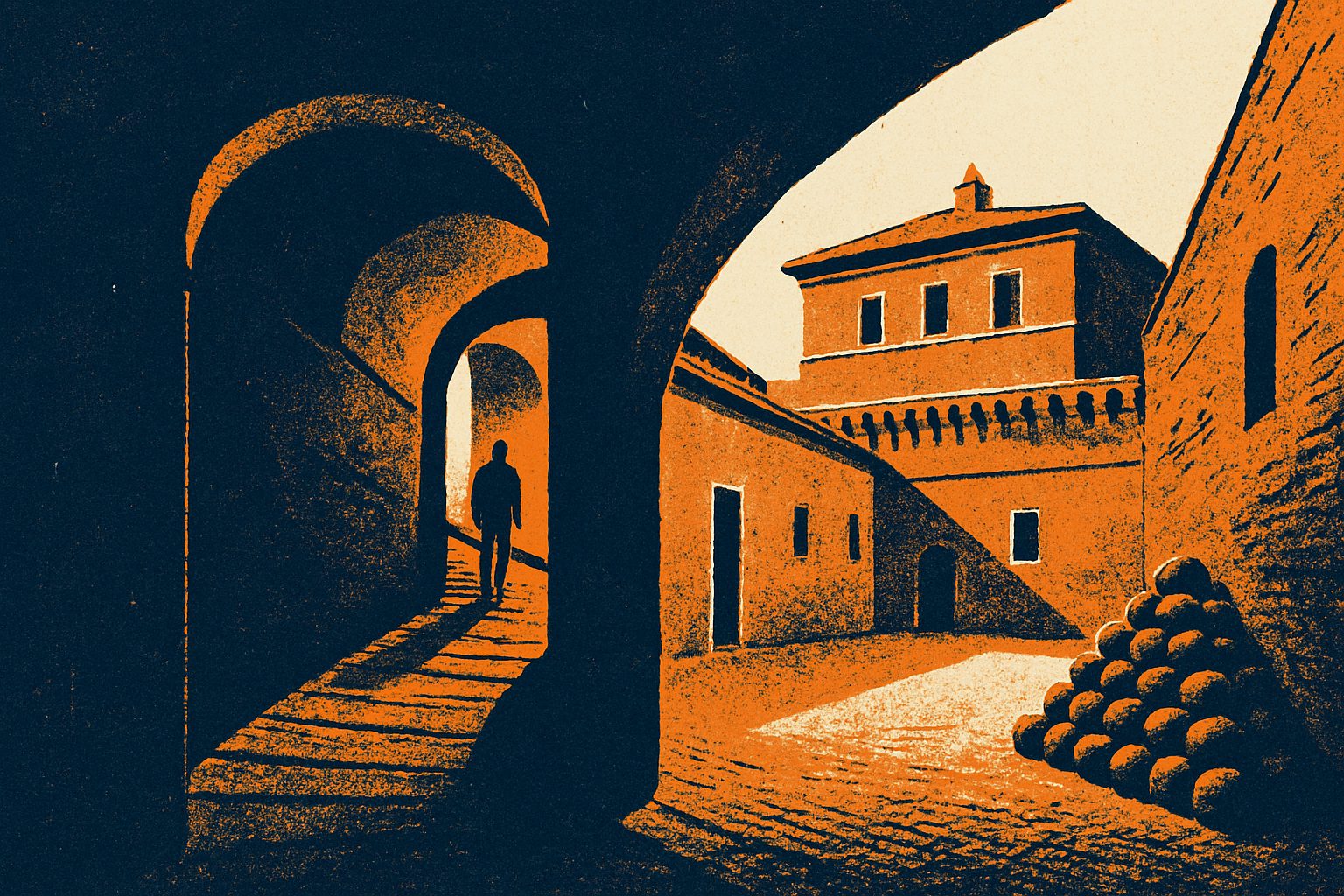
The visit works like a layered walk through time. It is also a museum, so allow a proper half-day rather than a quick look.
- The spiralling ramp. Inside the massive drum, a passage winds upward through the old Roman structure. It is one of the best places to feel the engineering of the original tomb.
- The courtyards. Military architecture and Renaissance additions sit side by side here, and the rows of stone cannonballs show how the building served as a fortress.
- The papal apartments. The upper floors hold richly decorated rooms. The frescoed halls, such as the Sala Paolina, show how popes wanted a place of defence to look like a palace.
- Prison spaces and cells. The castle served as a prison for centuries. The best-known prisoner is the goldsmith Benvenuto Cellini, who was held in the sixteenth century and, by his own account, escaped.
- The collections. The museum includes weapons, armour, paintings and furnishings, which add context to the architecture.
- The terraces. The upper levels give wide views over the Tiber, the rooftops and the dome of St. Peter’s.
The terrace also has a place in culture. Puccini set the final act of Tosca on the castle’s ramparts, which makes the view feel more theatrical.
Ponte Sant’Angelo: the approach matters
Do not skip the bridge. Ponte Sant’Angelo was built by Hadrian as the monumental approach to his tomb. Its ancient name, Pons Aelius, comes from his family name.
In the seventeenth century the bridge was lined with angels holding symbols of the Passion. The project was directed by Bernini, and the statues give the crossing a processional feeling. Some of the original sculptures were moved indoors for protection and replaced with copies, which is common for exposed works. The bridge is pedestrian, and walking it slowly with the castle ahead of you is the best introduction to the site.
The best times to visit
The best times to visit depend on what you want from the monument.
- Morning: a good choice if you want to beat the crowds and take your time in the interiors and the museum rooms.
- Late afternoon: better for the terraces, when the light turns warm over the river and the skyline of the city.
- Spring and autumn: comfortable weather for the exposed upper levels and the walk along the Tiber.
- Summer: the terraces are open to the sun, so plan around the hottest part of the day.
Opening days, hours, ticket types and any special evening openings change, so check them on the official website before you go. Reserve your tickets in advance where booking is offered, and pre-booked timed entry is the simplest way to secure your spot in busy periods.
How to fit it into your Rome days
Castel Sant’Angelo pairs naturally with the Vatican area, since the two are only a short walk apart along Via della Conciliazione. If you want a day with a clear theme, you can combine the castle with the Borgo district and a walk across the bridge into the historic centre toward Piazza Navona.
Wear comfortable shoes: the interior has ramps, stairs and uneven stone. Give the castle its own time slot rather than squeezing it between other big sights. Context also helps a lot here. With a guide, the layers of the building (Roman, medieval, Renaissance and papal) make much more sense than a single label on a wall.
Why it matters
Castel Sant’Angelo explains something essential about Rome: the city rarely replaces its past, it reuses it. An emperor’s tomb became a fortress, then a palace, then a museum. If you only have time for one monument that tells that story in a single building, this is a strong candidate.
If you are planning your itinerary and want a guided small-group visit with historical context, our Rome travel guide is a useful place to start.