Most first-time visitors to Rome plan around the big names. The Baths of Caracalla rarely make the shortlist, and that is a missed opportunity. This is one of the best-preserved places to understand daily life in imperial Rome, and the scale of the ruins is hard to take in until you are standing among them.
What were the Baths of Caracalla?
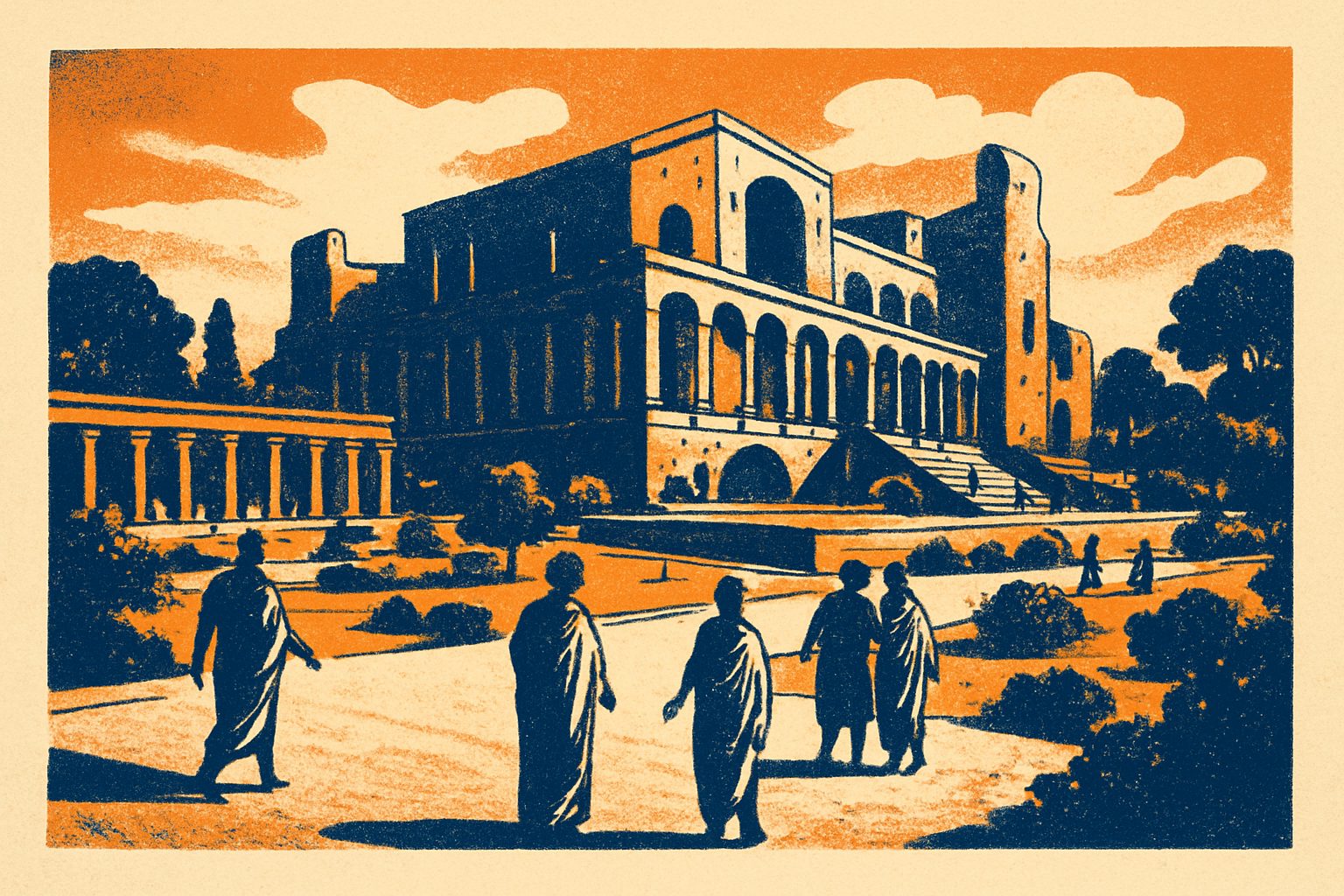
The baths were a public leisure complex, begun under Emperor Septimius Severus and inaugurated in AD 216 under his son Caracalla. They were not just a place to wash. Think of a mix of spa, gym, social club, garden and cultural centre, open to ordinary Romans as well as the wealthy.
The complex stood on a raised platform and was surrounded by gardens and service buildings. At the centre was the main bathing block, laid out with a symmetry that shows how carefully the Romans planned their public architecture.
How a Roman bath worked
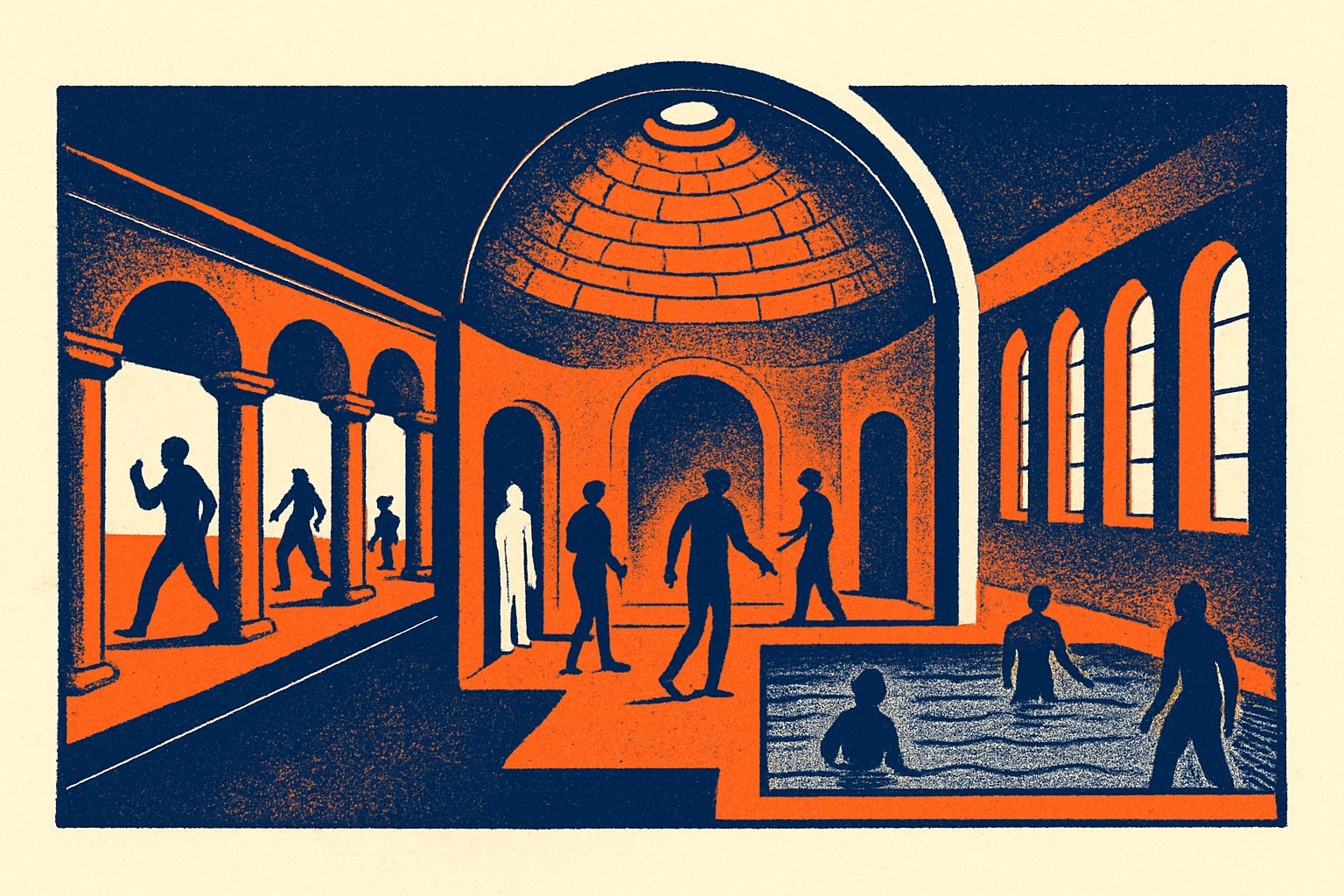
A visit to the baths followed a sequence. Understanding it makes the ruins much easier to read.
The route through the rooms
- Palaestrae: open exercise courts where bathers trained or played games before bathing.
- Caldarium: the hot room, a large circular hall that was once covered by a dome.
- Tepidarium: a warm, transitional space.
- Frigidarium: the cold room, the largest and most monumental hall of the central block.
- Natatio: a large open-air swimming pool.
Heat came from a system of furnaces and hollow floors known as a hypocaust. Water arrived through a dedicated branch of the city’s aqueduct network and was stored in large cisterns. The engineering behind it is as remarkable as the decoration.
What you see today
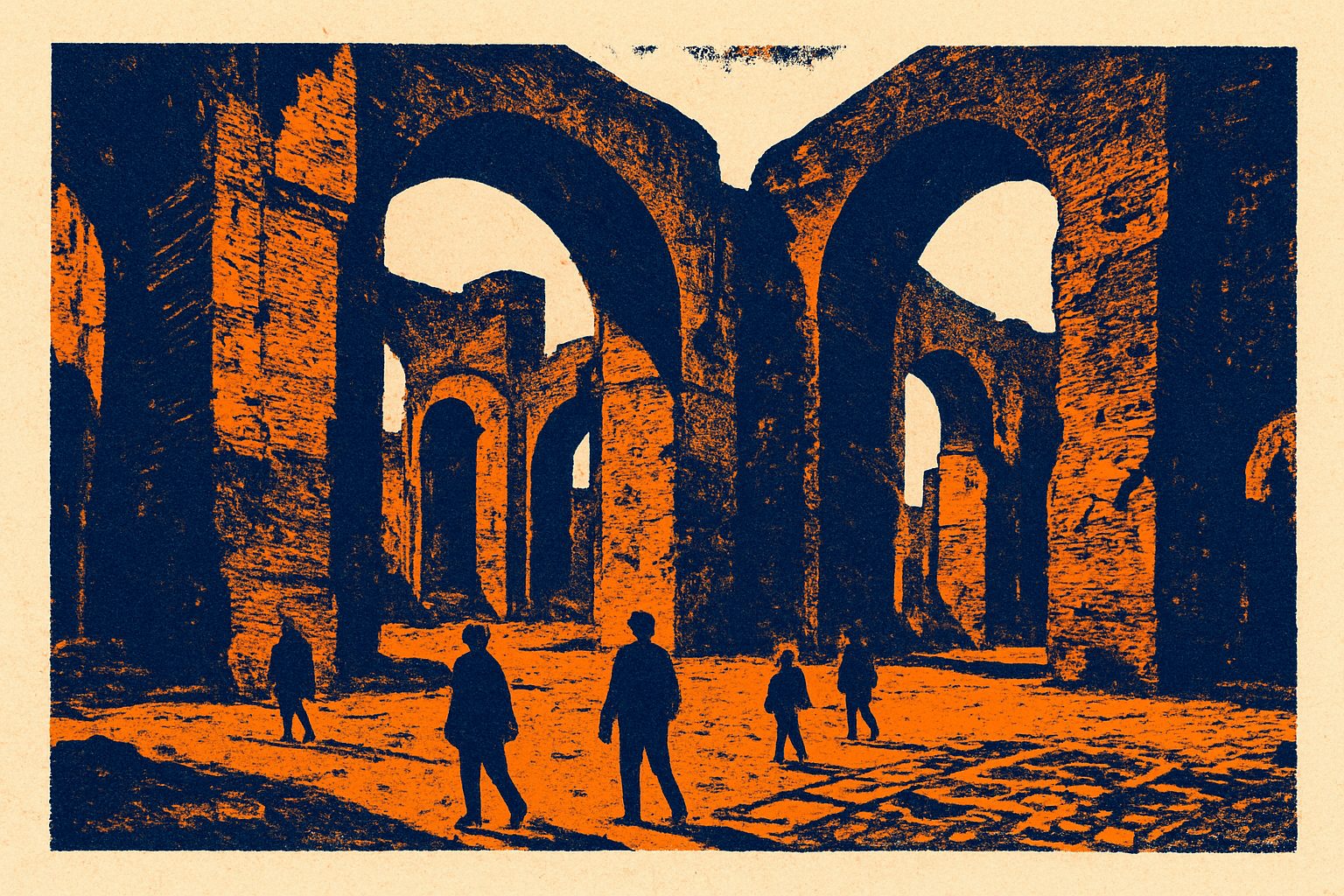
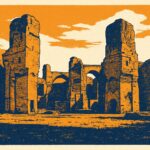
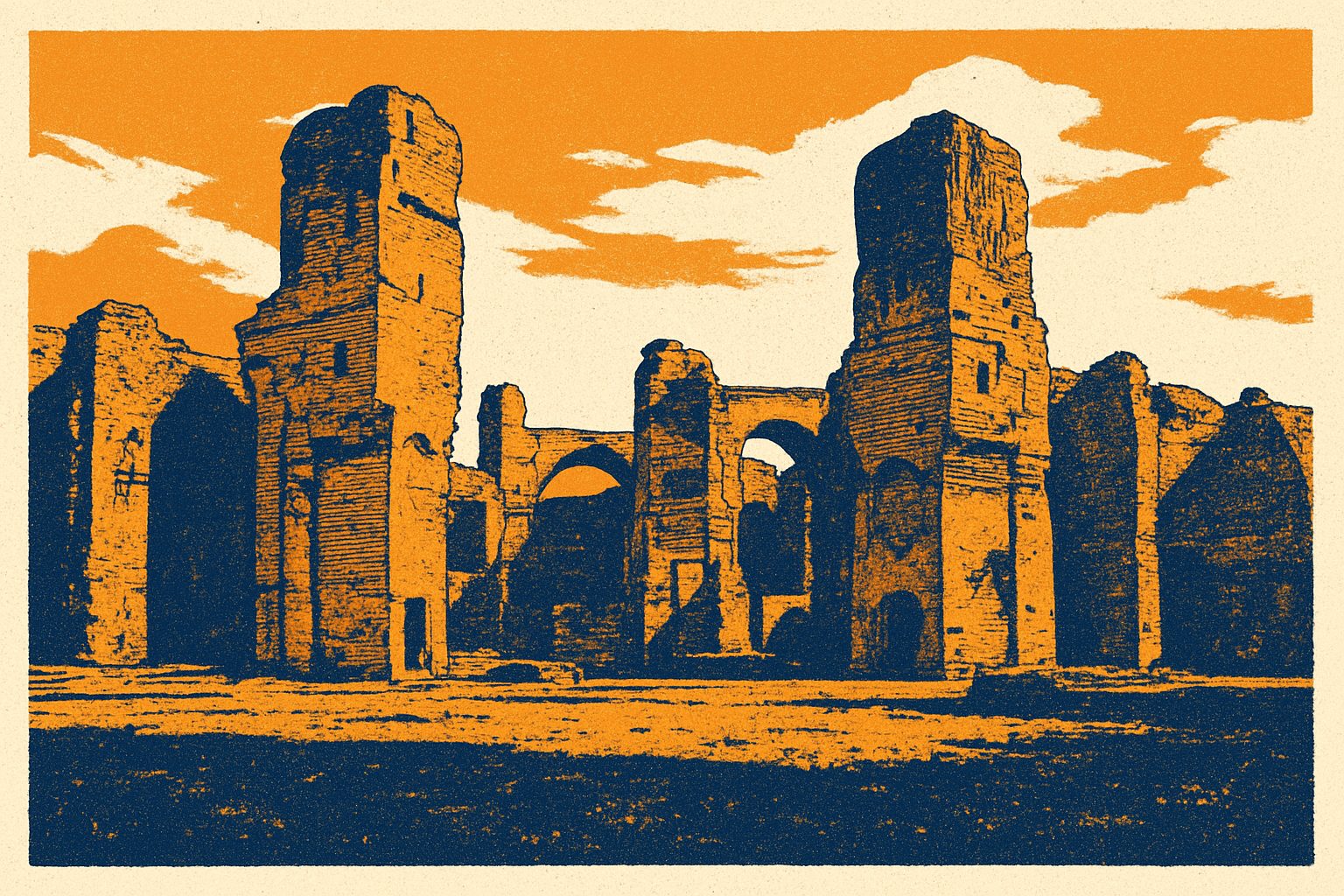
The marble, mosaics and statues are gone, but the structure still carries enormous weight. Tall brick-faced walls rise to heights that dwarf visitors. Enormous arched openings show where vaulted ceilings once spanned huge halls. Fragments of mosaic floor survive in places, giving a hint of the original richness.
It helps to look for scale. The vaults, the thickness of the walls and the sheer footprint of the site make clear that the Romans treated bathing as a civic institution, not a private luxury.
The world beneath the baths
Below the visible ruins runs a network of service tunnels, built so that slaves and workers could keep furnaces fed and supplies moving without crossing the bathers’ spaces. This hidden infrastructure is a reminder that the elegant halls above relied on constant, unseen labour. Parts of the underground system, including a former Mithraic shrine, have been opened to visitors at various times, but access changes, so check the official site before you go.
Where the treasures went
The baths were a famous source of sculpture during the Renaissance. Two of the best-known finds, the Farnese Hercules and the Farnese Bull, came from the complex and are now in the National Archaeological Museum of Naples. Mosaics showing athletes, also found here, are today part of the Vatican collections. Seeing the ruins first and the finds later is a rewarding way to connect them.
Why the ruins survived
The baths remained in use for centuries, until the aqueduct system was disrupted in the sixth century, after which the great halls fell silent. Over time the site was stripped of marble and decoration, but the sheer mass of the masonry meant that much of the structure remained standing. Later writers and artists were drawn to the ruins. The poet Percy Bysshe Shelley wrote part of Prometheus Unbound while wandering among them in 1819.
In the twentieth century the setting became a stage as well. Open-air opera and concerts have been held here, and the backdrop of the ruins has been used for major performances, including the famous Three Tenors concert in 1990.
The best times to visit
The site is open and exposed, with limited shade, so the season and time of day matter.
- Spring and autumn are the most comfortable seasons for walking the whole complex.
- Early morning or late afternoon are the best times to visit, helping you beat the crowds and the midday sun, with softer light on the brickwork.
- Summer can be very hot at midday, so plan around the cooler hours. Evening events are sometimes held on site, so look at the official programme.
Opening days, hours and ticket arrangements change, and some areas open only at certain times. Verify everything on the official site before you go, and reserve your tickets in advance if booking is offered.
Getting there and pairing it with other sights
The baths lie south of the Colosseum area, close to the Aventine Hill and the Circus Maximus. It is a pleasant walk through a quieter, greener part of the city, and the area feels very different from the busy centre.
You can combine the visit with the Aventine’s gardens and viewpoints or, with more time, with the start of the Appian Way. A half-day built around this southern side of Rome gives a calm contrast to the crowded central sights.
Why a guide helps here
Because so little decoration survives, the Baths of Caracalla reward interpretation. A knowledgeable guide can reconstruct the route through the rooms, point out traces of the heating system and explain what each vast space was for. A guided small-group visit lets you ask questions and linger where something catches your eye.
Plan your Roman days
If you are building an itinerary that goes beyond the headline monuments, the Baths of Caracalla deserve a place in it. For more ideas on planning your trip, see the Trip in Art Rome travel guide.