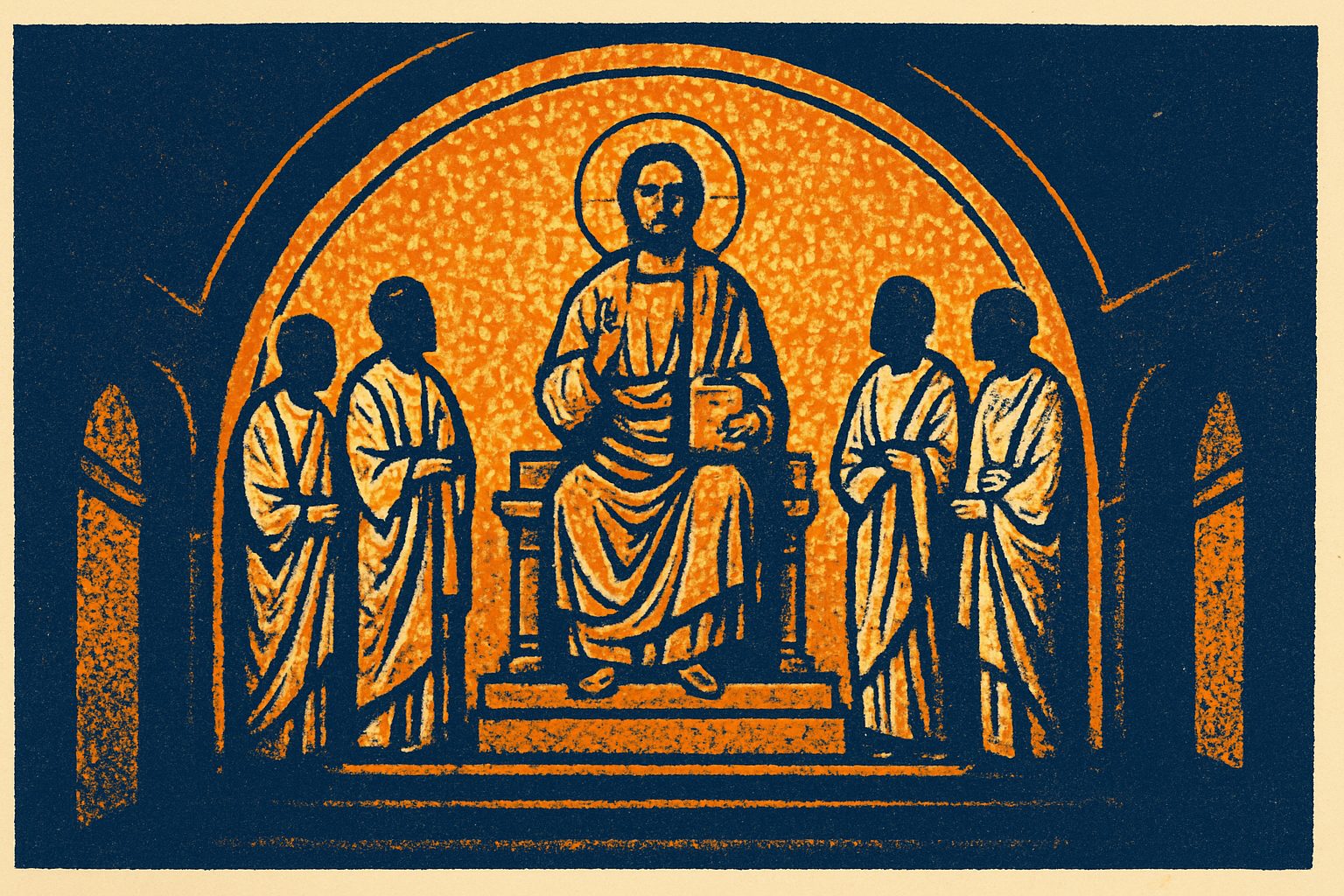
Most visitors come to Rome for marble, frescoes and ruins. Yet some of the city’s most striking art is made of tiny pieces of glass and stone, set into the apses and vaults of its churches. These mosaics span from the late Roman Empire to the Middle Ages, and many sit in churches that tour groups pass without a glance.
This guide explains what makes them special, where to find the key examples, and how to plan a visit that makes sense on the map.
Why Rome’s Mosaics Matter
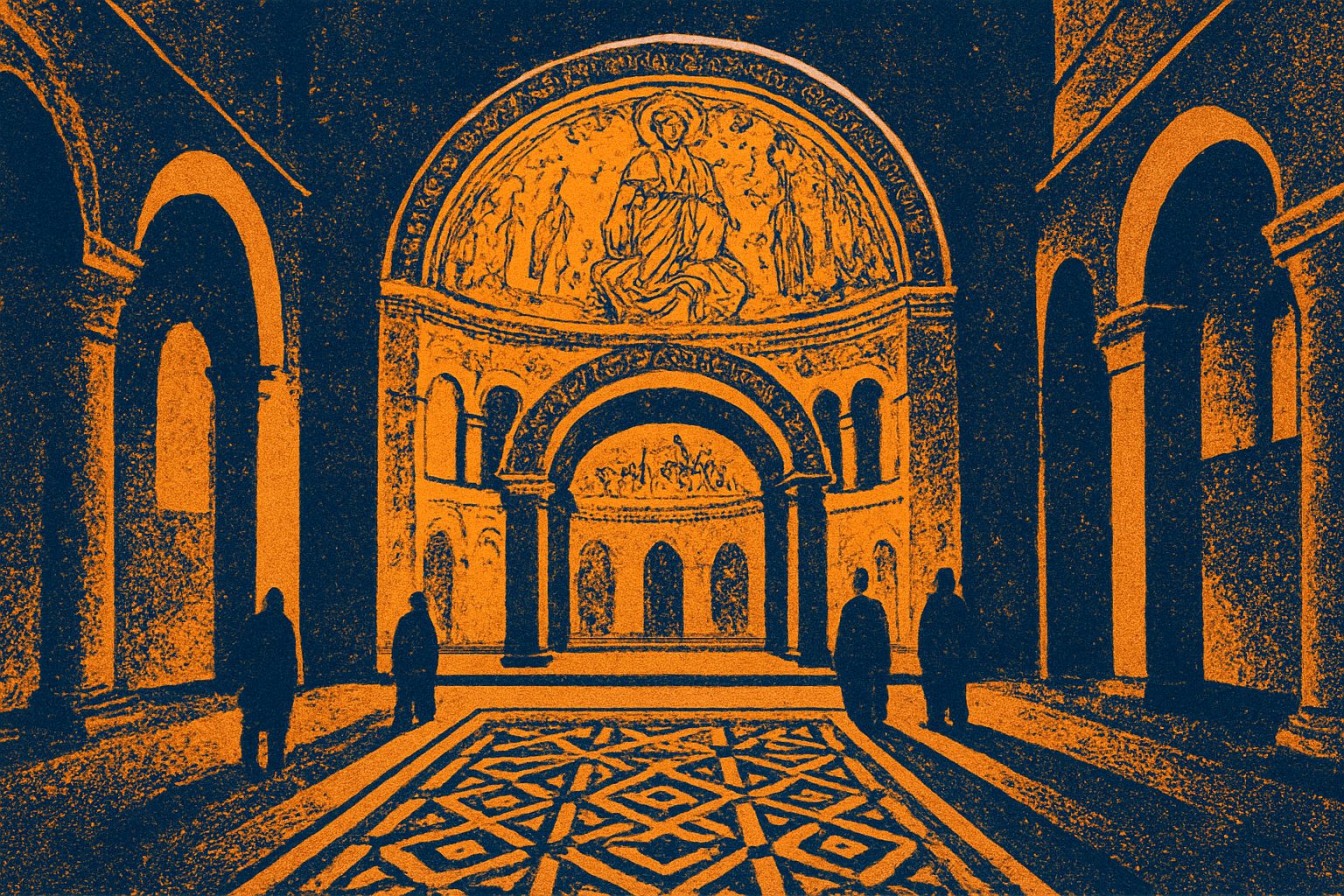
When Christianity moved from a persecuted faith to an imperial one in the 4th century, its new churches needed a visual language. Builders borrowed the Roman tradition of floor and wall mosaics and moved it upward, onto apses and triumphal arches, where light could play across the surface.
The result was a distinct style: shimmering backgrounds, solemn figures, and symbols that were meant to be read as much as admired. Rome preserves examples from almost every period, so you can follow the evolution of the style within a few neighborhoods.
How a Mosaic Works
Mosaics are built from tesserae, small cubes of stone or coloured glass. Gold backgrounds were typically made with glass tesserae that contain a thin layer of gold leaf. Each piece was set at a slightly different angle, so the surface seems to flicker as you move or as daylight changes.
That is why timing matters. A mosaic that looks flat at one hour can look alive at another.
Santa Maria Maggiore: The 5th-Century Nave
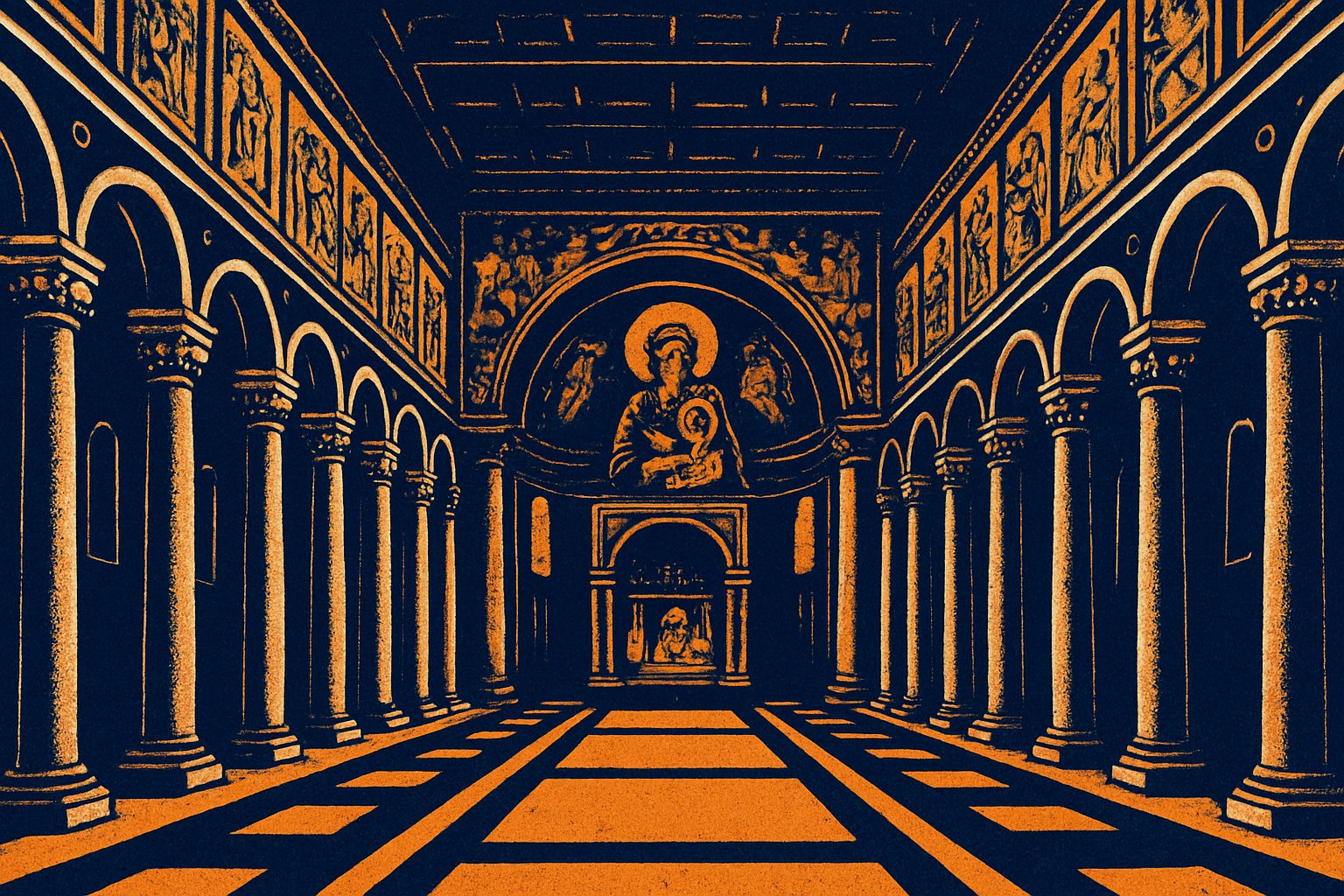
Santa Maria Maggiore, on the Esquiline Hill, is the essential starting point. High above the nave, a series of panels with Old Testament scenes dates to the 5th century, in the period when the church was built under Pope Sixtus III. The triumphal arch carries scenes linked to the Virgin Mary and the infancy of Christ, a statement of theology as much as decoration.
The apse mosaic is later, from the 13th century, and shows the Coronation of the Virgin. Seeing both in one visit lets you compare two very different eras of the same craft.
A small pair of binoculars helps with the nave panels, which are far above eye level.
Santa Pudenziana: One of the Oldest Apses
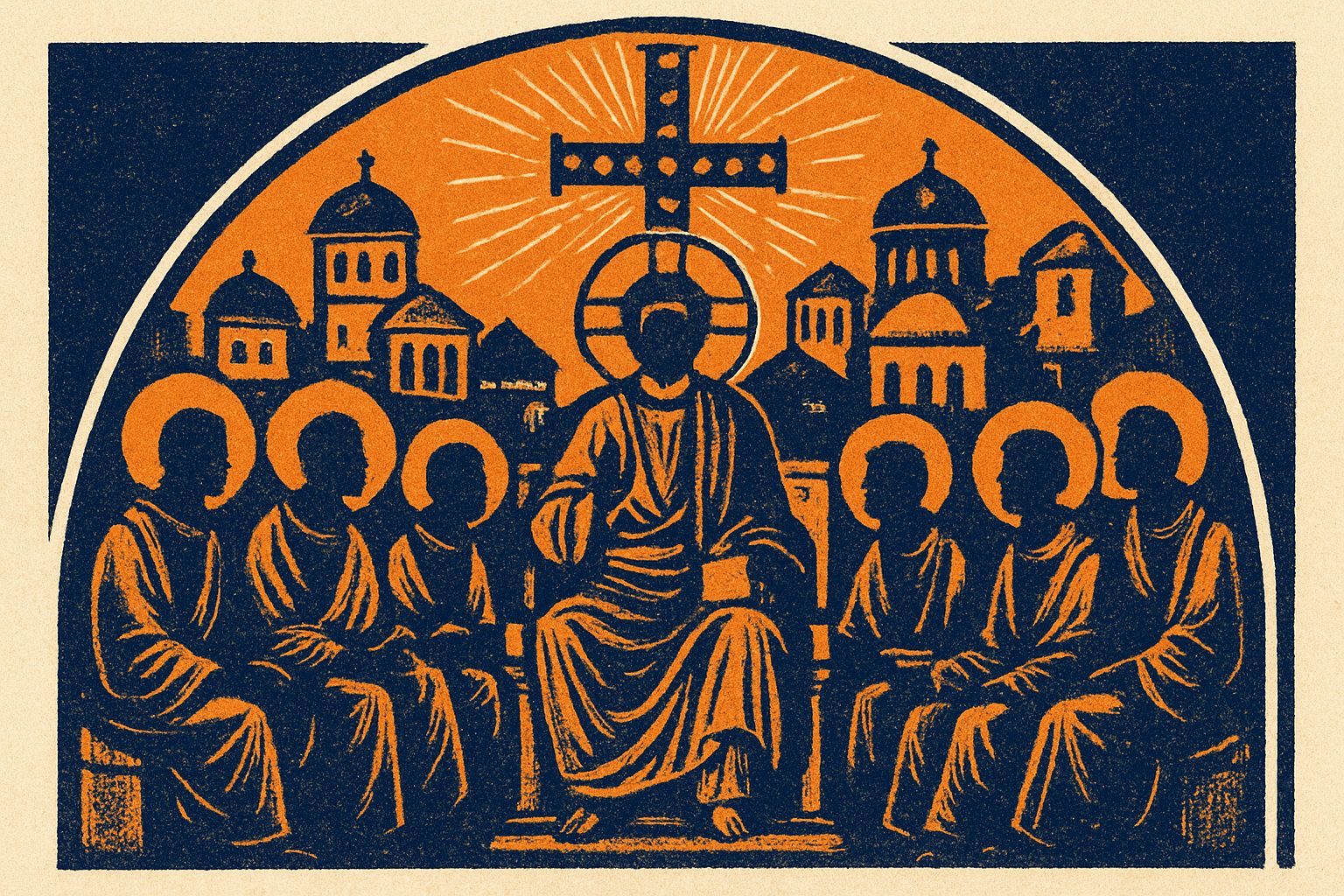
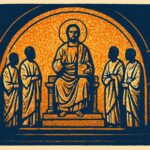
A short walk away, Santa Pudenziana sits below the level of the modern street, a reminder of how much Rome has risen over the centuries. Its apse mosaic, dated to around the end of the 4th century, shows Christ enthroned among the apostles, with buildings that evoke Jerusalem behind them.
The mosaic has been restored and altered over time, and part of it was trimmed in later building work. Even so, it remains a key document of early Christian imagery, with Christ depicted as a teacher and ruler in the manner of Roman imperial art.
Santa Prassede: A Chapel of Gold
Also close by, Santa Prassede takes you forward to the 9th century. Pope Paschal I rebuilt the church and decorated it with mosaics that look to the Byzantine East while remaining distinctly Roman.
The star is the small Chapel of San Zeno, where walls and vault glow with gold and deep colour. It is often described as a garden of paradise in miniature. The chapel is compact, so expect to take it in at a slow pace and to share the space with other visitors.
Santa Costanza: A Mausoleum from the 4th Century
On the Via Nomentana, a little outside the historic centre, Santa Costanza is a round building that began as a mausoleum for Constantina, daughter of Emperor Constantine. Its barrel-vaulted ring corridor preserves mosaics with vine scrolls, birds and harvest scenes that still echo Roman decorative taste.
This is a good place to see how the line between pagan and Christian imagery was far from sharp in the 4th century. It is also one of the quieter stops on any mosaic route.
Other Mosaics Worth Adding
- Santi Cosma e Damiano: a 6th-century apse near the Forum, with Christ and a procession of saints against a deep gold background.
- Santa Cecilia in Trastevere: a 9th-century apse from the same papal patronage as Santa Prassede, in a lively neighborhood that is easy to combine with lunch.
- Santa Maria in Trastevere: a medieval apse and a later band of scenes of the Virgin’s life, in one of Rome’s oldest churches dedicated to Mary.
Planning Your Mosaic Route
Group by Neighborhood
The simplest plan is to cluster the Esquiline churches (Santa Maria Maggiore, Santa Pudenziana, Santa Prassede) into one morning, then dedicate a separate half-day to Santa Costanza, or to the Trastevere churches. Rome’s distances look short on a map but slow down quickly once you add cobblestones and heat.
The Best Times to Visit
Early morning usually gives quieter interiors and softer light. Many Roman churches close for a midday break and reopen in the afternoon, and hours can change for religious celebrations. Visits are normally restricted during services, which are worth respecting.
Opening hours, dress codes and any entry arrangements change, so check each church’s official website shortly before you go. For busy sites, it is wise to reserve your tickets in advance where a booking system exists.
Dress Code and Etiquette
These are active places of worship, and many apply a dress code. Check the church’s own guidance and plan your clothing for the day accordingly. Keep voices low and follow any photography rules posted inside.
How to Read What You See
Early mosaics are rarely about realism. Size shows importance, gold signals the divine, and gesture and symbol carry the message. Lambs often stand for the apostles, palms for victory, and rivers for the waters of paradise. A little background reading before you go, or a knowledgeable guide beside you, turns a pretty surface into a story.
It also changes how you see the city. Rome’s mosaics sit between the classical world of the Forum and the Renaissance of Raphael and Michelangelo, and they explain how one became the other.
Final Thoughts
Rome’s mosaics reward slow looking. You do not need a long list of sites: three or four well-chosen churches are enough to understand a thousand years of change. If you prefer to explore with expert context in a guided small-group visit, you can find more on our Rome travel guide and at Trip in Art.