Most visitors to Rome spend their days among emperors’ monuments and grand temples. Ostia Antica tells a different story. It was the working harbour town at the mouth of the Tiber, where goods, grain and people entered the capital. Walking its streets, you see how ordinary Romans lived, worked and did business.
What Was Ostia?
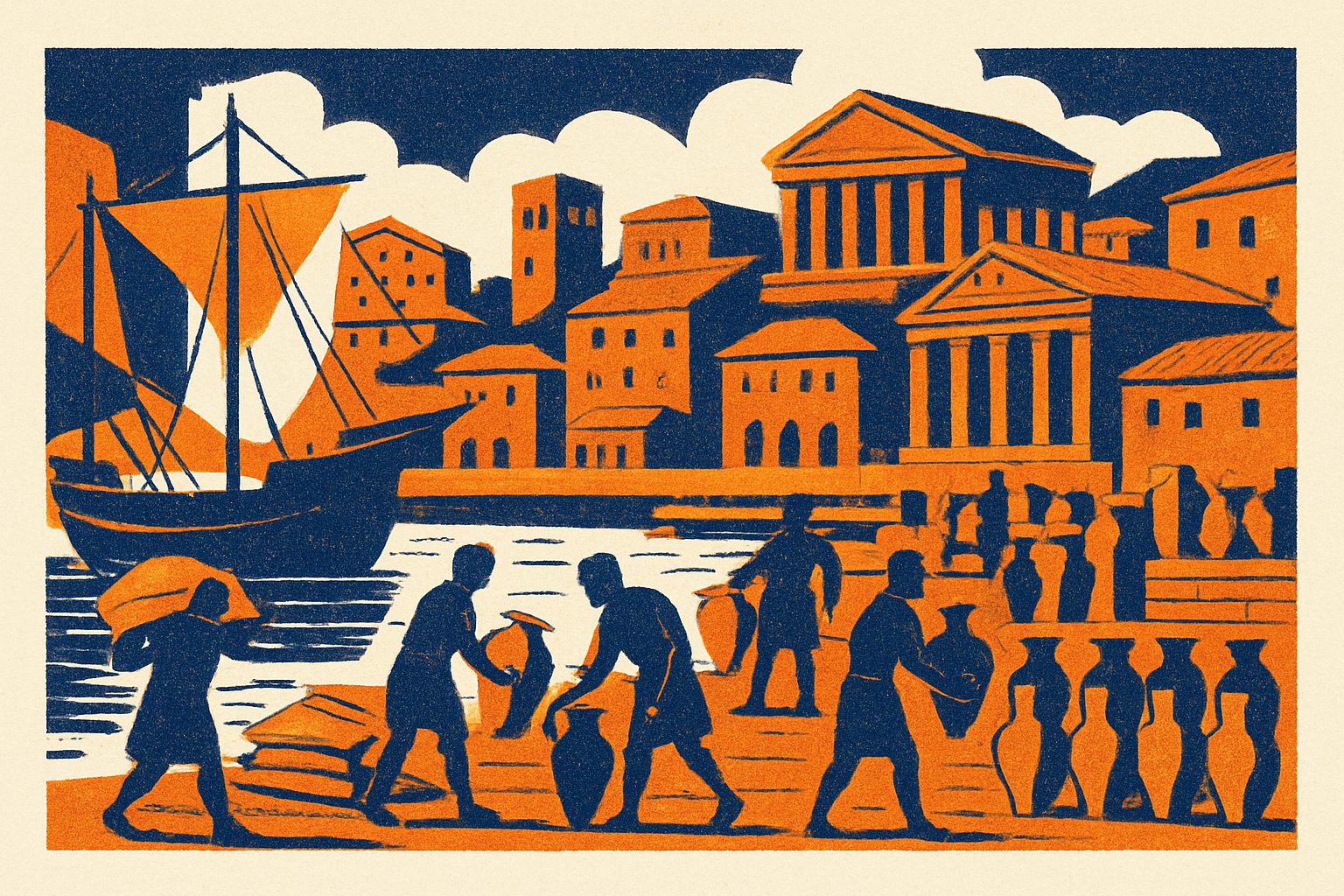
Ostia served as Rome’s gateway to the sea. Ancient tradition placed its origins in Rome’s earliest centuries, and over time it grew into a busy commercial hub. Cargo ships brought grain, oil, wine and other goods from across the Mediterranean. These were unloaded, stored and sent upriver to the city.
As Rome expanded, so did Ostia. It filled with warehouses, offices, shops, baths, temples and apartment buildings. Its population was made up of merchants, sailors, craftsmen, freed slaves and officials, and its religious life was just as varied as its trade.
Why It Declined
Ostia did not vanish in a single catastrophe. The harbour silted up, trade shifted to newer port facilities, and the Roman world around it changed. Over the centuries the town was gradually abandoned, and later the river changed course. Much of the site was preserved under earth, which is why so much brickwork and so many mosaics survive today.
How It Differs from Pompeii
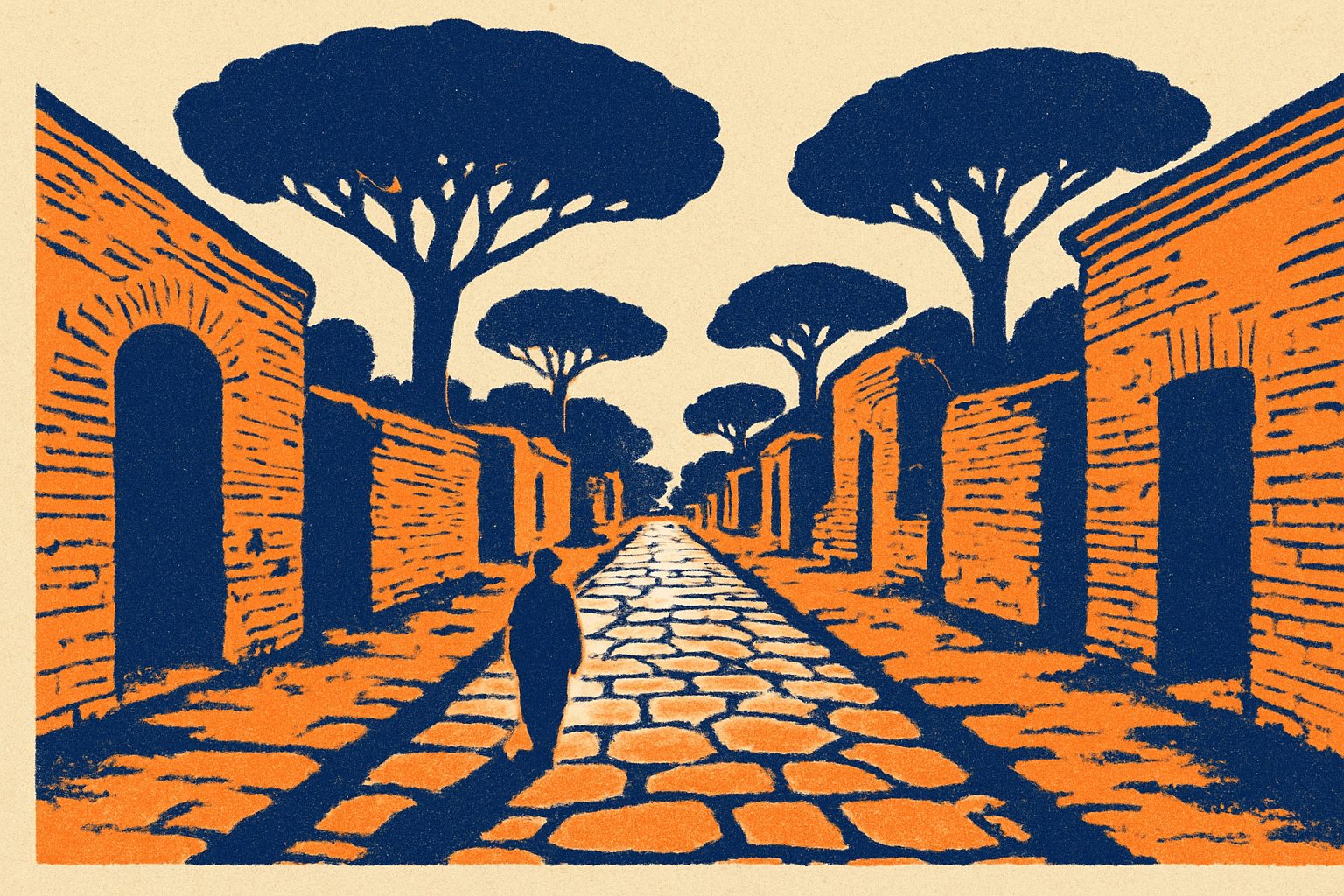
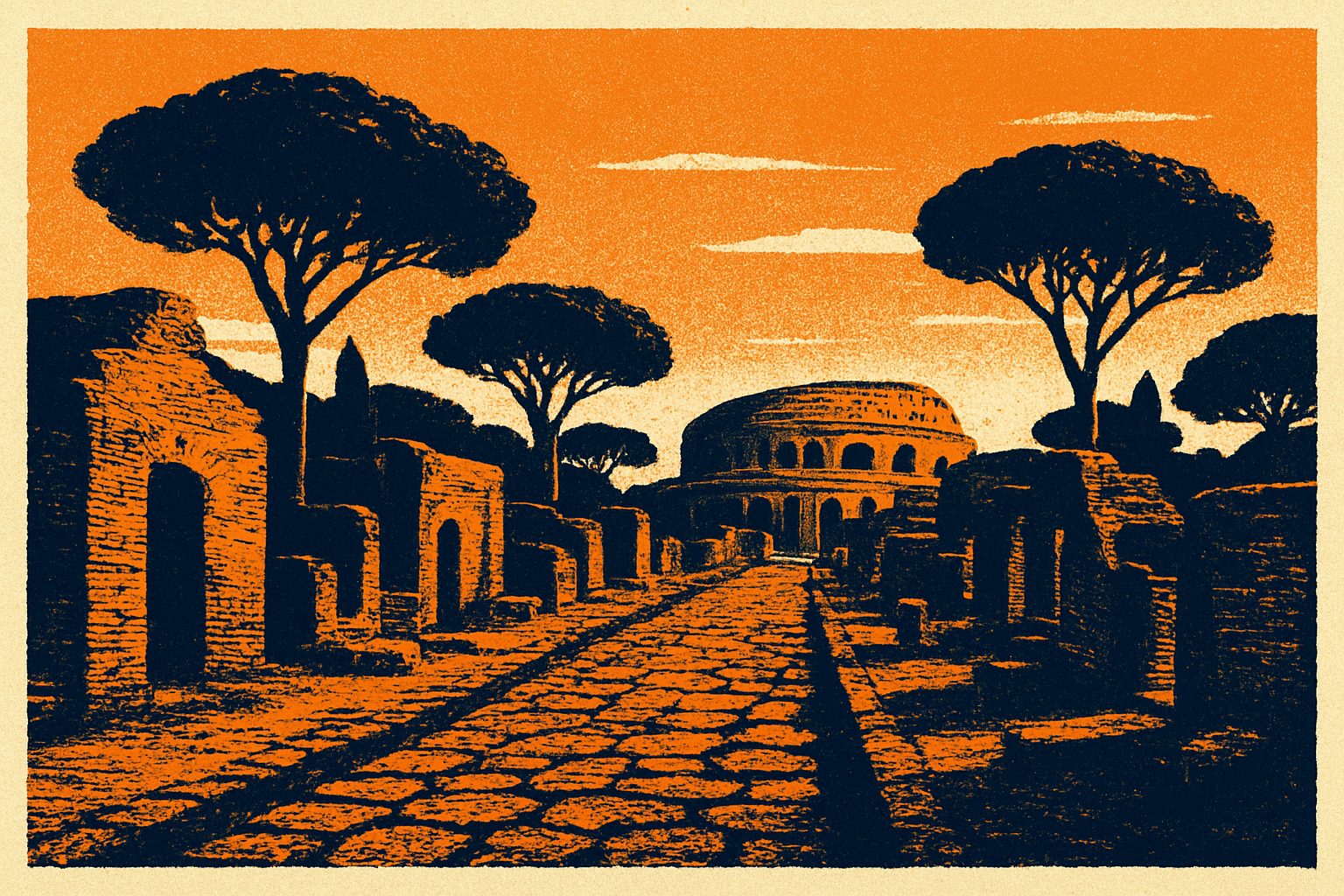
Travellers often compare Ostia with Pompeii. Both give a vivid sense of an ancient town, but the experience is different. Pompeii is famous for the sudden, dramatic moment that froze it. Ostia is quieter and more gradual, a place of faded brick, pine trees and long streets that trace the rhythm of daily commerce.
Ostia is also much closer to Rome. That makes it an easy addition to a longer stay, especially for travellers who have already seen the Forum and want to understand the infrastructure behind the empire.
What to See at Ostia Antica
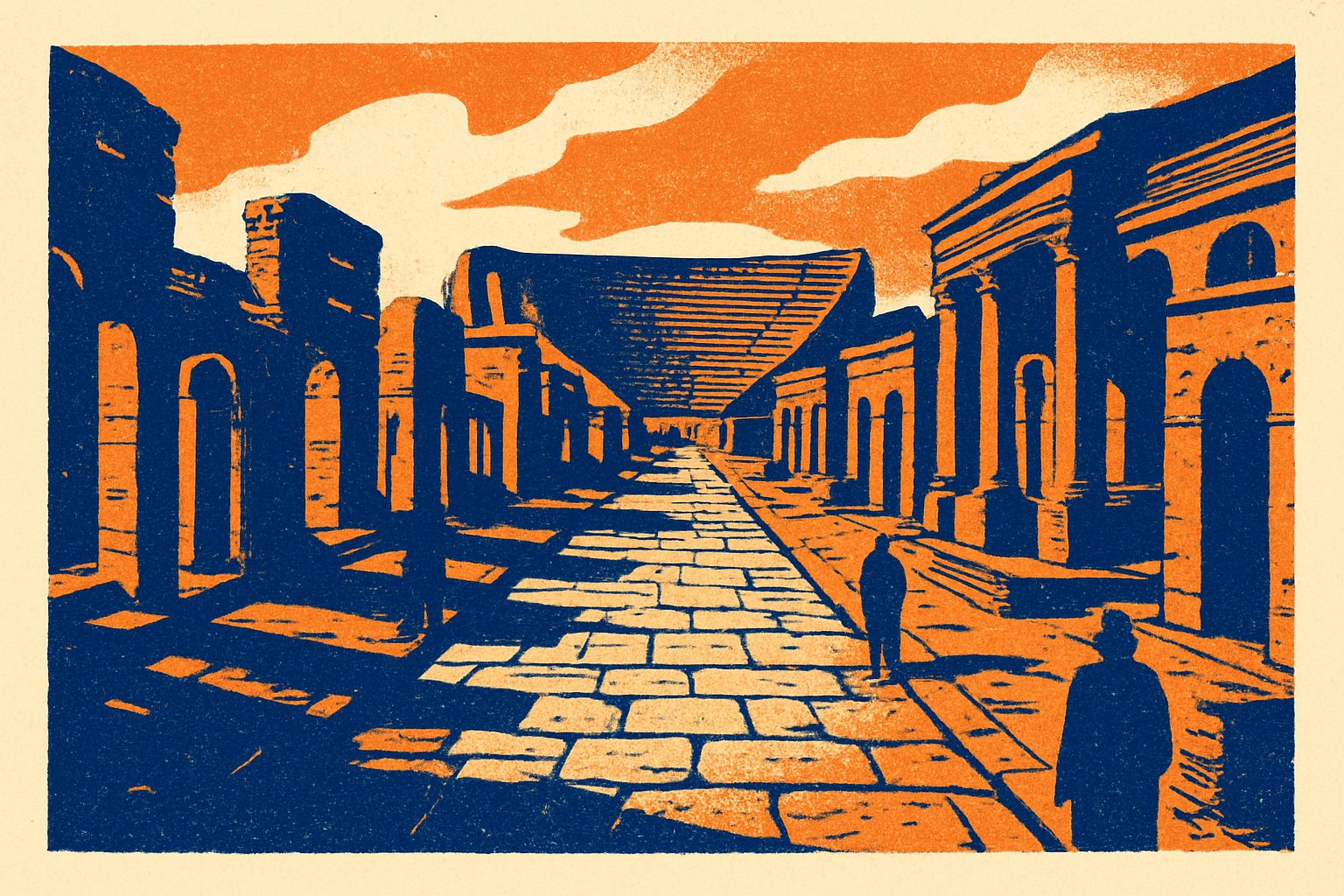
The Decumanus Maximus
The main street runs through the town and gives the site its structure. Follow it and you pass shops, baths, temples and public buildings. It is the best way to understand how the town was organised.
The Theatre
The brick theatre near the centre is one of the most recognisable landmarks. Its tiers of seating and the stage area show how entertainment was part of civic life, even in a town focused on trade.
The Piazzale delle Corporazioni
Behind the theatre lies a square surrounded by small offices linked to trade and shipping. Black-and-white mosaics at their thresholds show ships, sea creatures and other symbols. They worked like business signs, telling visitors what each firm dealt in.
The Insulae
One of Ostia’s great strengths is its multi-storey apartment blocks, known as insulae. Rome itself has few surviving examples, but at Ostia you can see staircases, ground-floor shops and the layout of urban housing. It is a rare look at how a large share of Romans really lived.
Baths and Mosaics
Bathing was central to Roman life, and Ostia had several bath complexes. The Baths of Neptune are known for a large mosaic of the sea god, and other bath buildings preserve floors, heating structures and decorative details.
Shops and Everyday Spaces
Look for the town’s counters, storage rooms and bars, including a well-known site with painted wall decoration. These small spaces do not have the grandeur of an imperial palace, but they bring the ancient street to life. The remains of communal latrines near the forum are another reminder that Roman life was often shared and public.
Temples and Sacred Spaces
Ostia was a cosmopolitan port, and its religious landscape reflects that. Alongside the main civic temples, you will find sanctuaries linked to cults from across the Roman world, including Mithraic spaces. They show how people and beliefs moved through the town along with cargo.
The Best Times to Visit
Ostia Antica is large and largely open-air, so the season and time of day make a real difference to how enjoyable the visit is.
- Spring and autumn are the best times to visit: pleasant light, comfortable conditions for walking, and green pines framing the ruins.
- Summer can be intense, and shade on the site is limited. If you go then, choose the morning.
- Weekdays usually feel calmer than weekends, which helps you beat the crowds.
- Winter can be atmospheric and quiet, though weather may affect the experience.
Allow at least half a day, and more if you want to explore the outer areas. Opening days, hours, ticket types and any special access arrangements change, so check the official site for Ostia Antica before you go. Also confirm whether particular areas or museum rooms are open on your date.
Getting There and Planning the Day
Ostia Antica can be reached from central Rome by public transport, which makes it one of the easiest archaeological day trips from the city. Check current routes and timetables locally, since services and works can change.
It helps to see the Roman Forum and the Colosseum first, because Ostia then reads as the other side of the story. Rome’s monuments show power and ceremony. Ostia shows the trade, housing and daily life that made them possible.
Why a Guide Helps
The site is spread out, and many buildings are unlabelled to the casual eye. A guided small-group visit can turn a field of brick walls into a readable town, explaining how a warehouse differed from a bath, or why a mosaic sits at a doorway. If you prefer to visit independently, read about the main areas beforehand and choose a few highlights rather than trying to see everything.
Why Ostia Antica Matters
Ostia reminds us that Rome was not only marble temples and imperial portraits. It was also ships, ledgers, apartments, workshops and shared public spaces. For travellers who want to understand the ancient city in depth, this site adds a missing layer.
If you are planning your time in the capital, our Rome travel guide offers more ideas for building an itinerary around art, archaeology and history.