When you think of ancient Rome, libraries might not be the first thing that comes to mind. Yet the Romans were among history’s most ambitious collectors of written knowledge, building magnificent public spaces where citizens could read Greek and Latin texts, consult maps, and study philosophy. These weren’t just storage rooms—they were architectural statements about the value of learning in Roman culture.
Most of Rome’s ancient libraries have vanished, their columns scattered and their scrolls long turned to dust. But the sites where they stood still exist, and understanding their history adds a fascinating layer to any walk through the city. This guide explores where Rome’s great libraries were located, what they looked like, and what traces remain for today’s visitors.
The First Public Library: Caesar’s Vision
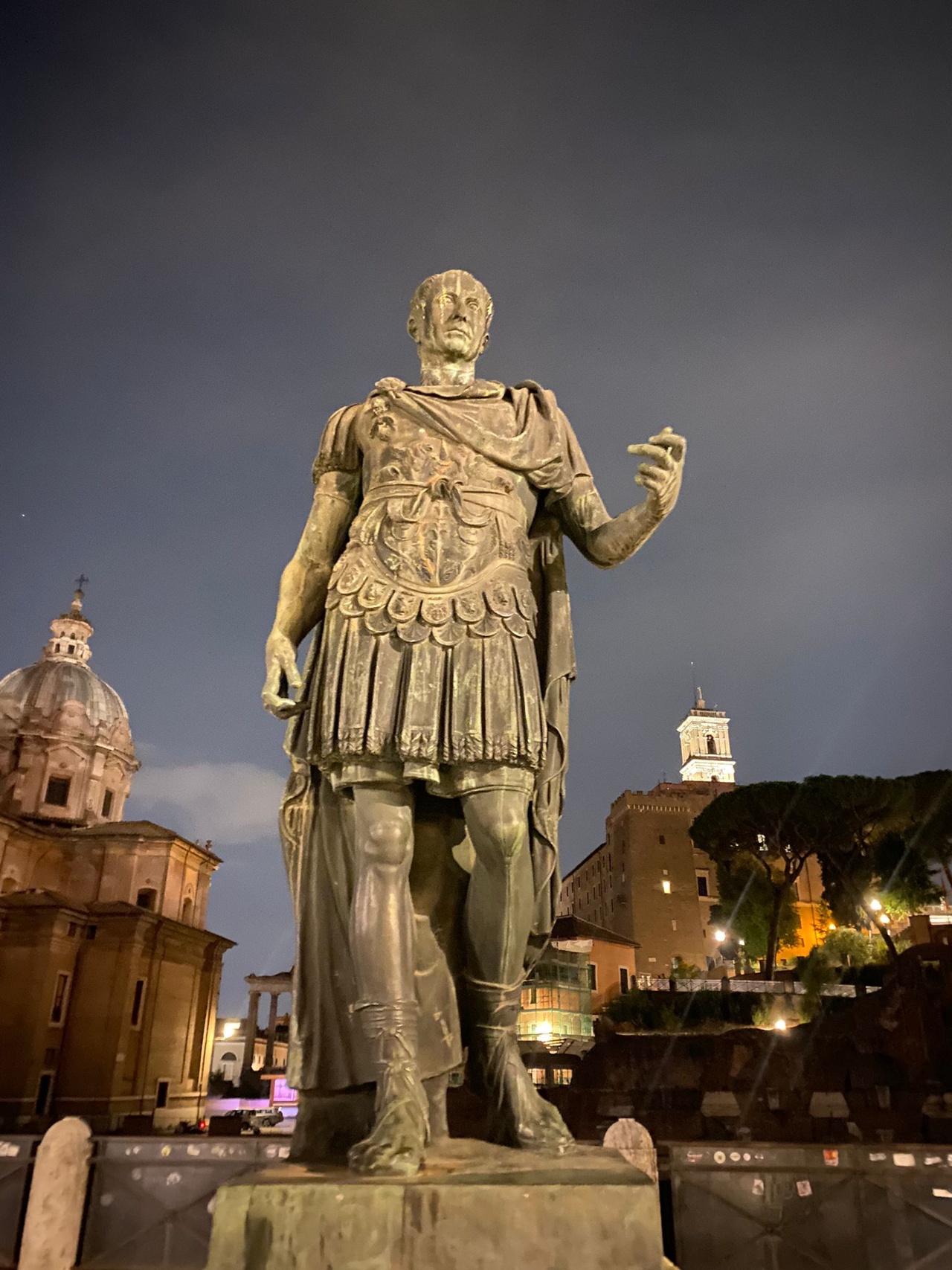
The concept of a public library in Rome began with Julius Caesar, who planned the first state-funded library accessible to Roman citizens. Though Caesar was assassinated before he could complete it, his vision set a precedent. The scholar Marcus Terentius Varro was tasked with organizing this collection, which would have housed both Greek and Latin works in separate wings—a format that became standard for Roman libraries.
Caesar’s library was never built, but his idea transformed how Romans thought about knowledge. Within decades, multiple public libraries appeared across the city.
The Library of Asinius Pollio
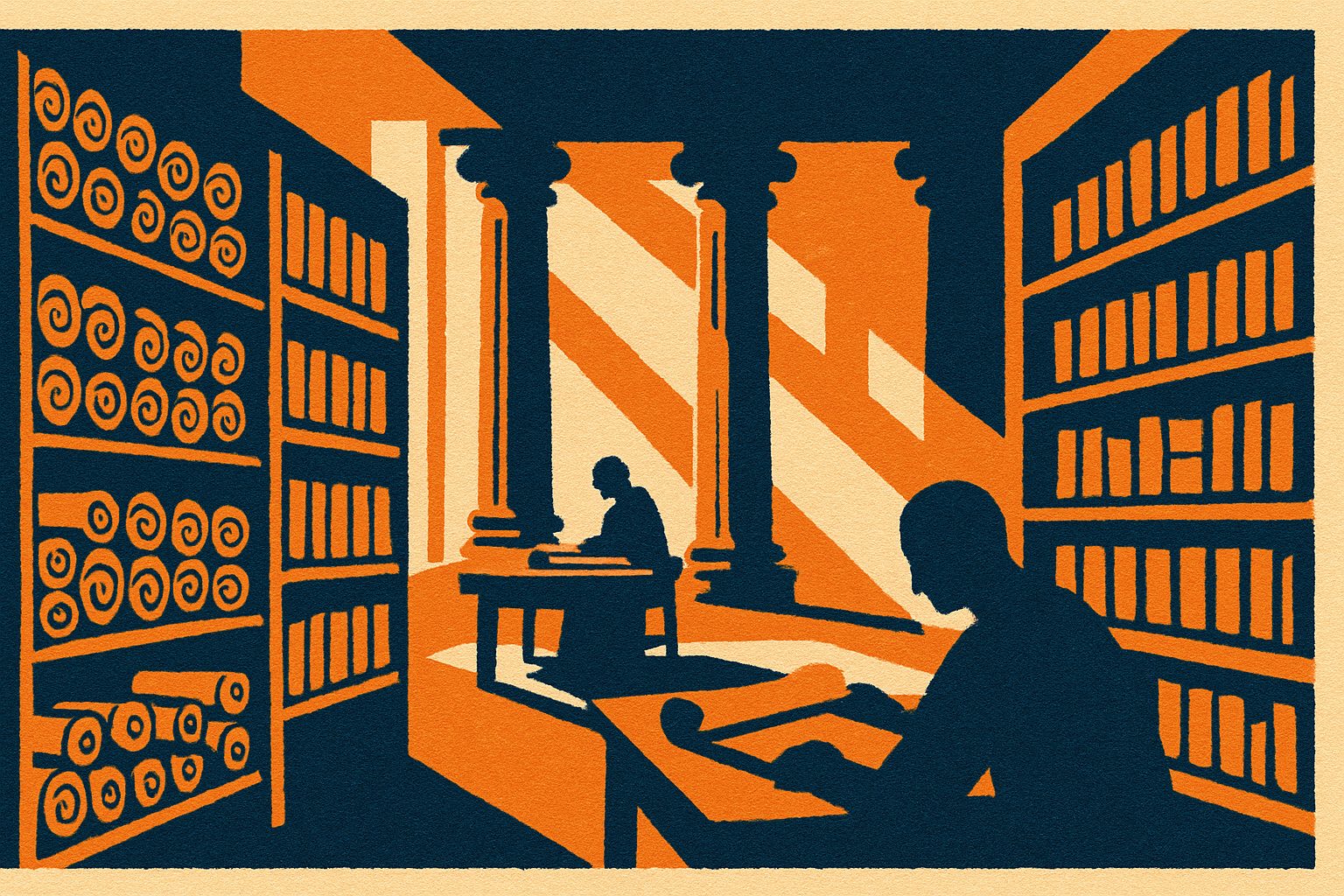
The honor of opening Rome’s first true public library went to Gaius Asinius Pollio, a general, statesman, and literary patron who founded his library around 39 BCE. Located in the Atrium Libertatis on the slope of the Capitoline Hill, it followed the Greek-Latin dual-room model and was decorated with portraits of famous authors.
The exact location is debated among scholars, but it likely stood near what is now the area between the Roman Forum and the Capitoline Museums. Nothing visible remains of the structure itself, but walking through this area—particularly along Via di San Pietro in Carcere—places you near where Roman intellectuals once gathered to read and debate.
The Palatine Libraries: Reading Rooms for Emperors
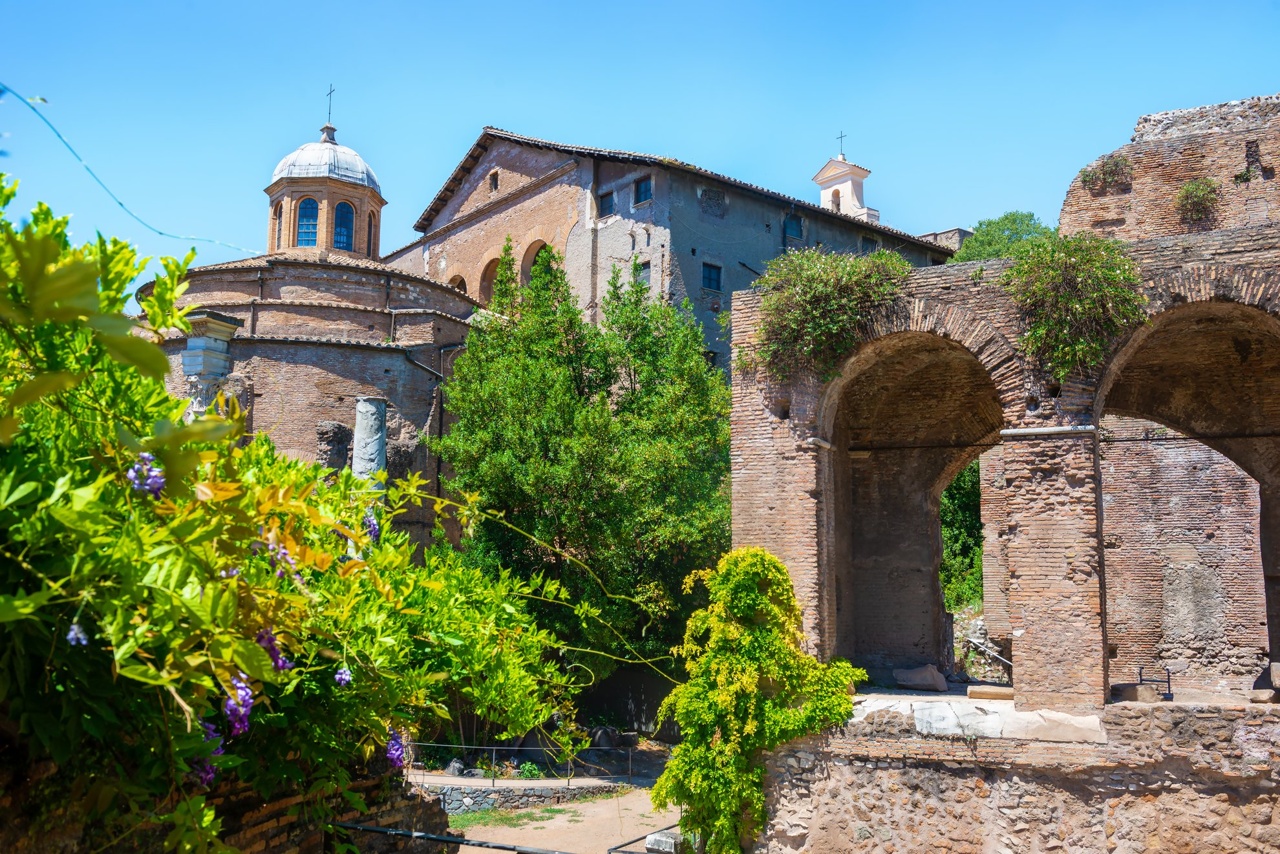
Augustus established two libraries on the Palatine Hill as part of his grand temple complex dedicated to Apollo. Built around 28 BCE, these twin libraries flanked the Temple of Apollo Palatinus and represented the intellectual dimension of imperial power. One room held Latin texts, the other Greek, and both were accessible to scholars and the educated public.
Today, visitors to the Palatine Hill can see the remains of the temple precinct. While the library structures themselves are fragmentary, the terraces and foundation walls give a sense of the monumental scale. The site offers sweeping views over the Roman Forum, and understanding that this was once Rome’s premier literary center changes how you see the ruins.
Later emperors added more libraries to the Palatine complex. Tiberius founded another, and the hill became synonymous with imperial scholarship.
Trajan’s Library: The Best-Preserved Footprint
The most archaeologically visible library site in Rome today is the Bibliotheca Ulpia, built by Emperor Trajan around 112-113 CE as part of his forum complex. This was ancient Rome’s largest and most prestigious library, named after Trajan’s family name, Ulpius.
The library occupied a large rectangular building between Trajan’s Column and the Basilica Ulpia. As with earlier libraries, it had separate Greek and Latin sections housed in symmetrical halls. Scholars estimate it could have held around 20,000 scrolls. The building featured multiple stories, with scroll niches lining the walls and reading spaces lit by tall windows.
When you visit Trajan’s Forum today, you can see the rectangular paved area where the library stood, flanking Trajan’s Column on two sides. The column itself was positioned so it could be “read” from the library’s windows—its spiral frieze depicting Trajan’s Dacian campaigns was meant to be studied like an illustrated scroll. The floor plan is still visible in the stone footings.
How Roman Libraries Were Organized
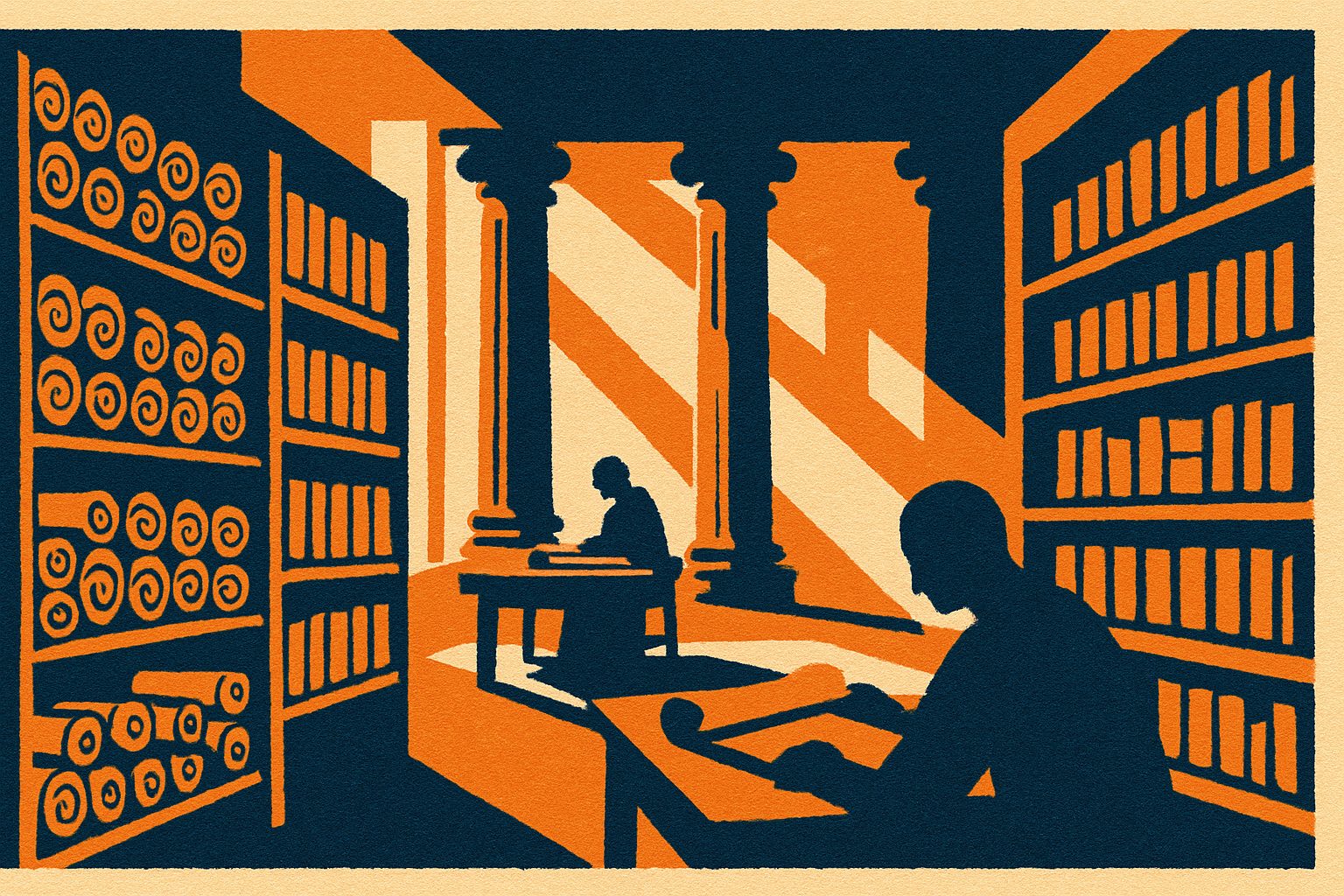
Roman libraries were carefully designed spaces. Scrolls were stored in wooden cabinets called armaria, with identifying tags hanging from each scroll. The reading rooms featured natural light from large windows, often facing away from direct sun to protect the delicate papyrus and parchment.
Many libraries included lecture halls, galleries of author portraits, and spaces for copying manuscripts. Scribes and librarians maintained the collections, and some libraries had catalogs listing their holdings.
The division between Greek and Latin sections reflected Rome’s bilingual educated class. Serious scholars were expected to read both languages, and housing the collections separately was partly practical—Greek texts required different storage conditions—and partly symbolic, honoring both Rome’s own literary tradition and the Greek culture Romans deeply admired.
Other Library Sites in Ancient Rome
Beyond these major libraries, several other collections existed throughout the city:
- The Library of the Temple of Peace: Built by Vespasian around 75 CE in what is now the area near Santa Maria Antiqua, this library was part of a larger complex celebrating Rome’s victory in the Jewish War. The site is near the Roman Forum’s eastern edge.
- The Baths of Caracalla: These massive public baths, built in the early 3rd century CE, included two library rooms in their complex. You can visit the baths today and see the remains of these rooms in the northwest and northeast corners of the main building.
- The Baths of Diocletian: Also included libraries, and parts of this complex are now incorporated into the Basilica of Santa Maria degli Angeli and the National Roman Museum. The museum’s current exhibits on Roman daily life occupy spaces that once held bathing facilities and reading rooms.
What Happened to the Books
The decline of Rome’s libraries mirrors the city’s broader transformation. As the Empire weakened, maintenance faltered. Fires destroyed some collections—the Palatine libraries burned during Commodus’s reign in the late 2nd century. Others gradually decayed as funding dried up and the political center shifted to Constantinople.
By the early Middle Ages, most of Rome’s great public libraries had closed. Their buildings were quarried for stone, and what texts survived were preserved in Christian monasteries and private collections. The tradition of public libraries wouldn’t return to Europe for centuries.
Why Libraries Mattered in Roman Culture
Rome’s investment in public libraries wasn’t just about education. Libraries were political statements. By making Greek and Latin literature available to citizens, emperors demonstrated Rome’s cultural sophistication and continuity with the Hellenistic world. Libraries also served as propaganda spaces, often decorated with imperial portraits and inscriptions celebrating the founder’s generosity.
For Romans, libraries represented civilization itself—the preservation of knowledge across generations, the debate of ideas, and the transmission of values. Building a library was an act of immortality, ensuring your name would be associated with learning for centuries.
Visiting Library Sites Today
While no ancient Roman library survives intact, several sites reward curious visitors:
Trajan’s Forum and Column: The most accessible site. The forum is always open, and you can walk around the column and see where the library wings stood on either side. The geometry is still readable in the ancient pavement.
The Palatine Hill: Requires a ticket (the same ticket covers the Colosseum and Roman Forum). The Apollo temple area is in the southern part of the hill. Look for information panels explaining the library locations.
Baths of Caracalla: Open to visitors with separate admission. The library rooms are labeled in the site’s signage, and the scale of the entire complex is impressive.
National Roman Museum at Diocletian’s Baths: The museum building itself incorporates parts of the ancient bath complex, including former library spaces. The exhibitions provide context about Roman daily life and intellectual culture.
For the best experience, verify opening hours and ticket requirements on official sites before visiting. Many of these archaeological areas have seasonal schedules.
Best Times to Explore
The library sites are outdoor archaeological zones or museums. For outdoor sites like Trajan’s Forum, early morning or late afternoon offers better light for photography and fewer crowds. The Palatine Hill can get hot in summer, so spring and fall visits are more comfortable. Winter provides solitude and dramatic light, though days are shorter.
Museum sites like the National Roman Museum are climate-controlled and can be visited comfortably year-round. Weekday mornings tend to be quietest.
Understanding Rome’s Intellectual Legacy
Exploring Rome’s ancient libraries adds depth to the usual tourist itinerary. These weren’t peripheral spaces—they stood at the heart of imperial complexes, next to temples and basilicas. Romans put books and learning on the same monumental scale as their military victories.
Walking through these sites, you’re tracing the footsteps of scholars who read Virgil when it was contemporary literature, who debated Stoic philosophy in reading rooms lit by Mediterranean sun, and who copied manuscripts that would eventually shape European thought for millennia. The scrolls are gone, but the spaces where knowledge lived remain part of Rome’s landscape.
If you want to explore these layers of Rome’s cultural history with expert context, Trip in Art offers small-group experiences that go beyond the standard monuments to reveal the city’s intellectual and artistic legacy.