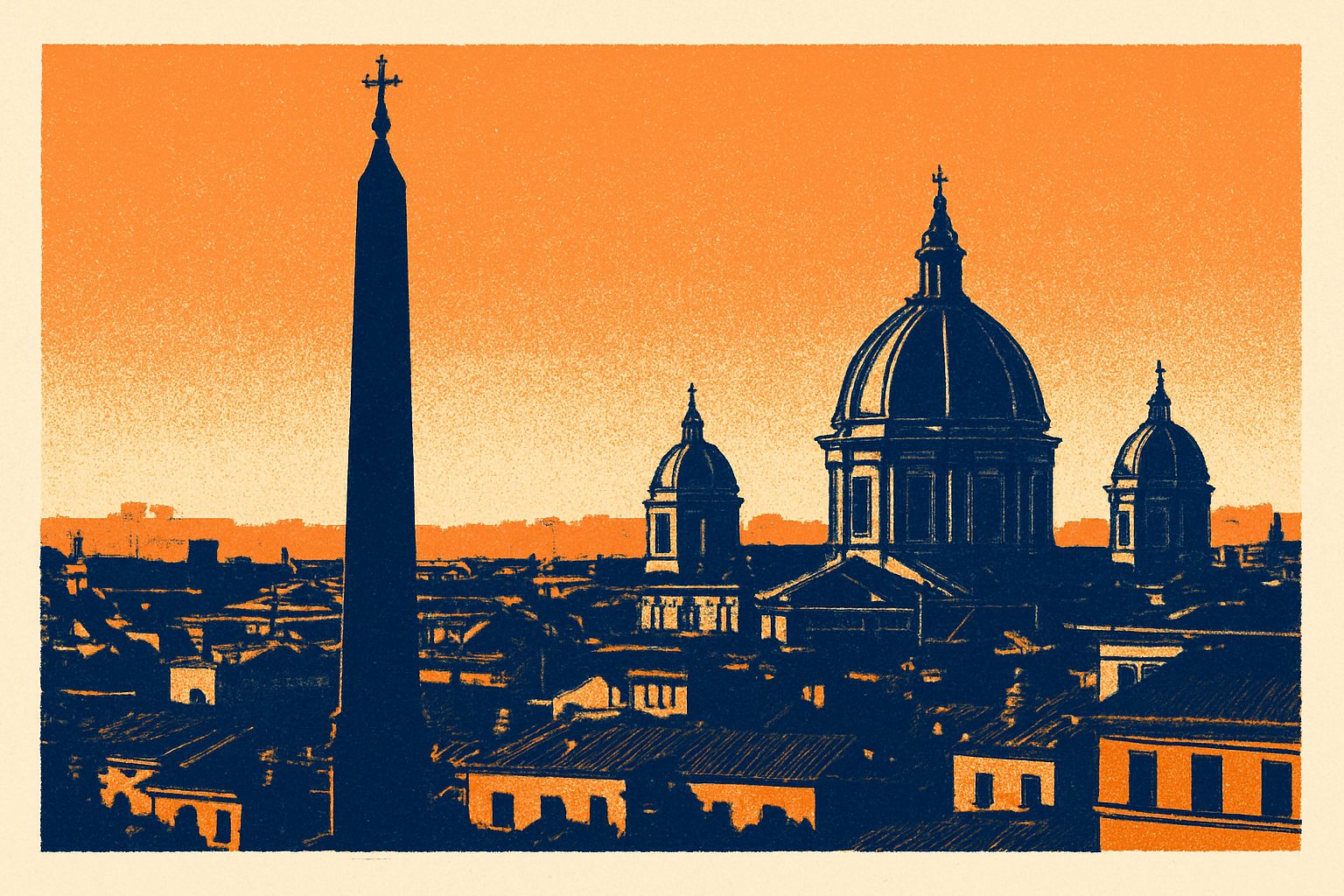
Rome is full of monuments that visitors walk past every day without really looking. The obelisks are some of the easiest to miss. They stand in squares, in front of churches and on hilltops, usually topped with a cross or a star. Each one carries a story that runs from ancient Egypt through imperial Rome to the Renaissance popes.
This guide explains why the city has so many, which ones reward a closer look, and how to fit them into a walk.
Why Does Rome Have So Many Obelisks?

Obelisks began as Egyptian monuments, linked to the sun and carved from single blocks of granite. After Rome absorbed Egypt, its emperors began shipping them across the Mediterranean as symbols of conquest and prestige. Some were used as markers in circuses. Others served as part of a monumental sundial. Rome’s own craftsmen also carved obelisks in the Egyptian style.
Most of these monuments later fell and were buried as the city declined. Centuries on, Renaissance popes wanted to turn Rome into a clear, readable Christian capital. They dug the obelisks out and re-erected them as landmarks to guide pilgrims through the streets. Many of the city’s main sightlines come from this period of planning, which is why the obelisks matter to anyone trying to understand how Rome is laid out.
The Obelisks Worth Seeking Out
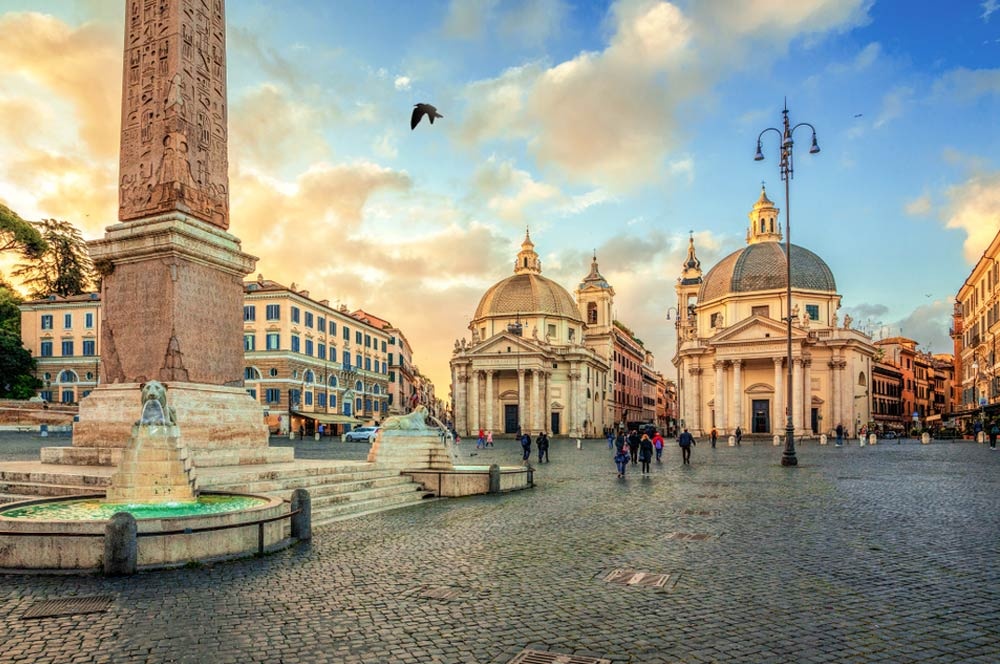
Piazza del Popolo: the Flaminio Obelisk
Piazza del Popolo is a good place to start. The central obelisk was begun under Seti I and finished under Ramesses II, and it comes from Heliopolis. Augustus had it brought to Rome and set up in the Circus Maximus. In the late sixteenth century it was moved to its present site, where it anchors the three streets fanning out from the square. Arriving here from the old city gate, you can see how the planners meant the monument to draw visitors into the city.
San Giovanni in Laterano: the Lateran Obelisk
The obelisk beside the Lateran basilica is usually described as the largest surviving ancient obelisk of its kind. It was carved for pharaohs at Karnak and brought to Rome in the fourth century AD under the emperor Constantius II, who placed it in the Circus Maximus. It was re-erected at the Lateran in the 1580s. The setting is calmer than in the city centre, and the scale is easier to appreciate when fewer people are around.
Piazza della Minerva: Bernini’s Elephant
Not every obelisk is a grand landmark. Behind the Pantheon, a small Egyptian obelisk stands on the back of a marble elephant, a seventeenth-century design associated with Bernini. It is one of the city’s most charming pieces of sculpture, and it shows how Roman artists treated an ancient relic as raw material for something playful and new.
Piazza della Rotonda and Montecitorio
Right in front of the Pantheon, an obelisk rises from a fountain. It was moved there in the early eighteenth century, so the Pantheon’s famous portico now has an Egyptian neighbour. A short walk away, the obelisk in Piazza di Montecitorio has an even more specific history. Augustus used it as the pointer of a huge sundial in the Campus Martius. It was recovered from the ground and re-erected in the late eighteenth century. The standing monument is only one part of the original ancient design.
Trinità dei Monti and Piazza Navona
At the top of the Spanish Steps stands an obelisk that is a Roman imitation rather than an Egyptian original. It’s a useful reminder that Rome copied Egypt as readily as it collected from it. In Piazza Navona, Bernini’s Fountain of the Four Rivers carries another obelisk of Roman origin. It is best understood as part of the fountain’s design, with the sculpture below and the pointed shaft above.
St. Peter’s Square
The obelisk at the centre of St. Peter’s Square was brought to Rome in the first century AD and stood nearby for centuries. Its move to the present spot in 1586, led by the architect Domenico Fontana, was among the best-known engineering feats of its time. It is worth looking up at it as you cross the square.
How to Build an Obelisk Walk
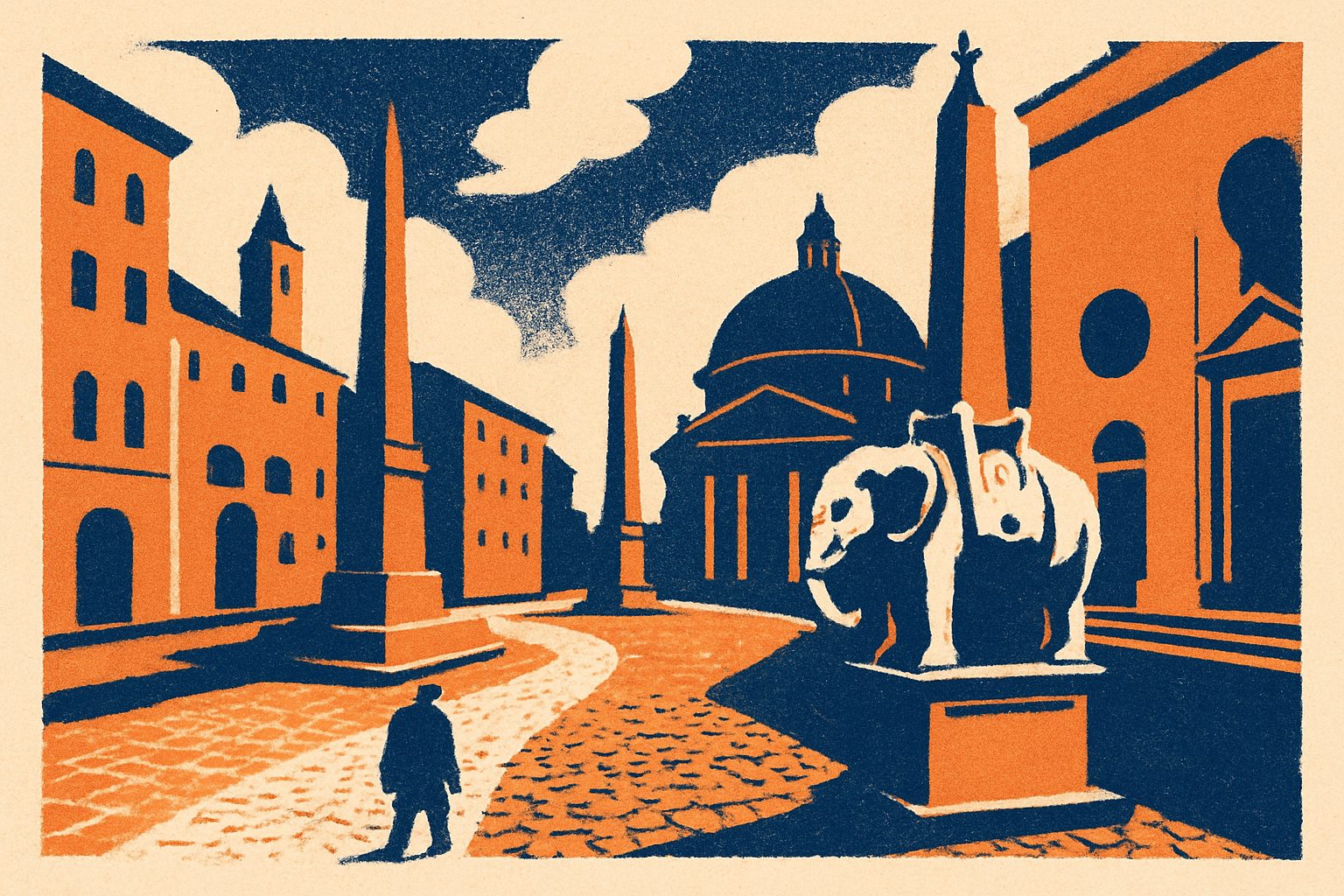
A simple route links several of these monuments in the historic centre:
- Begin at Piazza del Popolo and the Flaminio Obelisk.
- Walk toward the Spanish Steps and look for the obelisk at Trinità dei Monti.
- Continue to Montecitorio, then to the Pantheon and the elephant in Piazza della Minerva.
- Finish at Piazza Navona, or take public transport to the Lateran for a quieter ending.
The central stretch is compact, so the walk fits easily into a half day alongside a museum or church visit. Check opening hours for any church or museum you add, and read the information on official sites before you go.
The Best Times to Visit
Obelisks stand in open squares, so you can see them whenever you like. Early morning and the hour before sunset are the best times to visit if you want to beat the crowds and see the carved granite in good light. Low sun brings out the hieroglyphs on the Egyptian originals, and the squares are much calmer than at midday.
Bring a little patience for the details. Many obelisks sit on later bases with inscriptions that record when and by whom they were re-raised. Reading these gives you a quick lesson in papal Rome.
Why It Matters
An obelisk walk shows Rome as a city built in layers. Egyptian pharaohs made the monuments, Roman emperors moved them, time buried them, and popes re-erected them. Seeing them in sequence helps connect places that usually feel separate: a basilica, a square, a fountain, a hilltop.
If you would rather have the background explained on site, a guided small-group visit can place these monuments in context alongside the nearby sites. For ideas on planning your days in the city, the Trip in Art Rome travel guide is a useful place to start.