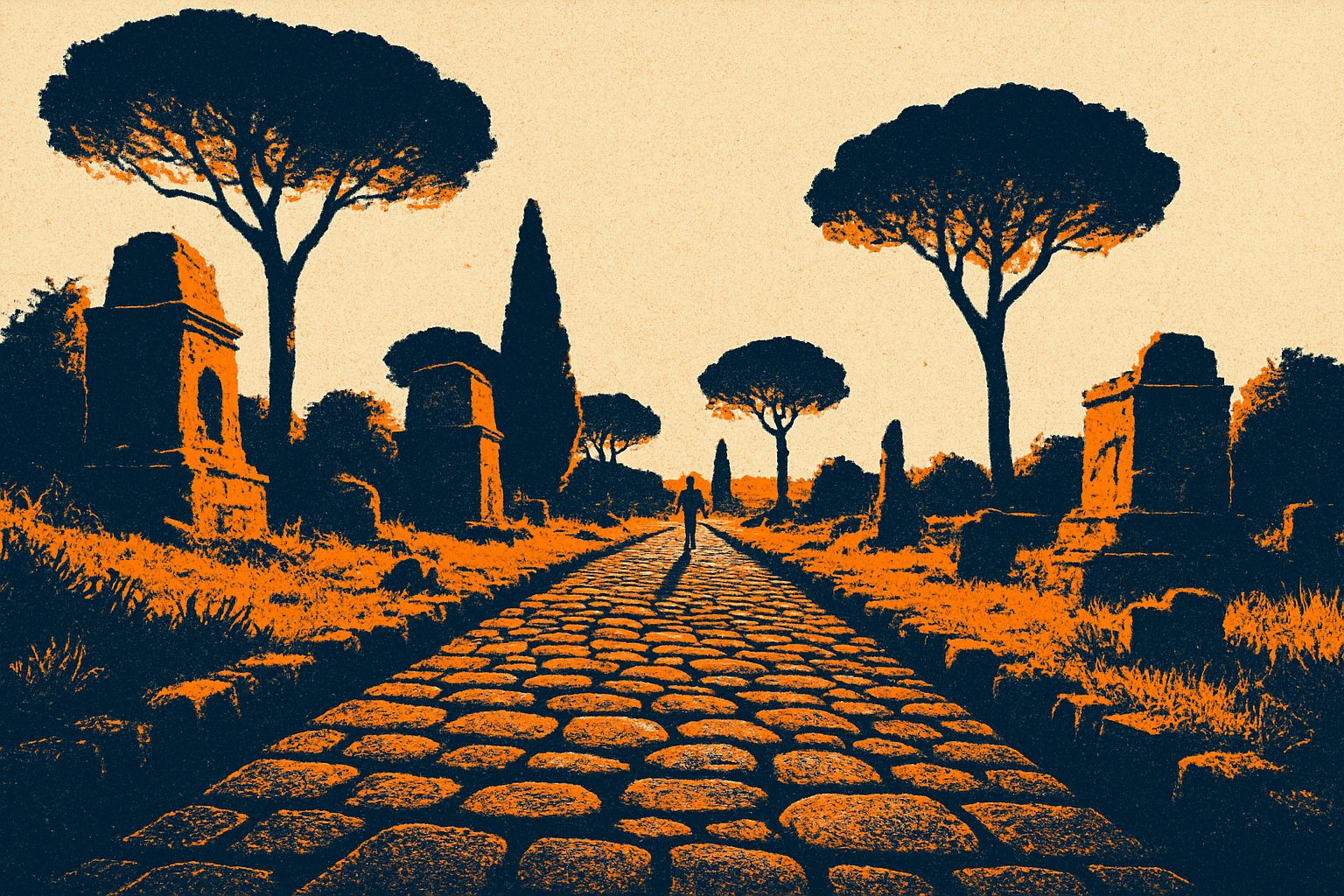
The Via Appia Antica—the Appian Way—is one of the oldest and most important roads ever built by the Romans. Begun in 312 BCE by Appius Claudius Caecus, it first ran from Rome to Capua; later extensions carried it all the way to the port city of Brindisi, some 540 kilometres—about 335 miles—to the southeast. Today, the first stretch of this legendary road survives as an open-air archaeological park just outside Rome’s city center, offering visitors a rare chance to walk on original ancient Roman paving stones surrounded by monuments, tombs, and underground burial chambers.
Unlike the crowded forums and basilicas of central Rome, the Appian Way feels spacious, green, and contemplative—a place where history unfolds at walking pace.
Why the Appian Way Matters
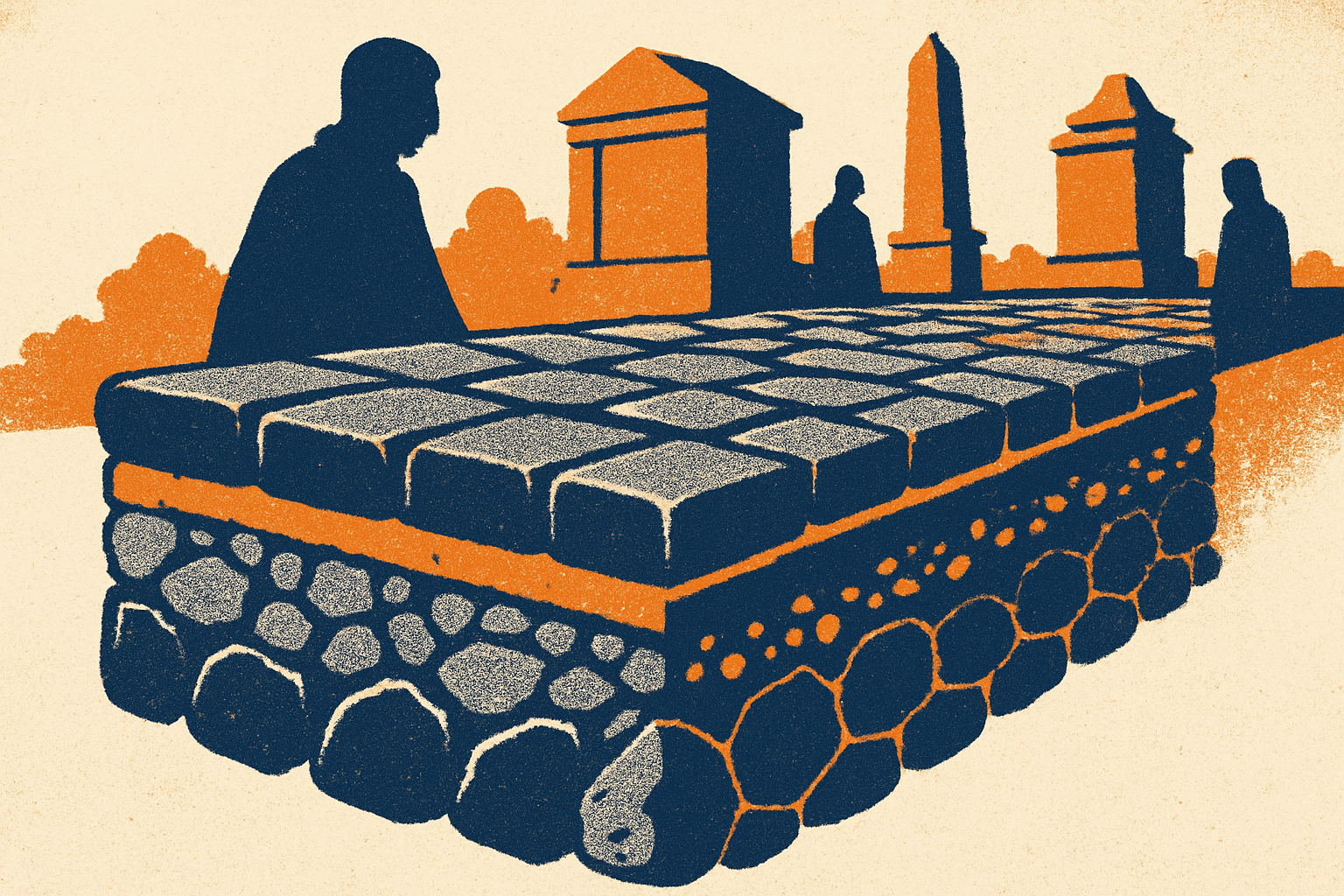
The Via Appia was the first of Rome’s great consular roads, and its engineering was revolutionary. The roadbed was built in layers—large stones at the base, gravel for drainage, then fitted basalt paving stones on top—designed to carry military legions, trade goods, and official messengers at unprecedented speed.
But the road also became a corridor of memory. Roman law forbade burials inside the city walls, so wealthy families built elaborate tombs along the Appian Way. Freed slaves, early Christians, and later Jewish communities carved underground catacombs into the soft volcanic tufa beneath the surface. The result is a landscape where architecture, archaeology, and belief systems intersect across two millennia.
For travelers interested in Roman engineering, early Christian history, or simply escaping the intensity of central Rome, the Appian Way offers a unique perspective: history encountered not in a museum case, but underfoot and all around you.
What to See Along the Appian Way
The Road Itself
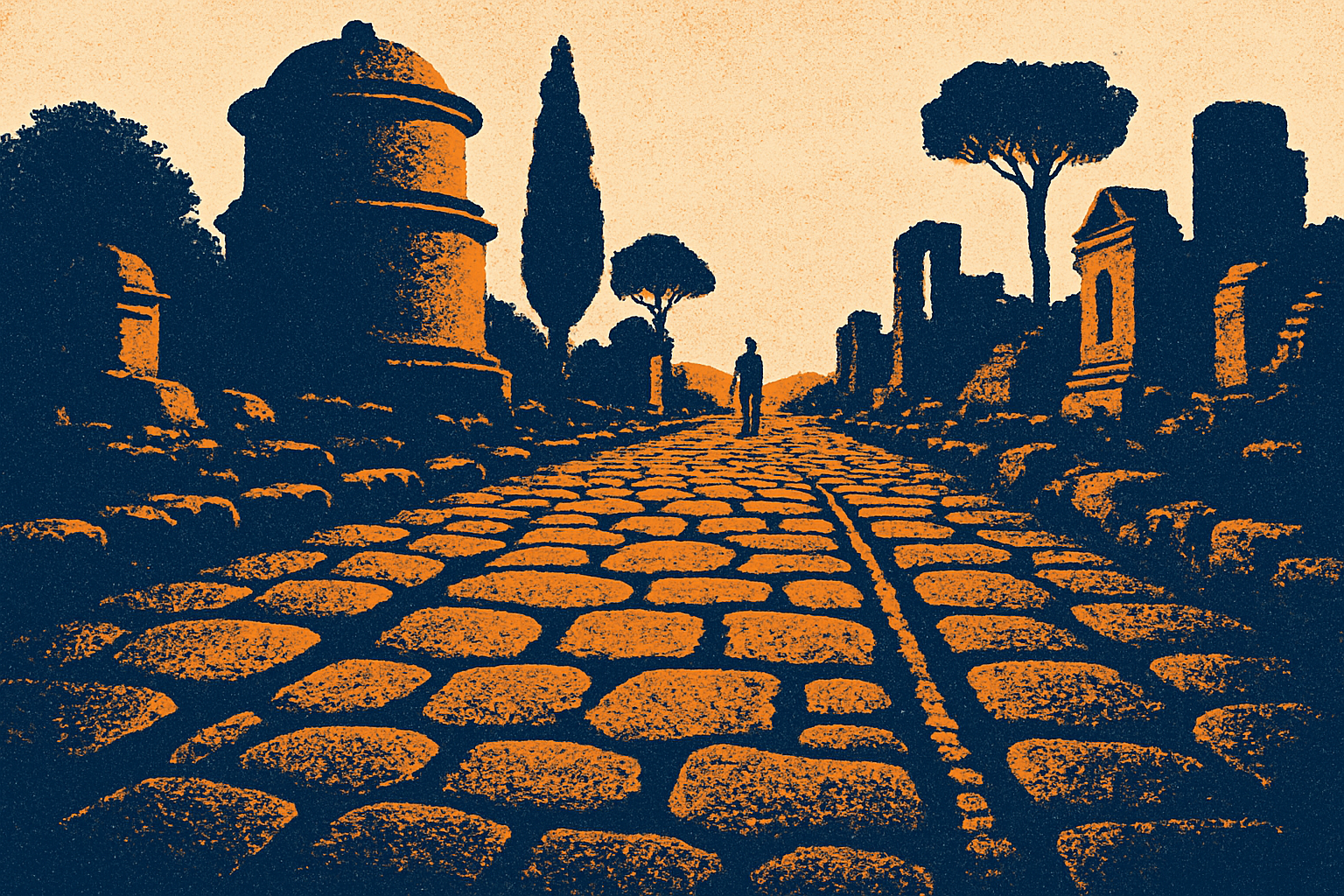
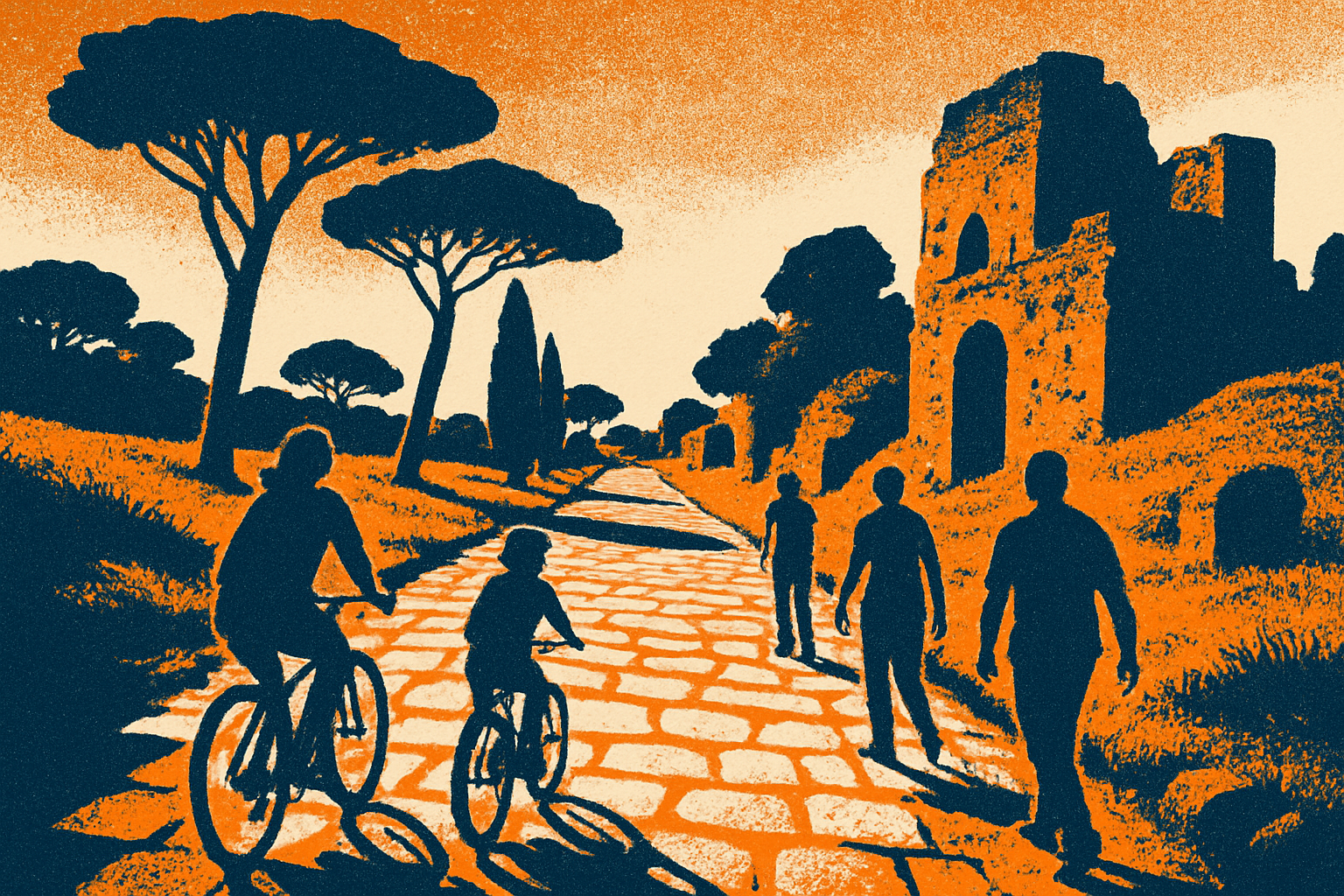
The ancient paving stones are the star. Known as basoli, these dark blocks of basaltic lava were quarried from volcanic regions and fitted together without mortar. After more than two thousand years, many sections remain intact. Walking or cycling on them—feeling the ruts worn by Roman cart wheels—is an experience no reconstruction can replicate.
Major Monuments and Tombs
The roadside is lined with ruins of monumental tombs. The most recognizable is the Tomb of Cecilia Metella, a massive cylindrical mausoleum dating to the first century BCE. Its scale and preserved travertine facade make it a visual anchor along the road. In the Middle Ages, it was converted into a fortified tower, adding another layer to its story.
Further along, you’ll encounter the ruins of the Villa of Maxentius, a sprawling complex that includes a circus (chariot-racing track) and the emperor’s mausoleum. The circus is one of the best-preserved in Rome, and its sheer size gives a sense of the ambition and wealth that once defined this stretch of countryside.
Scattered along the route are dozens of smaller tombs, some little more than brick cores, others with fragments of sculpture or inscription still visible. These weren’t just memorials—they were statements of identity, meant to be seen by everyone traveling the empire’s most important road.
The Catacombs
Beneath the Appian Way lies a network of underground burial galleries. The most famous are the Catacombs of San Callisto and the Catacombs of San Sebastiano, both significant sites for early Christian history.
The Catacombs of San Callisto were the official cemetery of the Church of Rome in the third century and contain the crypts of several early popes. The tunnels extend for miles and were carved directly into the tufa rock, with niches (loculi) stacked floor to ceiling for individual burials.
The Catacombs of San Sebastiano preserve one of the few places where the term “catacomb” was first used. They also contain rare examples of early Christian graffiti and symbols—anchors, fish, Greek letters—scratched into the walls by pilgrims and mourners.
Visiting the catacombs requires joining a guided group (they cannot be explored independently for safety and preservation reasons). These visits offer a powerful counterpoint to the monumental tombs above ground: here, burial was communal, humble, and defined by faith rather than wealth.
The Jewish Catacombs (Vigna Randanini)
Less visited but equally significant are the Jewish catacombs at Vigna Randanini. Rome’s Jewish community is one of the oldest in Europe, and these underground chambers contain inscriptions in Hebrew, Greek, and Latin, along with symbols like the menorah. Access is more restricted, but the site underscores the religious and cultural diversity that characterized ancient Rome.
How to Visit the Appian Way
Getting There
The Appian Way begins about 5 kilometers south of central Rome. You can reach it by bus (line 118 from Piramide or San Giovanni, or line 218 from San Giovanni) or by bicycle if you’re comfortable navigating Roman traffic for the first stretch. Once you’re on the Appia Antica itself, car traffic is restricted on Sundays, making it ideal for walking or cycling.
Best Times to Visit
Spring (April–May) and autumn (September–October) offer the best weather—mild temperatures, blooming wildflowers or golden light, and fewer crowds than summer. Early mornings are especially atmospheric, with soft light filtering through the umbrella pines.
Sundays are popular because of the traffic restrictions, but weekdays can be quieter if you prefer solitude. Avoid the middle of summer (July–August) unless you start very early; the road offers little shade, and the heat can be intense.
What to Bring
Wear comfortable walking shoes with good grip—the ancient stones are uneven and can be slippery. Bring water, sunscreen, and a hat. If you plan to visit the catacombs, note that temperatures underground are cool year-round (around 12–14°C), so a light jacket is useful even in summer.
Cycling the Appian Way
Renting a bicycle is one of the most enjoyable ways to cover more ground. Several rental points are located near the start of the archaeological park. Cycling allows you to reach lesser-known stretches of the road and explore side paths leading to additional ruins and medieval towers.
Practical Tips
- Catacombs: Reserve your spot in advance during peak season (Easter, summer). Guided visits last 30–40 minutes and are conducted in multiple languages.
- Entrance fees: The road itself is free to walk. Individual monuments and catacombs charge separate admission.
- Facilities: There are a few cafés and restrooms near the Tomb of Cecilia Metella and at the Appia Antica Visitor Center, but options thin out further along the road. Plan accordingly.
- Combine with nearby sites: The Baths of Caracalla and the Aurelian Walls are both a short distance away and can be combined into a half- or full-day itinerary focused on Rome’s southern monuments.
Why the Appian Way Deserves Your Time
The Appian Way is not a single monument—it’s a layered landscape where engineering, memory, and belief are inscribed into the ground. Walking it, you move through centuries: from the republic’s expansion to the empire’s height, from pagan funeral rites to early Christian pilgrimage, from medieval fortifications to the pastoral countryside that artists like Piranesi and Goethe celebrated in their work.
It’s also a break from the intensity of Rome’s historic center—a place where you can set your own pace, linger over details, and experience history not as a curated exhibit but as a physical, lived environment.
For travelers planning a deeper engagement with Rome’s archaeology and cultural history, Trip in Art offers expert-led experiences that connect the dots between sites like the Appian Way and the broader narrative of ancient and early Christian Rome.