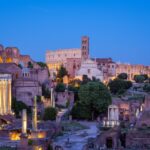

Beyond the forums and temples of central Rome lies another layer of ancient life: the grand country estates where emperors, senators, and wealthy Romans escaped the city’s heat and noise. These villas were not simple country houses but sprawling complexes of gardens, baths, libraries, and art galleries that reveal how Rome’s most powerful citizens lived when away from public life.
Many of these imperial estates survive today, and visiting them offers something the urban monuments cannot: a glimpse into the private spaces, personal tastes, and daily rhythms of ancient Rome’s ruling class.
Why Roman Villas Matter

Roman villas were where architecture, landscape design, and art came together in a single estate. Emperors commissioned the finest artists and engineers to create retreats that combined comfort, beauty, and intellectual life. The remains you see today preserve extraordinary mosaics, frescoes, sculptural programs, and engineering innovations that were rarely lavished on public buildings.
These sites also tell us about Roman daily life beyond war and politics: how they bathed, dined, entertained guests, and surrounded themselves with art and nature.
Villa Adriana (Hadrian’s Villa) – Tivoli

The largest and most ambitious imperial villa ever built, Hadrian’s Villa sprawls across 120 hectares in the hills east of Rome. Emperor Hadrian designed this estate between 118 and 138 CE as a retreat and a place to recreate architectural wonders he had seen during his travels across the empire.
What to See
The site contains over thirty buildings, each with a distinct function. The Maritime Theatre is a circular portico surrounding a small island villa, accessible only by a retractable bridge—likely Hadrian’s most private retreat. The Canopus is a long pool flanked by columns and statues, modeled after an Egyptian sanctuary near Alexandria.
The Pecile replicates an Athenian painted porch, the Baths show sophisticated heating systems, and scattered across the grounds are libraries, dining halls, temples, and underground service corridors that kept staff invisible to guests.
Many original sculptures are now in museums, but the architecture alone demonstrates Roman engineering at its peak: soaring domes, intricate water features, and spatial design centuries ahead of its time.
When to Visit
The estate is enormous and almost entirely outdoors, so visit in spring or fall when temperatures are moderate and light is ideal for photography. Arrive early to beat the crowds and allow at least three hours to explore properly. Verify opening hours and ticket details on the official site before planning your visit.
Villa d’Este – Tivoli

Though built in the Renaissance by Cardinal Ippolito II d’Este, Villa d’Este sits on the site of an ancient Roman villa and incorporates Roman architectural fragments throughout. Its terraced gardens, designed in the 16th century, follow principles of landscape architecture first developed in Roman villa estates.
The villa demonstrates continuity between ancient and Renaissance ideals of otium—cultivated leisure surrounded by art and nature. The famous fountains, grottos, and water organs show how Renaissance designers studied and adapted ancient hydraulic engineering.
The two Tivoli villas pair well in a single day trip from Rome, offering both ancient origins and their Renaissance evolution.
Villa of the Mysteries – Pompeii
Just outside the Pompeii archaeological park stands one of the best-preserved Roman villas anywhere. The Villa of the Mysteries takes its name from a series of large-scale frescoes in a dining room showing a mysterious initiation ritual, possibly related to the cult of Dionysus.
Why It Stands Out
The frescoes are nearly intact, still vibrant in their reds, blacks, and ochres. The figures are life-sized, painted with psychological depth rare in ancient art. Beyond this famous room, the villa contains refined architectural details, garden spaces, and domestic rooms that show how wealthy Romans outside the capital lived.
The villa was buried by the eruption of Vesuvius in 79 CE, preserving it in extraordinary detail. Visiting here connects you to a single frozen moment in Roman daily life.
Planning Your Visit
The villa is part of the Pompeii archaeological area. Confirm access details and timing when you book your visit to Pompeii, as some areas of the site operate on rotation for conservation. The best times to visit Pompeii are early morning or late afternoon to beat the crowds, particularly in summer months.
Villa dei Quintili – Via Appia Antica
Along the ancient Appian Way, just a short distance from central Rome, lies the Villa dei Quintili—one of the largest and most luxurious suburban villas in the Roman countryside. Built in the 2nd century CE by the wealthy Quintilii brothers, it was so impressive that Emperor Commodus had them executed and seized the estate for himself.
What Remains
The ruins include a vast bath complex with vaulted ceilings, a hippodrome for chariot exercises, an aqueduct that supplied the estate, and residential quarters with mosaic floors. The scale of the structures gives a sense of how Rome’s elite lived beyond the city walls.
The site is less crowded than central monuments but equally revealing. It sits within the Appian Way Regional Park, so the surrounding landscape still evokes the countryside that wealthy Romans sought when they built here.
Combining with an Appian Way Walk
The Villa dei Quintili pairs naturally with exploration of the Appian Way itself—ancient tombs, catacombs, and stretches of original Roman paving. Verify current visiting arrangements before heading out, as access and hours can vary seasonally.
Villa Farnesina – Rome (Built Over Ancient Remains)
Located in Trastevere, Villa Farnesina is a Renaissance jewel built for the banker Agostino Chigi in the early 16th century. During its construction and in later excavations, ancient Roman frescoes and architectural fragments were discovered beneath and around the site, revealing earlier villa structures.
While the building you visit today is Renaissance, the frescoes by Raphael and his workshop inside echo ancient Roman painting techniques and themes studied directly from ruins like the Domus Aurea. It demonstrates how Renaissance Rome literally built upon and learned from its ancient past.
Practical Considerations for Villa Visits
Most ancient villas are outside central Rome, requiring travel by train, bus, or guided transport. Hadrian’s Villa and Villa d’Este in Tivoli are reachable by regional train and local bus. The Villa dei Quintili is accessible via the Appia Antica bus line. Pompeii requires a longer journey—about two hours by train from Rome.
All sites require walking on uneven ancient paving, often with limited shade. Bring water, sun protection, and comfortable footwear. Some areas may have restricted access for conservation, so check official sources for current conditions before your visit.
Entrance arrangements and timing vary by site and season. Booking in advance is recommended, especially during peak travel months.
What These Sites Teach Us
Roman villas show a side of ancient life invisible in temples and arenas: leisure, refinement, intellectual pursuits, and the relationship between architecture and nature. They were laboratories for artistic and engineering experiments, and many innovations seen in villa design later influenced public monuments.
Visiting them today adds depth to your understanding of Rome. You see not just power and empire, but taste, privacy, and how the Romans shaped space to reflect philosophy and status.
Plan Your Visit to Rome’s Imperial Villas
If you want to explore ancient Roman life beyond the well-known monuments and understand the private world of emperors and elites, these villa sites offer rare access and extraordinary preservation. Whether you choose Hadrian’s architectural fantasies at Tivoli, the frozen luxury of Pompeii, or the countryside estates along the Appian Way, each visit deepens your connection to Rome’s layered history.
For expertly guided visits that bring these ancient estates to life with historical context and access to the most significant details, explore the curated experiences at Trip in Art.