Trip in Art
December 20, 2025
Exploring St Peter’s Square Rome means entering one of the most powerful and carefully designed urban spaces in the world. More than a simple forecourt to the basilica, the square was conceived as a monumental setting where architecture, symbolism and movement work together to shape the visitor’s experience.
Moreover, it represents one of the highest expressions of Baroque urban planning.
Designed in the 17th century by Gian Lorenzo Bernini, St Peter’s Square transforms an open space into a controlled architectural narrative. The vast scale is not meant to overwhelm, but to guide.
As a result, visitors are drawn naturally toward the basilica while remaining part of a larger, collective experience.
What makes this square unique is its dual identity.
On one hand, it functions as a ceremonial space for religious gatherings and papal events.
On the other, it operates as a sophisticated architectural device, built to communicate authority, unity and welcome.
Furthermore, its design responds precisely to the surrounding urban and spiritual context of the Vatican.
This guide focuses on how to read St Peter’s Square rather than simply how to visit it.
By understanding Bernini’s design choices, the symbolism of the colonnade and the relationship between space and movement, the square reveals itself as a masterpiece of Baroque thought — one that continues to shape how Rome is experienced today.
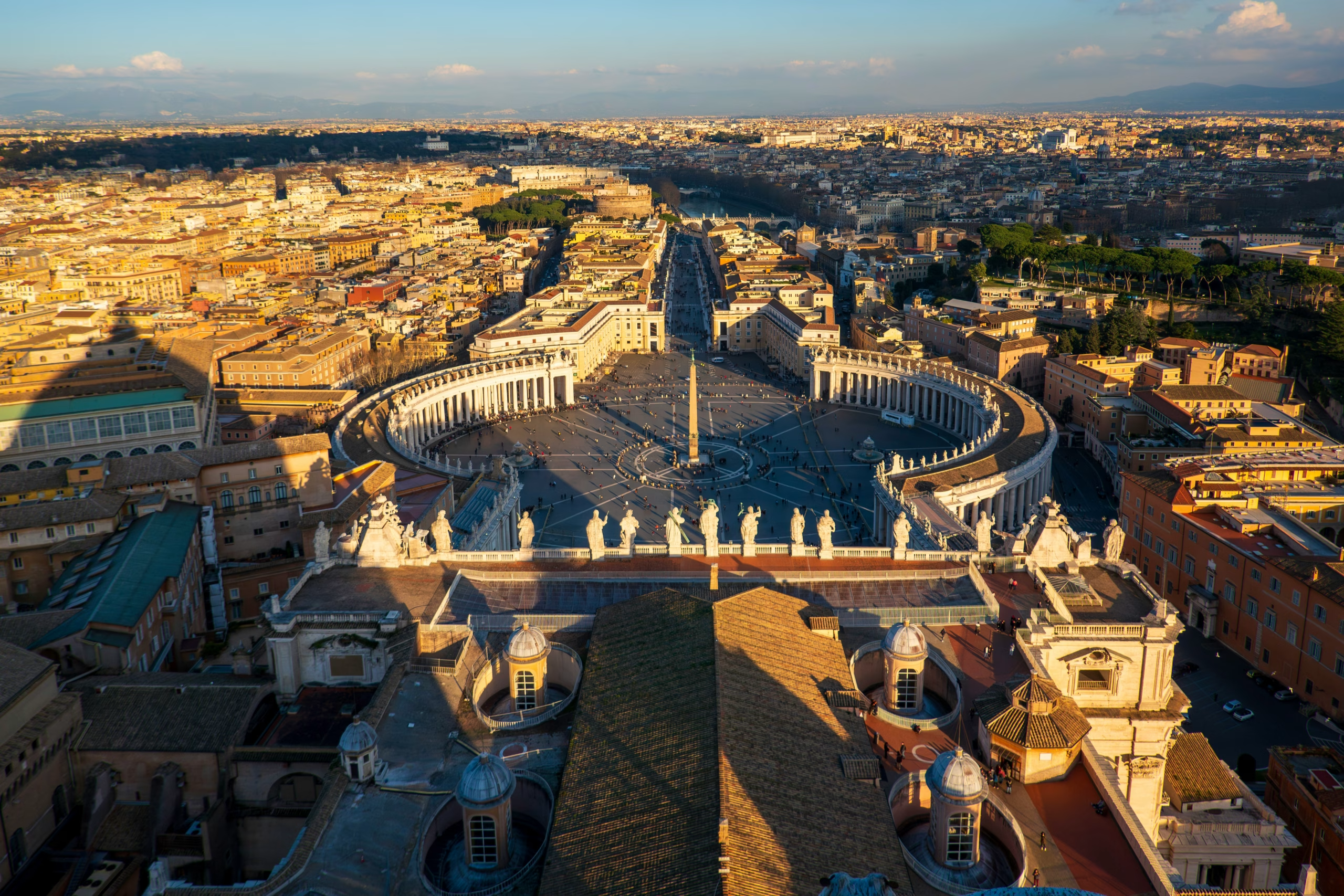
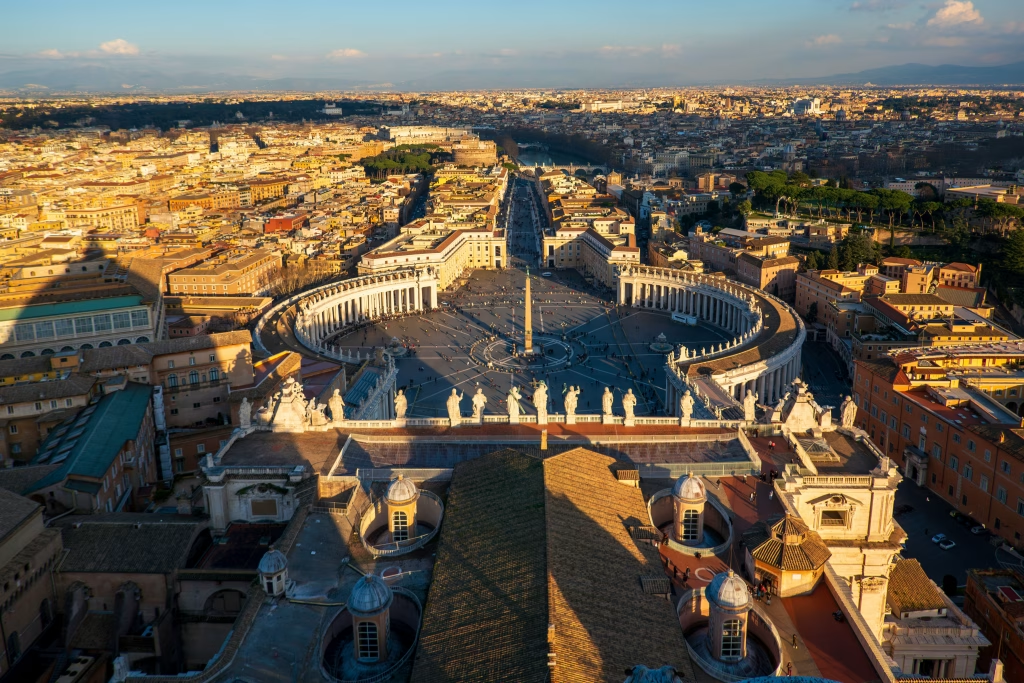
The defining feature of St Peter’s Square Rome is Bernini’s monumental colonnade, a structure that transforms space into meaning.
Rather than enclosing the square rigidly, the colonnade opens in two vast semicircles, creating a powerful sense of movement and inclusion. Moreover, its form is designed to be experienced dynamically, not observed from a single point.
Bernini conceived the colonnade as an architectural embrace.
The four rows of Tuscan columns guide visitors inward, framing the view toward St Peter’s Basilica while maintaining visual openness. As a result, the square feels both expansive and controlled, monumental yet human in scale. This balance is one of the key achievements of Baroque architecture.
Symbolism plays a central role. The colonnade is often interpreted as the arms of the Church welcoming the faithful. Furthermore, the placement of 140 statues of saints along the upper entablature reinforces the idea of a spiritual community gathered around the basilica. Architecture, sculpture and theology merge into a single narrative.
The experience changes as you move. From the outer edges, the columns appear layered and rhythmic. When you approach the center of the square, they align almost perfectly, revealing Bernini’s mastery of perspective. Consequently, the colonnade becomes an optical device as much as a symbolic one.
Understanding Bernini’s colonnade is essential to reading St Peter’s Square. It reveals how Baroque design could shape emotion, movement and meaning through architecture, transforming an open space into a carefully orchestrated experience.
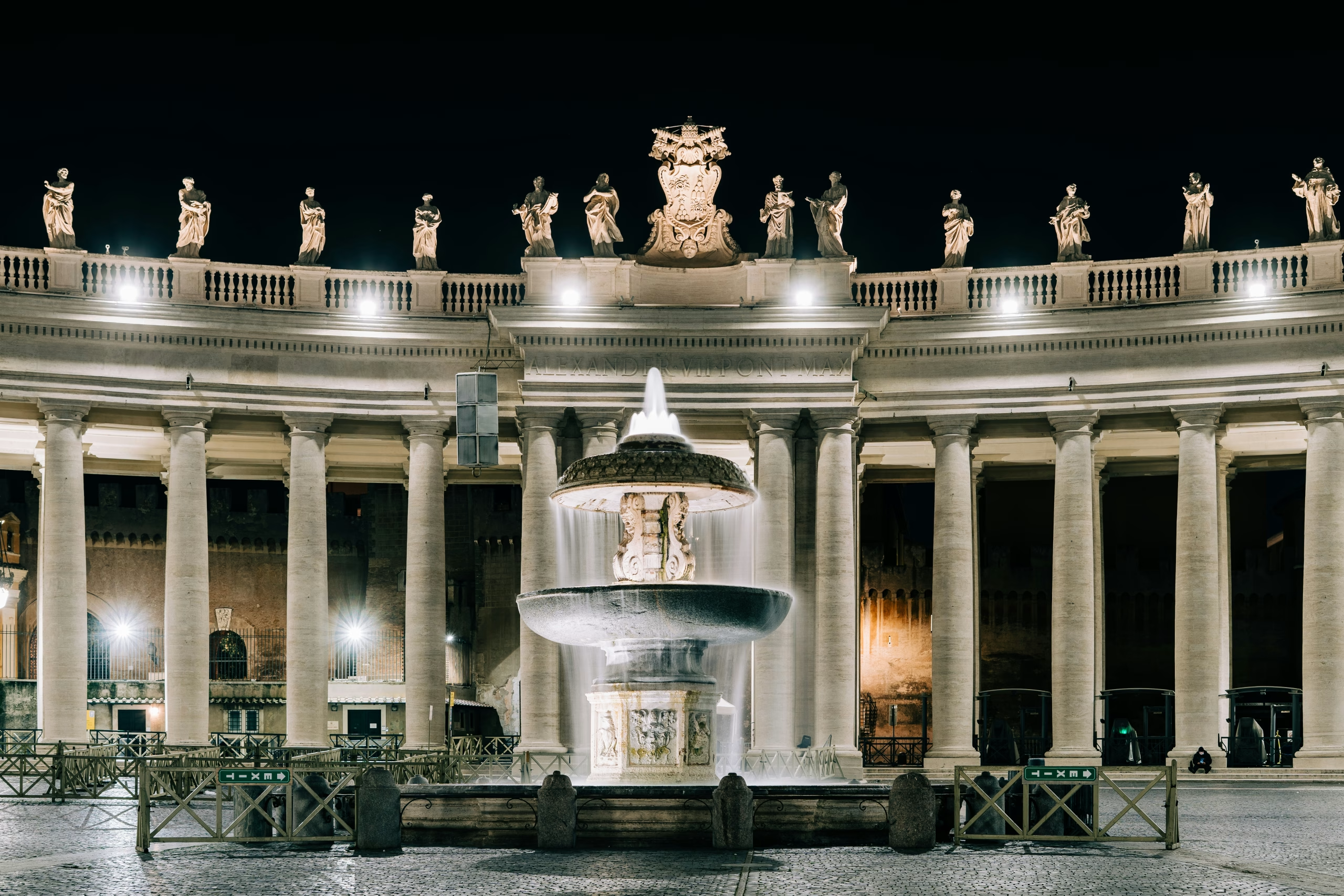
At the center of St Peter’s Square Rome stands the ancient Egyptian obelisk, a silent anchor around which the entire space is organized. Unlike decorative monuments, the obelisk defines the square’s main axis, creating a clear point of orientation both visually and symbolically.
Moreover, its presence connects different layers of history within a single urban gesture.
The obelisk originally stood in ancient Rome and was relocated to the Vatican in the 16th century.
Bernini integrated it into his Baroque design, using it as the focal point from which the square’s geometry unfolds. As a result, the colonnade, fountains and open space align around a stable vertical element that structures movement and perspective.
This vertical axis serves multiple functions.
From a practical standpoint, it organizes large gatherings and guides the flow of people.
Symbolically, it acts as a marker of continuity, linking ancient authority, Christian symbolism and Baroque urban planning.
Furthermore, the cross placed at the top reinforces the transformation of a pagan monument into a Christian symbol.
The obelisk’s relationship with the surrounding architecture becomes most evident when standing at the center of the square. From this point, the symmetry of the colonnade and the alignment toward St Peter’s Basilica become clear.
Consequently, the square reveals itself as a carefully calibrated system, not an open space left to chance.
Understanding the role of the obelisk allows you to read St Peter’s Square as an integrated composition, where geometry, symbolism and movement converge to shape one of the most influential public spaces in the world.
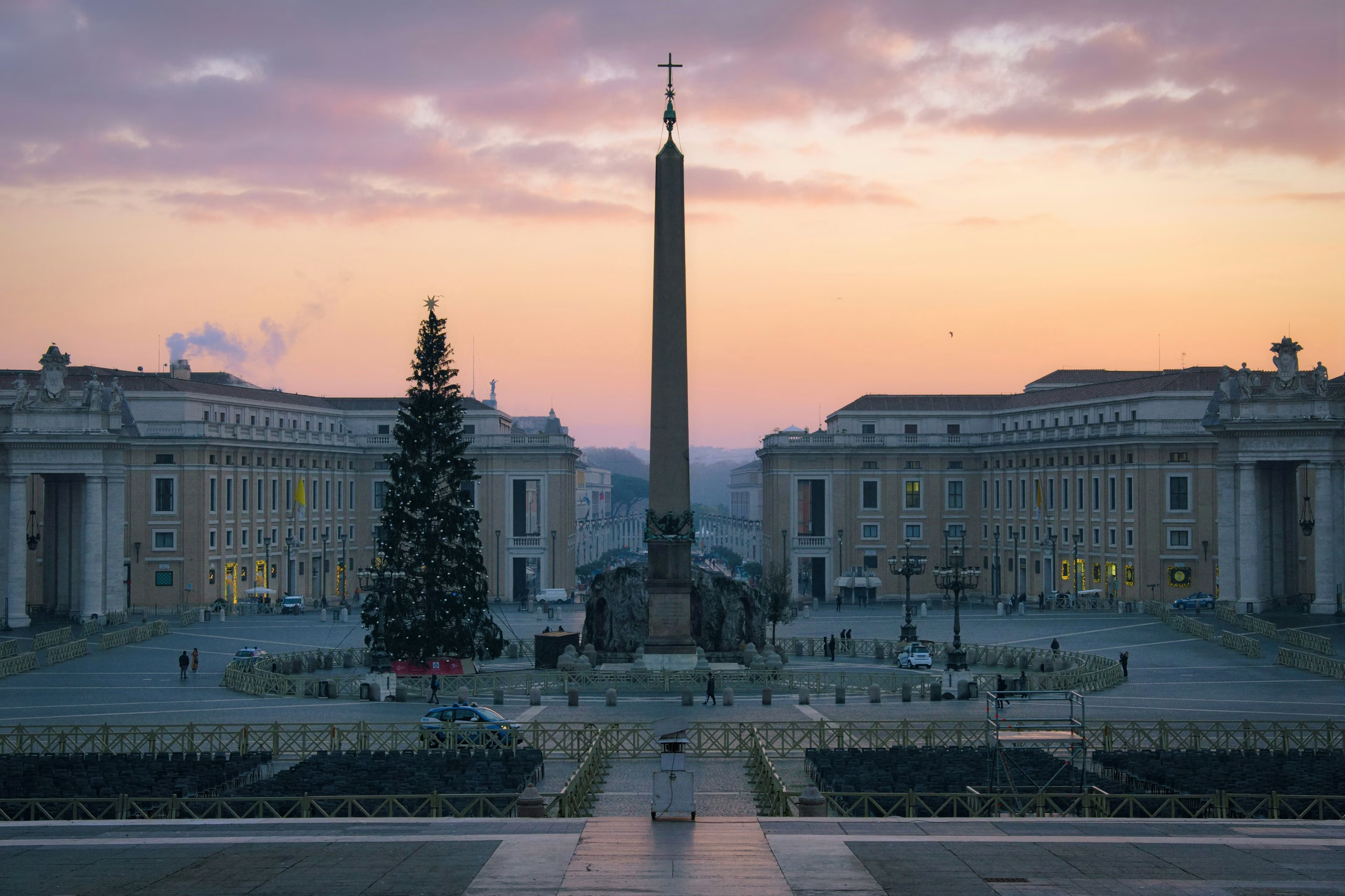
Experiencing St Peter’s Square Rome is defined by movement rather than static observation.
Bernini designed the space to be walked through, allowing perspective and scale to reveal themselves gradually. Moreover, the square changes character depending on where you stand, encouraging constant visual adjustment.
As you enter from Via della Conciliazione, the square opens slowly, creating a sense of anticipation.
The widening space draws visitors forward, while the colonnade frames the approach to the basilica.
As a result, the transition feels ceremonial rather than abrupt, reinforcing the square’s symbolic function.
Movement across the square is carefully controlled.
The curved colonnade guides paths without imposing rigid routes, allowing large crowds to circulate naturally. Furthermore, the gradual shift in perspective emphasizes the basilica’s façade, making it appear closer and more dominant as you advance.
Scale plays a crucial role. Although vast in size, the square never feels disorienting.
The repetition of columns creates a human rhythm that balances the monumentality of the space. Consequently, visitors remain oriented and engaged, even within an area designed to host thousands of people.
Standing at the center, near the obelisk, reveals the square’s full logic.
From this point, symmetry, alignment and proportion come into focus, transforming the experience from emotional to analytical.
Understanding how movement, perspective and scale interact allows you to fully appreciate St Peter’s Square as a masterpiece of Baroque urban design.
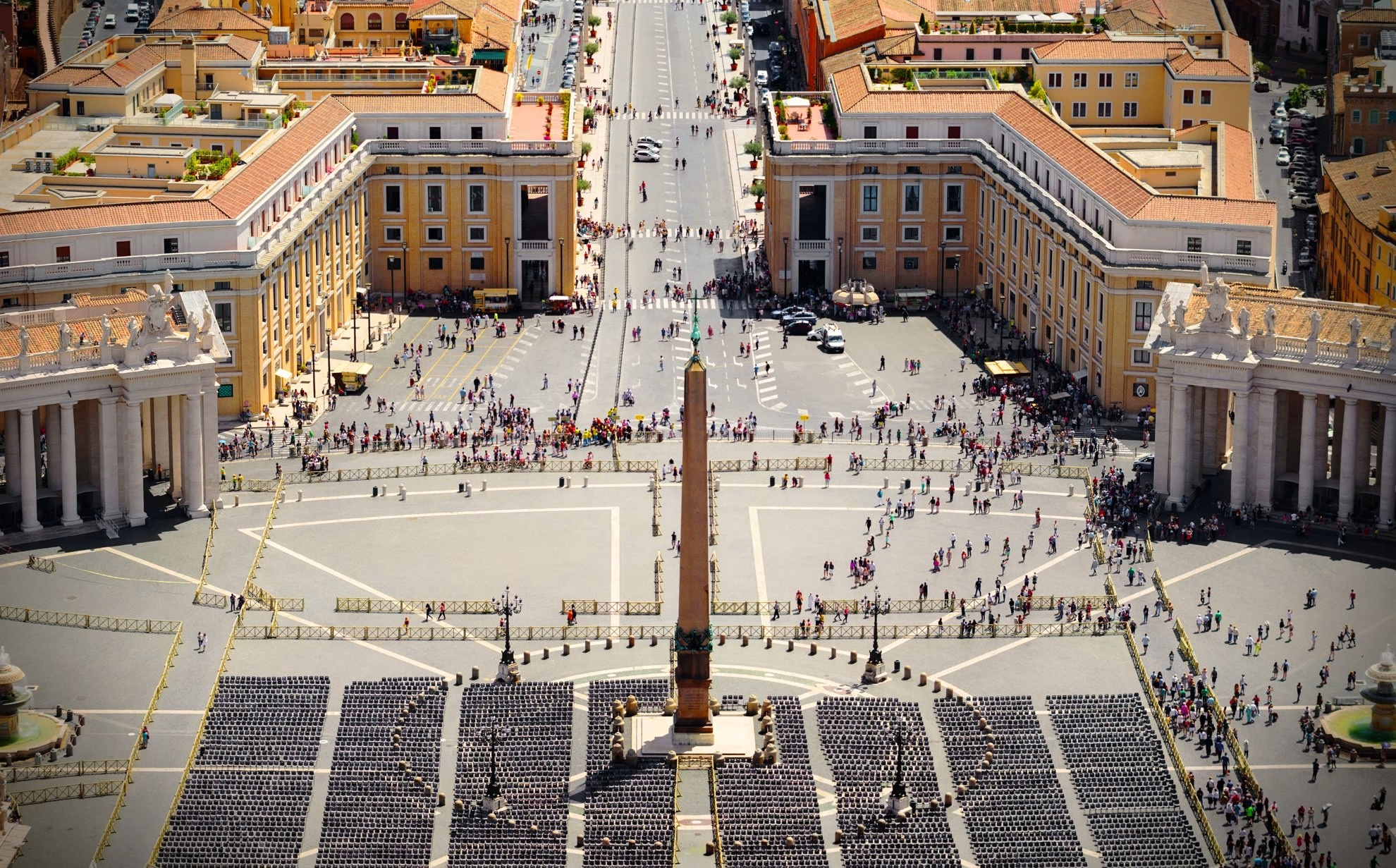
St Peter’s Square was designed not only as an architectural masterpiece, but as a space meant to function on a monumental, collective scale.
From the beginning, its role has been deeply connected to public ceremonies, religious celebrations and moments of shared experience. Moreover, Bernini’s design allows the square to adapt naturally to both everyday use and extraordinary events.
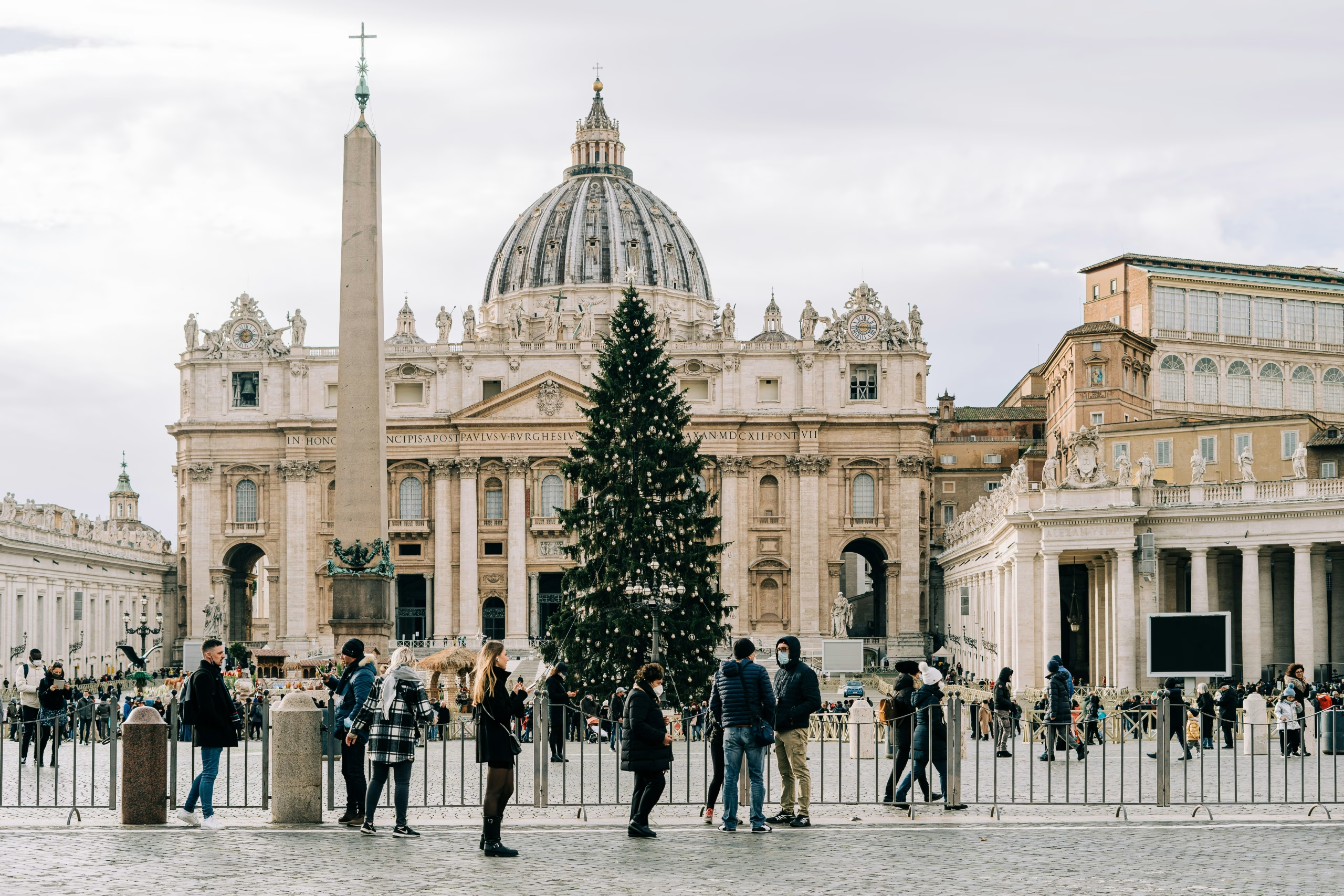
One of the clearest examples of this role emerges during Christmas.
Each year, St Peter’s Square becomes the symbolic heart of the season, hosting the Vatican Christmas tree, Christmas lights and large public gatherings.
As a result, the square transforms visually and emotionally, reinforcing its function as a place of collective ritual rather than static architecture.
The interplay between seasonal lighting, temporary structures and Bernini’s colonnade highlights how the space adapts to celebration without losing its architectural clarity.
Major papal celebrations, such as Christmas Mass and Easter events, further highlight the square’s ceremonial purpose.
The open central area accommodates vast crowds, while the colonnade defines a clear perimeter without enclosing the space. Furthermore, lighting, temporary structures and symbolic elements interact with Bernini’s architecture rather than overwhelming it.
Outside of major events, the square remains a place of transition and pause.
Visitors cross it on their way to St Peter’s Basilica, linger beneath the colonnade or observe daily activity within a monumental setting.
Consequently, St Peter’s Square functions simultaneously as a sacred forecourt, a civic gathering space and a living part of the city.
Understanding this dual nature explains why the square remains so powerful today.
It continues to operate exactly as intended: a space where architecture shapes collective experience, adapting to time, ritual and meaning without losing its identity.
The way you arrive at St Peter’s Square Rome deeply influences how the space is perceived.
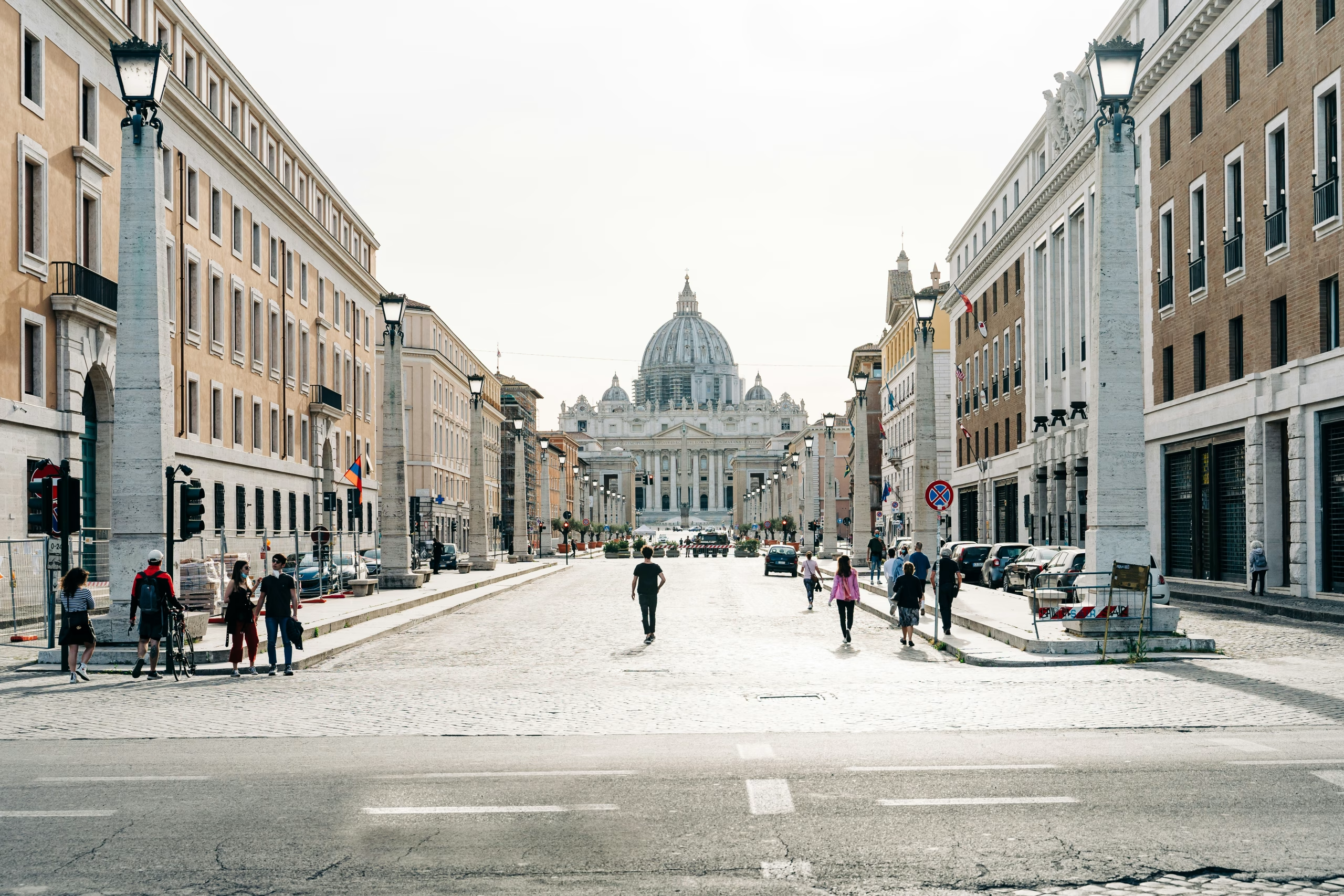
Via della Conciliazione, the wide avenue leading to the Vatican, plays a decisive role in this experience.
Moreover, its presence tells a complex and often surprising story about power, politics and urban transformation.
Via della Conciliazione did not exist in Bernini’s time. Until the 20th century, the approach to St Peter’s Square passed through a dense medieval district known as the Spina di Borgo.
Narrow streets gradually opened onto the square, creating a dramatic sense of sudden expansion — an effect fully aligned with Baroque spatial thinking.
As a result, the piazza was meant to be discovered rather than announced.
The avenue was created in the 1930s, following the Lateran Pacts between the Vatican and the Italian state. Entire neighborhoods were demolished to open a direct visual axis toward the basilica.
From a distance, the dome now dominates the view, growing larger as you approach.
This new perspective emphasizes monumentality and clarity.
However, this transformation altered the original Baroque intention.
Instead of surprise, the experience became frontal and controlled. Furthermore, the square shifted from a hidden embrace to a monumental destination framed in advance.
Understanding this contrast is essential.
Walking along Via della Conciliazione highlights the tension between modern urban planning and Bernini’s Baroque vision. When you finally enter the square, the sudden expansion of space still works — but with a different emotional impact.
Via della Conciliazione is a lens through which the meaning, power and evolution of St Peter’s Square can be more fully understood.
Visiting St Peter’s Square Rome is straightforward, but understanding how and when to approach it can significantly improve the experience.
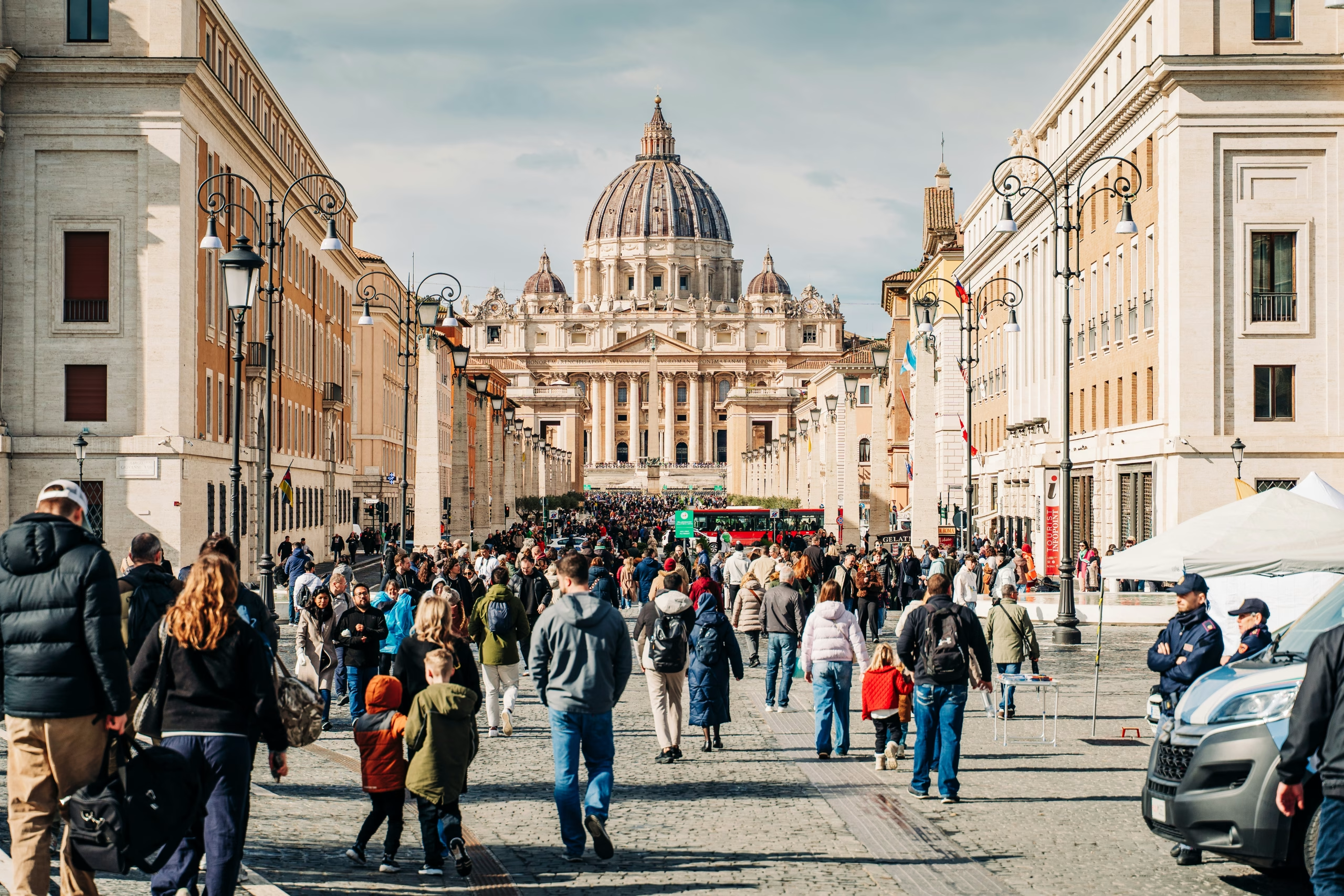
Early morning is the ideal time to observe the square with fewer crowds and a calmer atmosphere.
Moreover, this is when the geometry of the colonnade and the central axis are easiest to read.
Late afternoon offers a different perspective.
The light becomes warmer, enhancing the stone surfaces and deepening shadows along the columns. As a result, the square gains a stronger sense of depth and rhythm, especially around the obelisk and the fountains.
Access to St Peter’s Square is free and open throughout the day.
However, security checks may be in place depending on events, religious celebrations or crowd levels. Furthermore, during major papal ceremonies, parts of the square may be reorganized to manage large gatherings, temporarily changing normal circulation patterns.
Comfortable shoes are recommended, as the square is vast and often combined with visits to St Peter’s Basilica or the surrounding Vatican area.
Standing near the center of the square can feel overwhelming during peak hours, so moving toward the edges of the colonnade offers shade, quieter viewpoints and a more balanced perspective.
Finally, remember that St Peter’s Square functions both as a monumental space and a living one.
Respectful behavior is expected, especially during religious moments. Approaching the square with awareness allows you to experience not only its scale, but also the intention behind Bernini’s design.
What is St Peter’s Square and who designed it?
St Peter’s Square is the monumental open space in front of St Peter’s Basilica in Vatican City. It was designed in the 17th century by Gian Lorenzo Bernini as a masterpiece of Baroque urban planning.
Why is St Peter’s Square considered a Baroque masterpiece?
Because it combines architecture, symbolism and movement into a single design. Bernini’s colonnade, the central obelisk and the controlled perspective create an experience meant to guide and involve the visitor.
Is St Peter’s Square free to visit?
Yes. St Peter’s Square is a public space and can be accessed freely throughout the day. However, security checks may be in place during events or religious celebrations.
What is the meaning of Bernini’s colonnade?
The colonnade is often interpreted as the arms of the Church embracing the faithful. Architecturally, it also controls movement, perspective and scale within the square.
What happens in St Peter’s Square during Christmas?
During Christmas, the square hosts the Vatican Christmas tree, Christmas lights, and major religious celebrations, transforming it into the symbolic center of the season in Rome.
What is the best time to visit St Peter’s Square?
Early morning and late afternoon are ideal. These times offer fewer crowds and better light, making it easier to appreciate the architecture and spatial design.