
Trip in Art
December 12, 2025
Exploring Piazza Navona Rome means entering one of the city’s most theatrical urban spaces, where art, architecture and history unfold in continuous motion.
More than a Baroque square, Piazza Navona is a place shaped by layers that span from ancient Rome to the papal city.
Moreover, its long, open form creates a sense of movement that guides the eye and the body through the space.
What makes Piazza Navona unique is the way different eras coexist so naturally. Beneath the fountains and palaces lies the outline of an ancient stadium, while above it Baroque Rome stages one of its most powerful visual performances.
As a result, the square feels less like a static monument and more like a living composition.
This guide offers a curated reading of Piazza Navona, focusing on its origins, masterpieces and quieter details.
By slowing down and observing with intention, the square reveals itself as one of the clearest expressions of Rome’s ability to transform history into urban art.
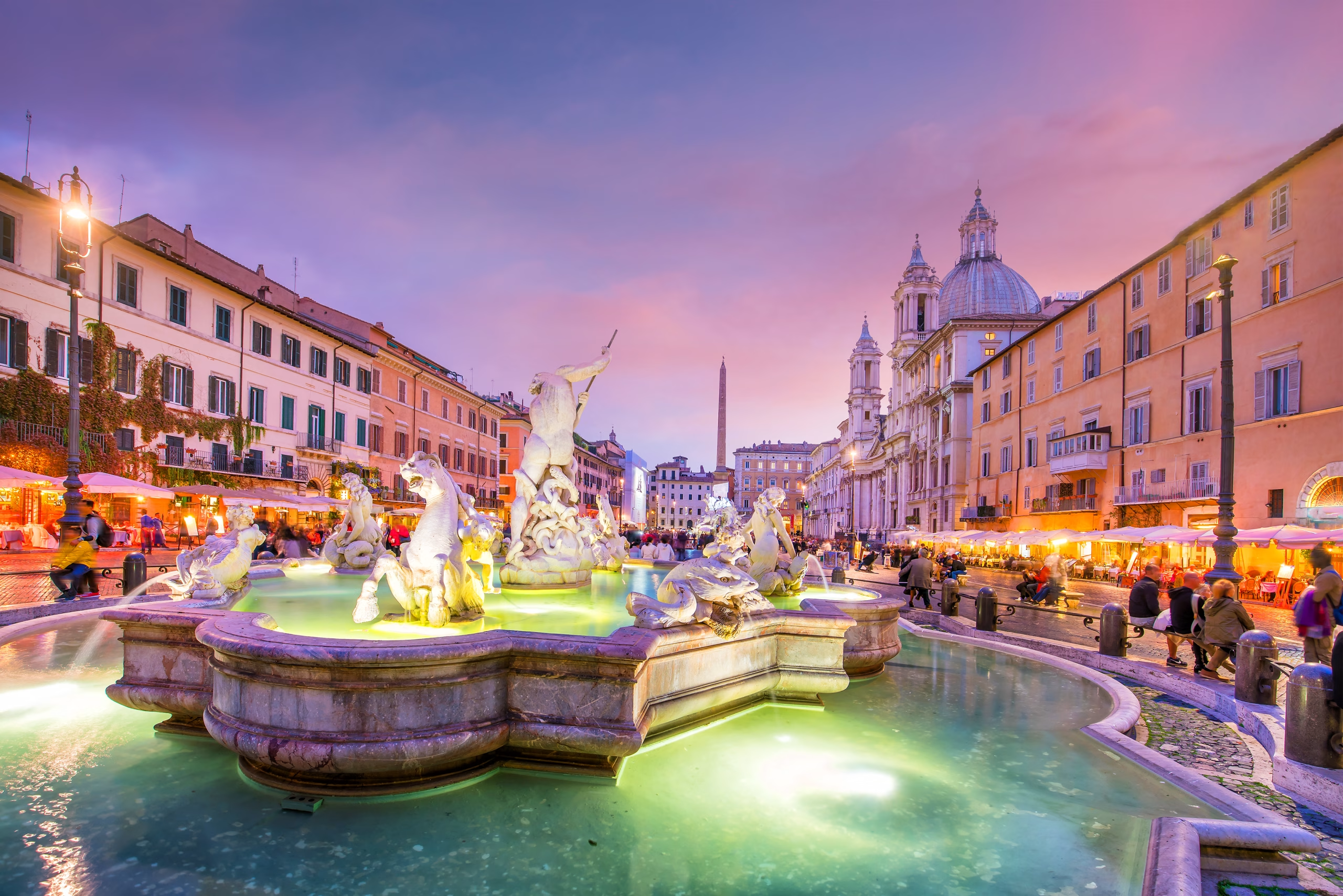
Piazza Navona owes its unmistakable shape to a structure hidden in plain sight: the Stadium of Domitian, built in the 1st century AD.
Unlike many Roman squares that evolved organically, Piazza Navona preserves the exact outline of an ancient athletic arena. Moreover, this continuity explains why the space feels elongated, open and fluid rather than enclosed.
The stadium was designed for athletic competitions and public games, with tiers of seating running along the perimeter.
Over time, as the stadium fell out of use, houses and palaces were built directly on its foundations.
As a result, the curve of the ancient structure survived, shaping the piazza we see today.
Walking across Piazza Navona, you are literally moving within the footprint of ancient Rome.
The palaces that frame the square follow the same rhythm imposed by the stadium’s walls, creating a rare example of urban continuity across centuries. Furthermore, this ancient layout offered Baroque architects a ready-made stage for visual drama, movement and perspective.
Archaeological remains of the Stadium of Domitian can still be visited beneath the square, reinforcing the idea that Piazza Navona is a layered space rather than a single-period monument.
Consequently, the piazza should be read as a dialogue between ancient engineering and Baroque imagination.
Understanding these origins changes the experience. Piazza Navona is not simply a scenic backdrop; it is a space where Roman history was transformed, reused and reinterpreted, turning an ancient arena into one of the city’s most iconic urban compositions.
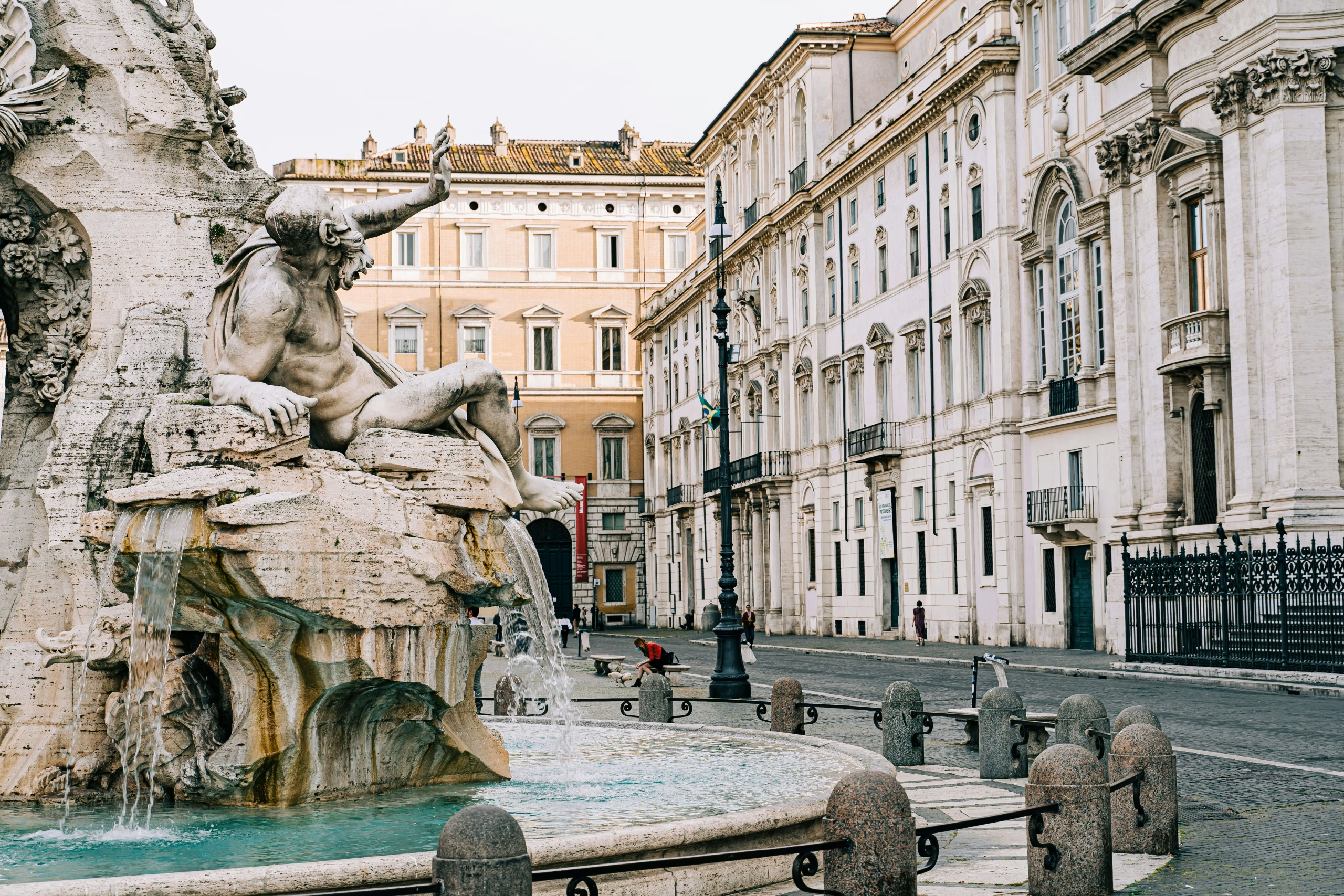
Piazza Navona is one of the clearest expressions of Baroque Rome, a space where art, power and urban design merge into a single theatrical setting.
Moreover, the square reflects the vision of Pope Innocent X Pamphilj, whose family palace dominates the western side.
Under his patronage, Piazza Navona was transformed into a statement of prestige and authority.
At the center of this transformation stands Gian Lorenzo Bernini, the leading sculptor of the Roman Baroque. His interventions were not isolated artworks, but elements carefully designed to interact with the surrounding architecture and the long shape of the piazza.
As a result, movement becomes the guiding principle: water flows, figures twist, and stone appears almost alive.
Opposite Bernini’s sculptural drama rises the church of Sant’Agnese in Agone, closely associated with Francesco Borromini. While Bernini’s language is expansive and expressive, Borromini’s architecture introduces a more controlled, rhythmic tension.
The façade curves inward and outward, creating a dynamic dialogue with the square rather than a static backdrop.
Furthermore, the church’s vertical emphasis balances the horizontal stretch of the piazza.
What makes Piazza Navona exceptional is not competition, but coexistence.
Sculpture, architecture and urban space are orchestrated into a unified composition.
The square functions like a stage where different artistic voices contribute to a single narrative of movement, illusion and power.
Reading Piazza Navona through this lens reveals the essence of the Baroque: not decoration for its own sake, but a deliberate strategy to engage the viewer emotionally and physically.
Consequently, the piazza becomes an experience rather than a sight to be observed from a distance.
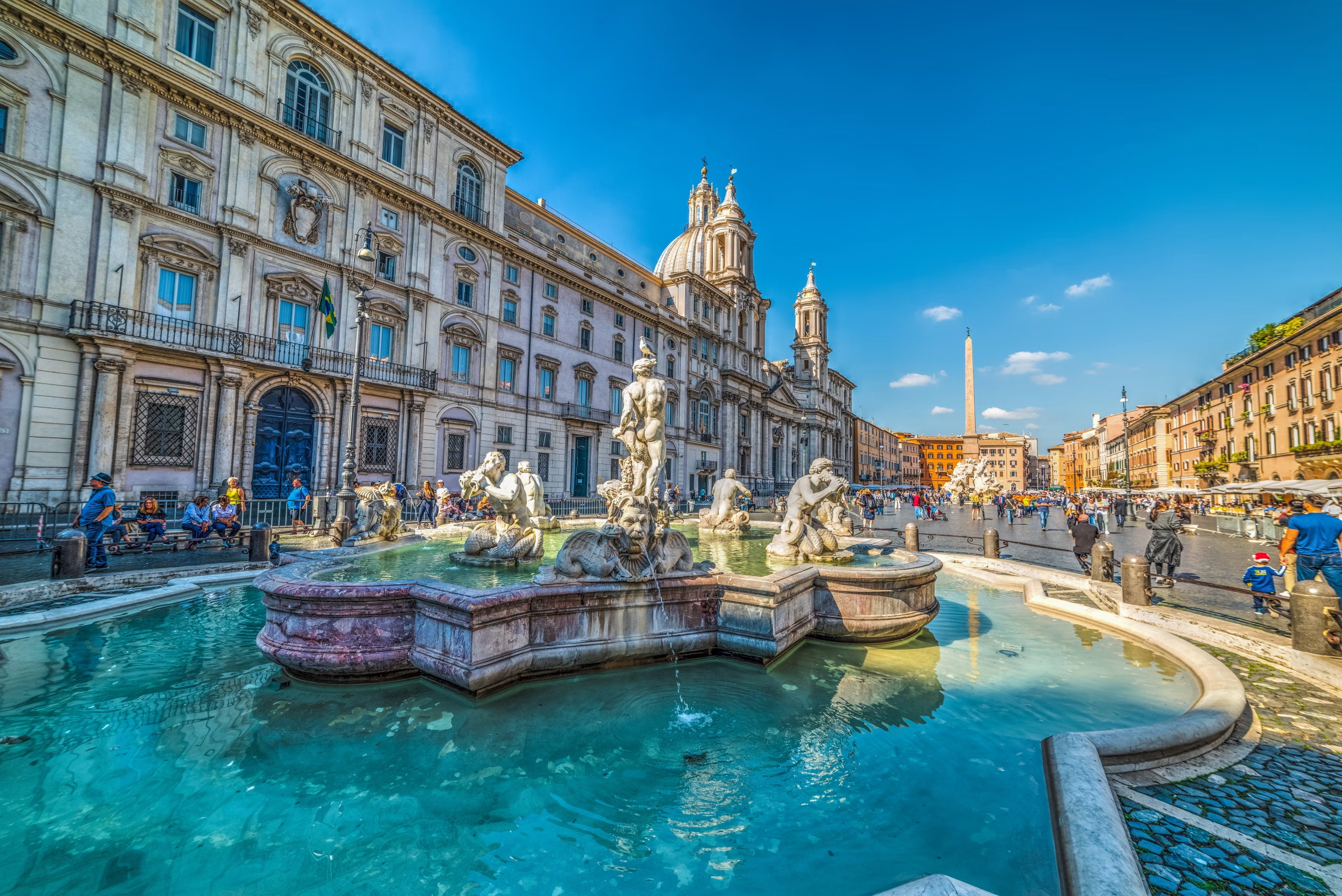
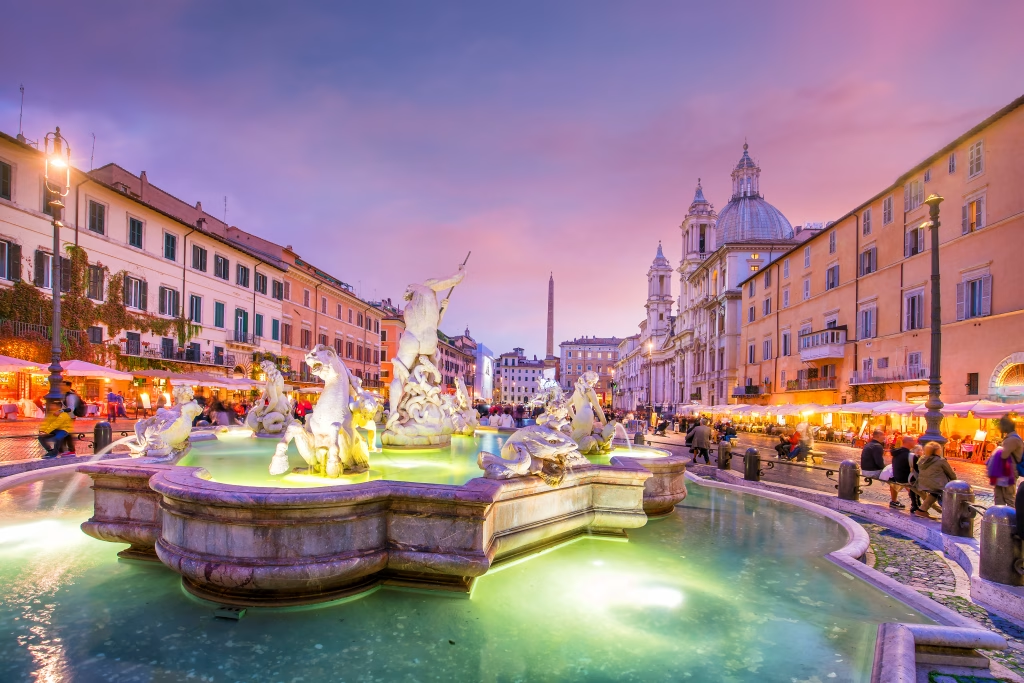
At the center of Piazza Navona rises the Fountain of the Four Rivers, Bernini’s most powerful urban sculpture. Rather than a single focal point, the fountain is conceived as a dynamic composition that unfolds as you move around it.
Moreover, its meaning emerges through observation, not from a fixed viewpoint.
The four monumental figures represent the major rivers of the known continents at the time: the Nile, the Ganges, the Danube and the Río de la Plata.
Each figure reacts differently to the space, creating a rhythm of gestures, tensions and movements. As a result, the fountain feels alive, shaped by contrasts between force and balance.
Bernini’s mastery lies in the relationship between sculpture and void.
The rocky base opens into arches and cavities, allowing light and shadow to animate the surface.
Furthermore, the central obelisk rises directly from the sculptural mass, linking ancient Egyptian symbolism with Baroque theatricality.
Animals and natural elements reinforce the narrative.
The lion, the horse and the serpent are not decorative details, but expressive accents that guide the viewer’s eye. Water flows irregularly, enhancing the sense of movement and unpredictability.
Consequently, the fountain becomes an experience rather than an object to be admired at a glance.
Taking time to circle the monument reveals how Bernini transformed stone into a choreography of gestures, textures and space. In Piazza Navona, the fountain functions as the emotional core of the square, drawing the surrounding architecture into its orbit.
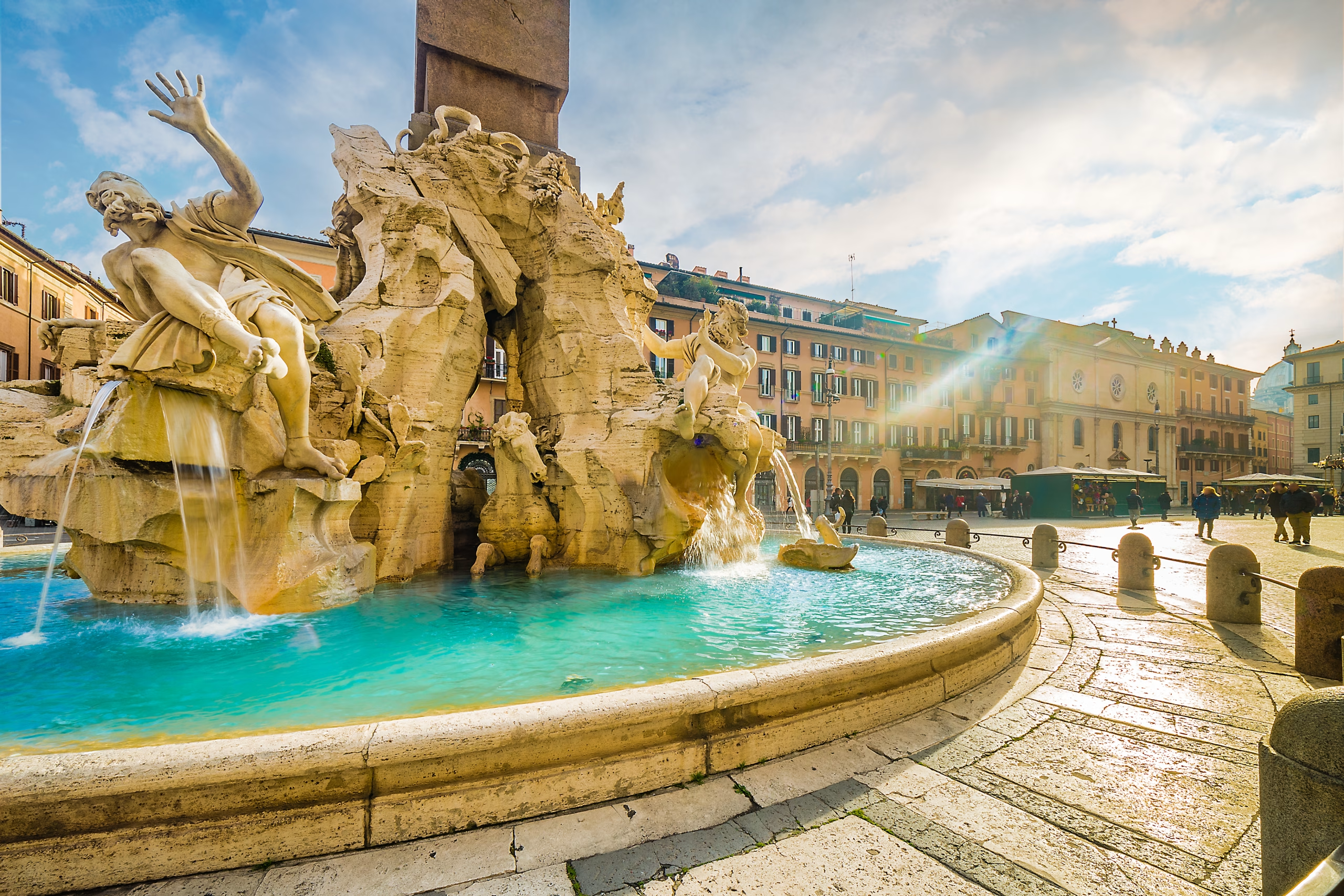
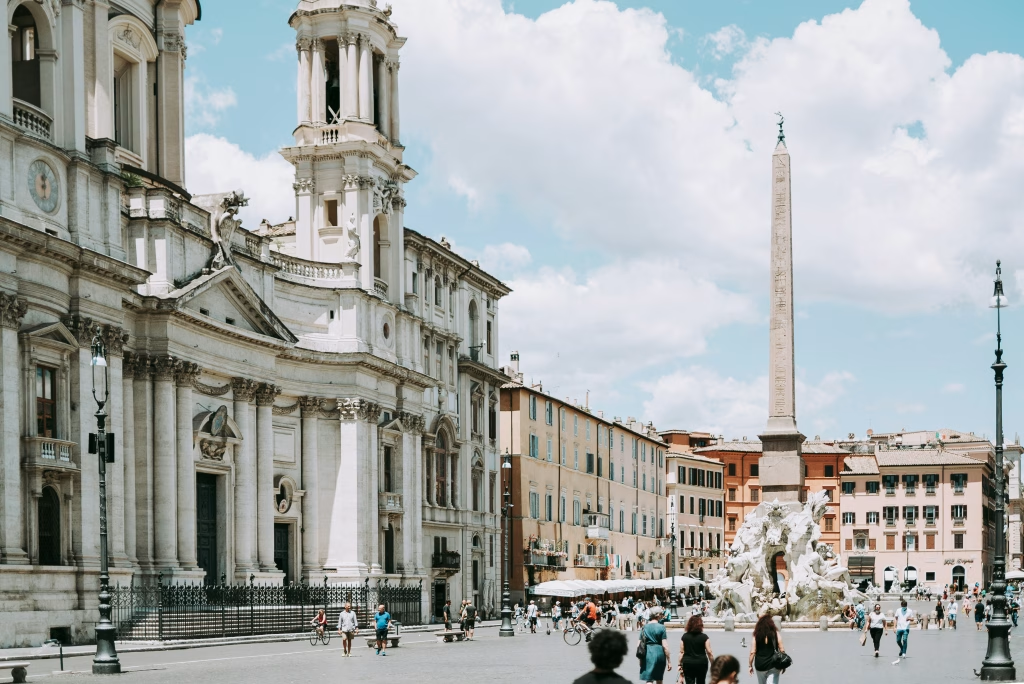
Facing Bernini’s Fountain of the Four Rivers, the church of Sant’Agnese in Agone introduces a different kind of Baroque language.
Its architecture does not rely on sculptural drama, but on rhythm, geometry and controlled movement. Moreover, the church plays a crucial role in balancing the visual energy of Piazza Navona.
The façade curves inward, creating a sense of tension and attraction toward the center.
This concave movement is not accidental: it responds directly to the shape of the square, softening its long axis and guiding the viewer’s gaze upward.
As a result, the church feels integrated into the piazza rather than placed against it.
Vertical elements define the composition.
Twin bell towers frame the central dome, creating a clear architectural hierarchy.
Furthermore, the dome rises with restraint, avoiding excess decoration and relying instead on proportion and structure. This choice reinforces the contrast with Bernini’s expressive fountain, allowing sculpture and architecture to coexist without competing.
Sant’Agnese in Agone is often associated with Francesco Borromini, whose influence is evident in the dynamic geometry and disciplined surfaces.
While the church’s construction involved multiple architects, Borromini’s approach shaped its most distinctive features: movement through form rather than ornament.
Standing in front of the church, it becomes clear that Sant’Agnese is not meant to overpower the square. Instead, it anchors Piazza Navona with architectural clarity.
Consequently, the dialogue between church and fountain defines the square’s identity, revealing Baroque Rome as a carefully orchestrated balance between emotion and control.
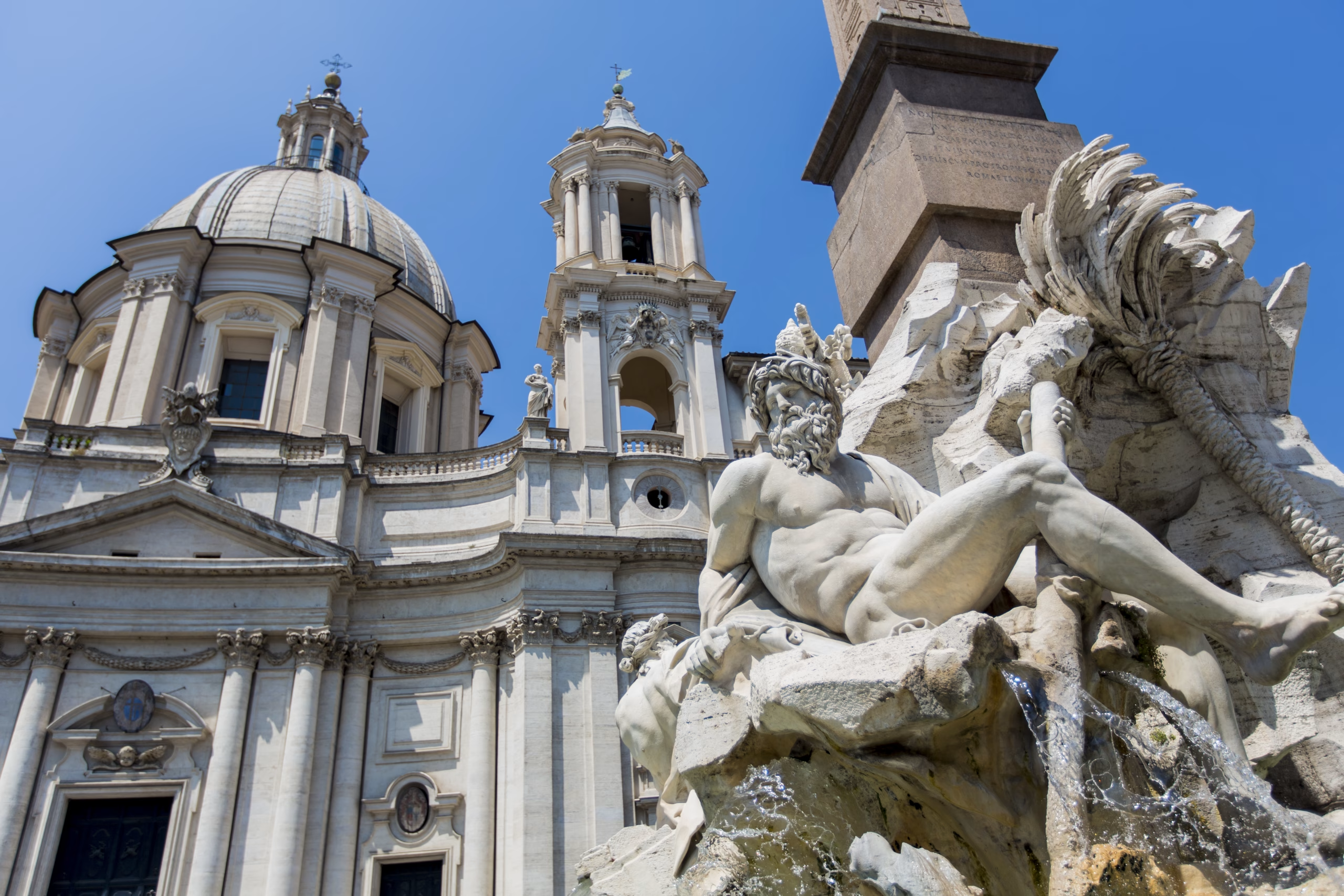
While Piazza Navona is often experienced from its central axis, some of its most interesting details emerge at the edges. Moving slightly away from the fountains allows you to observe the square from different angles, where architecture and space feel more balanced and less theatrical.
Moreover, these quieter zones reveal how the piazza connects naturally with the surrounding streets.
Along the long sides of the square, notice how the palaces follow the ancient stadium’s curve.
Their façades are not uniform, yet they maintain a visual rhythm that reinforces the piazza’s elongated form. As a result, even small details—window frames, cornices, subtle color variations—become part of a larger architectural composition.
The short streets opening onto the piazza offer moments of pause.
Stepping into them briefly creates a contrast between movement and stillness, helping you reset your perception of the square. Furthermore, these transitions highlight how Piazza Navona was designed not as an isolated monument, but as a space woven into the city’s fabric.
Looking back toward the square from these side perspectives changes the experience.
The fountains appear framed rather than dominant, and the church façade reads as part of a broader urban scene. Consequently, Piazza Navona reveals a quieter identity—one that rewards observation over spectacle.
Taking time to explore these marginal viewpoints allows you to experience the piazza with greater intimacy. It becomes less about crowds and photographs, and more about understanding how space, architecture and daily life interact within one of Rome’s most iconic settings.
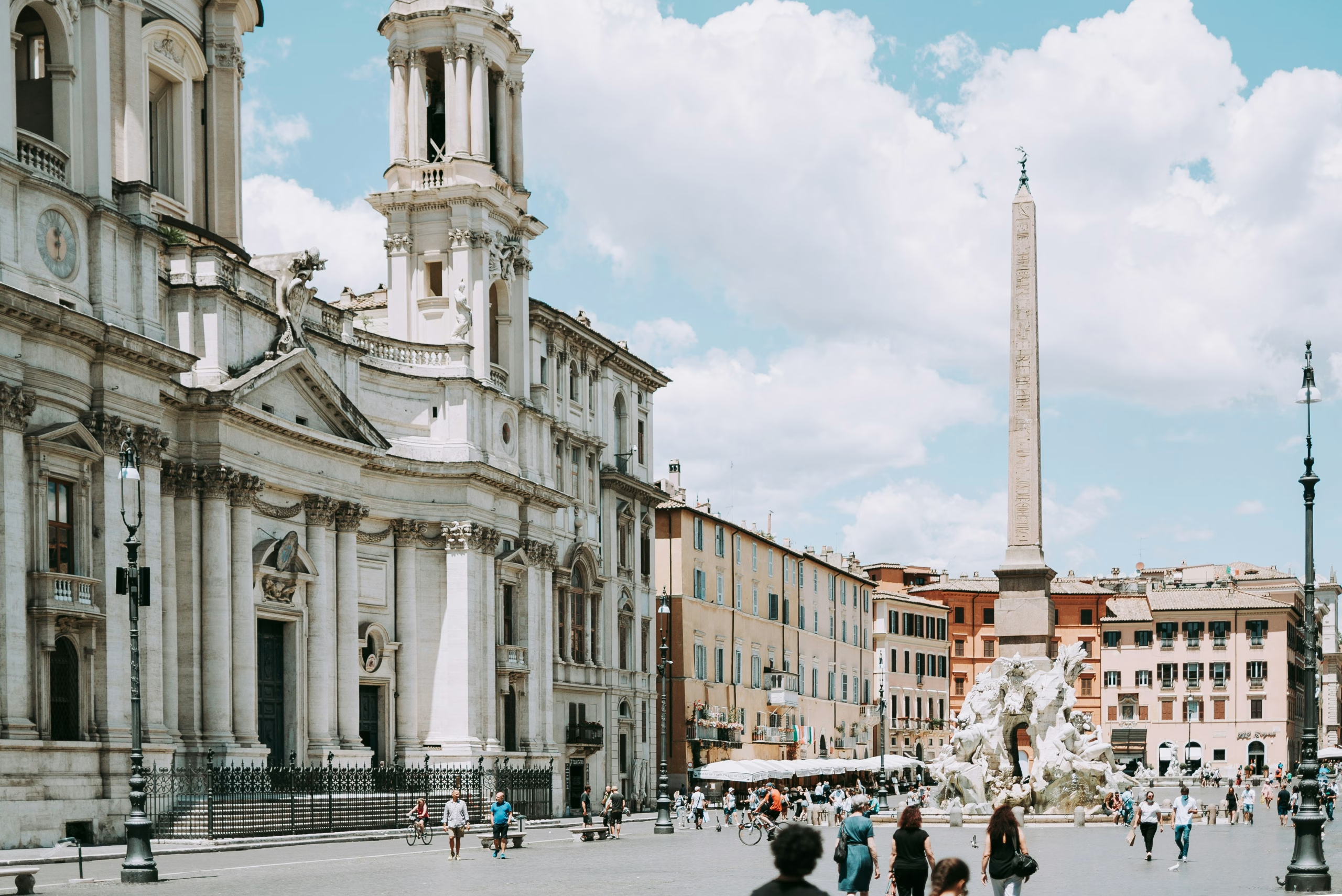
Visiting Piazza Navona is simple, but timing makes a real difference.
Early morning is the best moment to experience the square with minimal crowds and softer light.
Moreover, this is when the architecture and fountains can be observed without constant movement around them.
Late afternoon offers another balanced option. The light becomes warmer, enhancing textures and stone surfaces, while the atmosphere remains lively without being overwhelming.
As a result, this time of day works well for photography and slow exploration.
Piazza Navona is always accessible and does not require tickets.
However, street performers and temporary installations may appear depending on the season.
Furthermore, cafés and outdoor seating can alter walking paths, so staying near the edges of the square allows for a more fluid visit.
Because the piazza is a popular destination, basic awareness is recommended, especially during peak hours. Keep personal belongings secure and avoid standing still in the central flow of foot traffic. Stepping into side streets offers quick relief from crowds and helps reset the experience.
Finally, remember that Piazza Navona is best enjoyed as part of a broader walk.
Connecting it with nearby areas such as Campo de’ Fiori, the Pantheon or Via Giulia allows the square to be read within its urban context. Consequently, the visit feels less like a stop and more like a continuous discovery of Rome’s historic center.
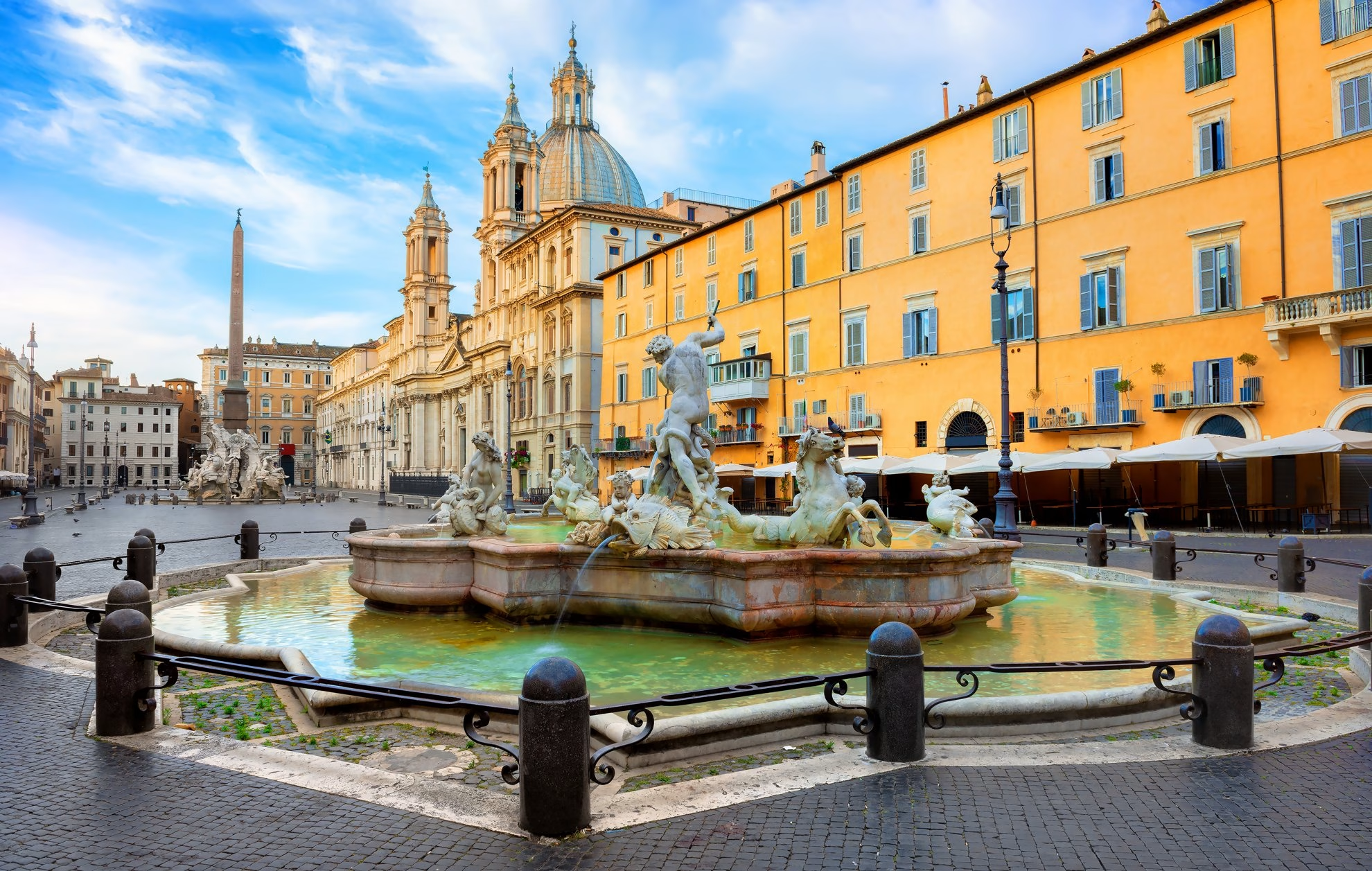
Why is Piazza Navona shaped the way it is?
Because it follows the outline of the ancient Stadium of Domitian. The Baroque square was built directly on its foundations, preserving the original elongated form.
Who designed the Fountain of the Four Rivers?
The fountain was designed by Gian Lorenzo Bernini in the 17th century. It represents four major rivers and stands at the center of the square.
Is Sant’Agnese in Agone by Borromini?
The church involved several architects, but Francesco Borromini strongly influenced its design, especially the dynamic façade and architectural rhythm.
Is Piazza Navona free to visit?
Yes. Piazza Navona is a public square and can be visited at any time without tickets.
What is the best time to visit Piazza Navona?
Early morning and late afternoon are ideal. These times offer better light and fewer crowds, making observation more enjoyable.
How much time should I spend in Piazza Navona?
A slow visit of 30–45 minutes is sufficient. Moreover, combining it with nearby areas enhances the experience.
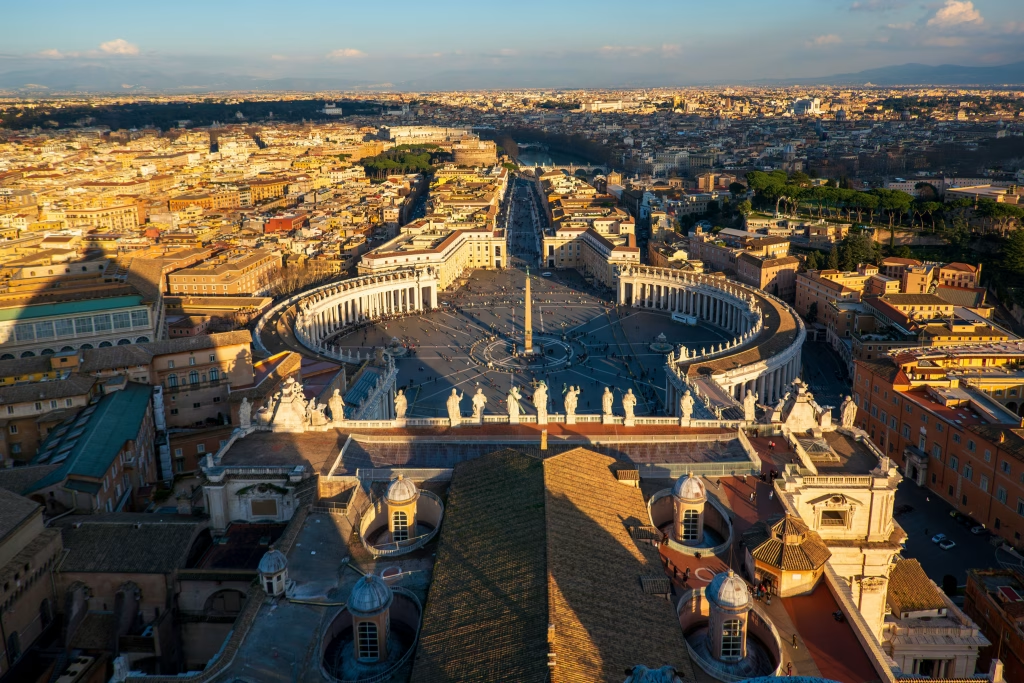
Semi-private tours with expert guides — Colosseum, Vatican, Baroque Rome and more. Maximum 8 people per group.
Book Your Experience →