
Trip in Art
December 9, 2025
Visiting the Altare della Patria: what to see and how to approach the Vittoriano reveals far more than a monumental landmark in the heart of Rome.
The complex blends architecture, national memory and panoramic views in a single, cohesive experience.
Moreover, its scale and symbolism often surprise visitors who expect only a viewpoint or a ceremonial site.
The Vittoriano is a place designed to be read slowly: statues, reliefs and architectural lines form a narrative about Italy’s identity and the ideals that shaped the nation.
As a result, exploring it with intention allows you to appreciate not only the monument’s grandeur, but also its quieter corners and lesser-known museums.
This guide offers a curated path through the Altare della Patria, highlighting what to see, how to visit its terraces and which spaces reveal the monument’s true character.
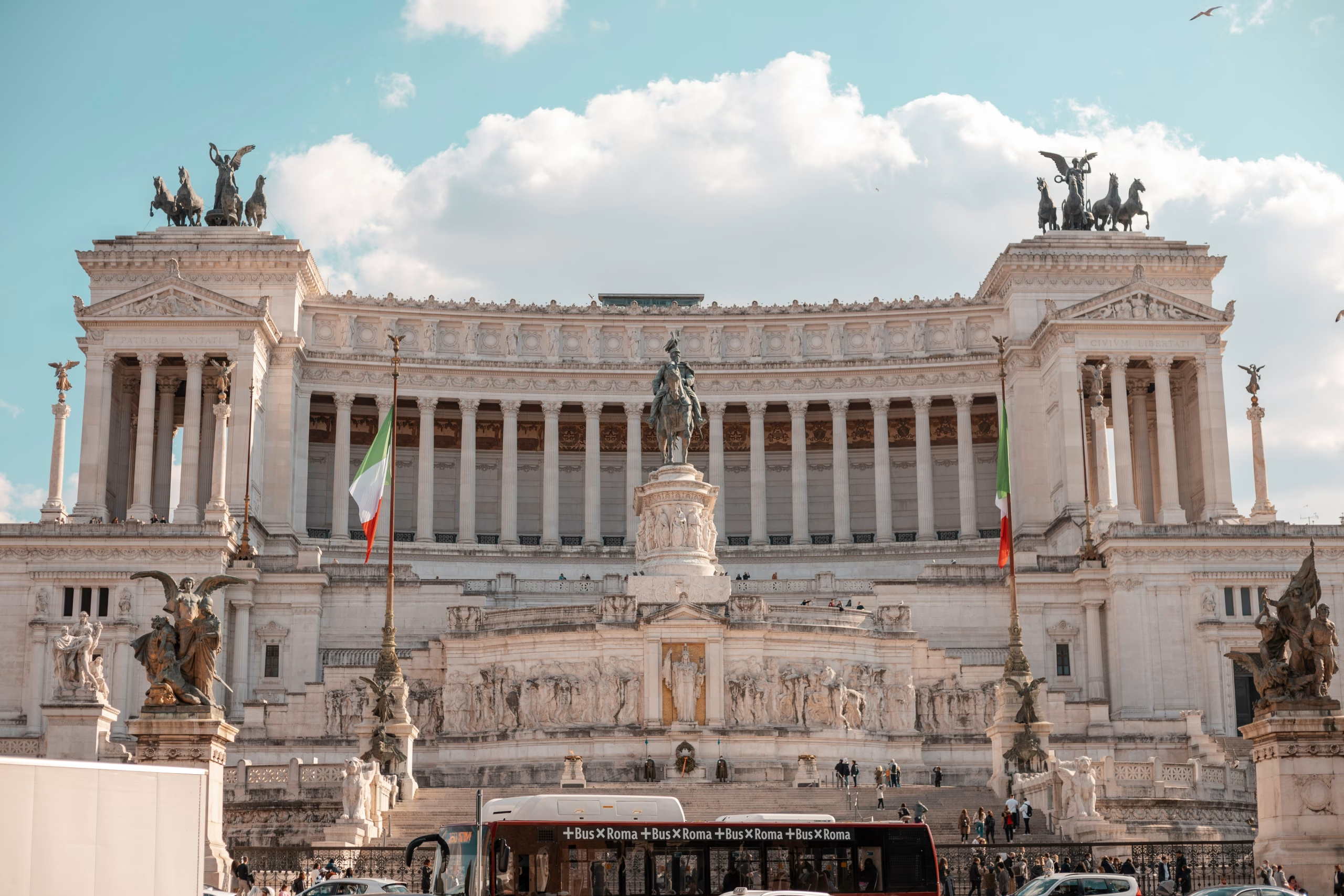
Many visitors arrive in Piazza Venezia without fully understanding whether the Altare della Patria and the Vittoriano refer to the same monument.
In reality, they are two parts of a single architectural vision.
The Vittoriano is the entire complex, conceived at the end of the 19th century to celebrate Italy’s unification and honor Victor Emmanuel II, the first king of the unified nation.
Moreover, its strategic location—between the Capitoline Hill and the Roman Forum—was chosen to place modern Italy in a visual dialogue with its ancient past.
The Altare della Patria, instead, is the emotional core of the monument.
Added in the early 20th century, it functions as a sanctuary of national identity. At its center lies the Tomb of the Unknown Soldier, marked by an eternal flame and a continuous military guard.
As a result, the space carries a solemn tone, and visitors are encouraged to move quietly and respectfully.
Understanding this distinction helps you read the monument with greater clarity.
The Vittoriano expresses the grand architectural ambition: sweeping staircases, symbolic porticoes, allegorical statues and panoramic terraces that rise above the city.
Furthermore, its sculptural program communicates ideals such as unity, progress and civic virtue. The Altare della Patria, on the other hand, represents the monument’s intimate dimension, where themes of sacrifice and national memory take center stage.
As a consequence, the Vittoriano becomes more than a viewpoint: it becomes a key to understanding the cultural identity of modern Italy.
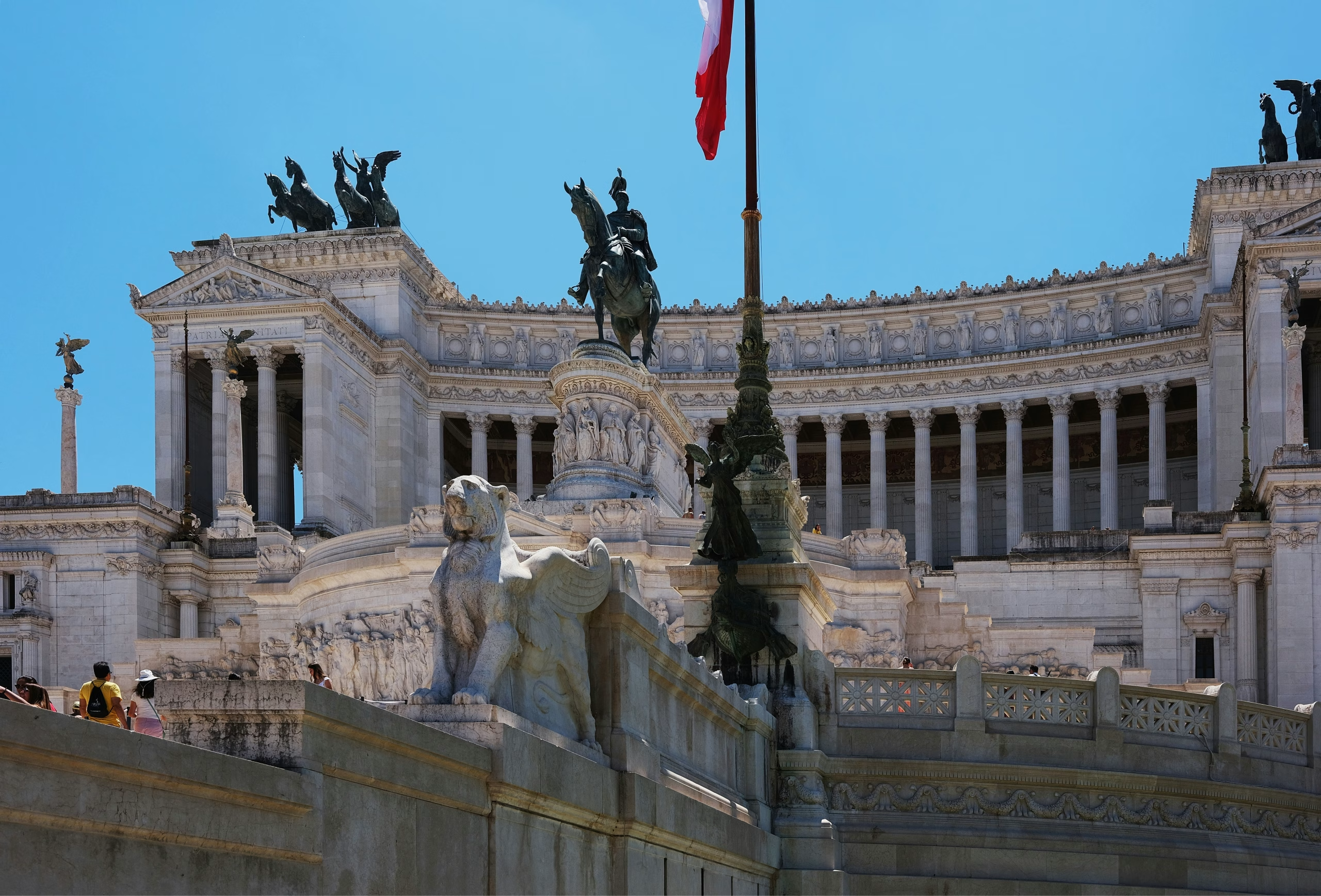
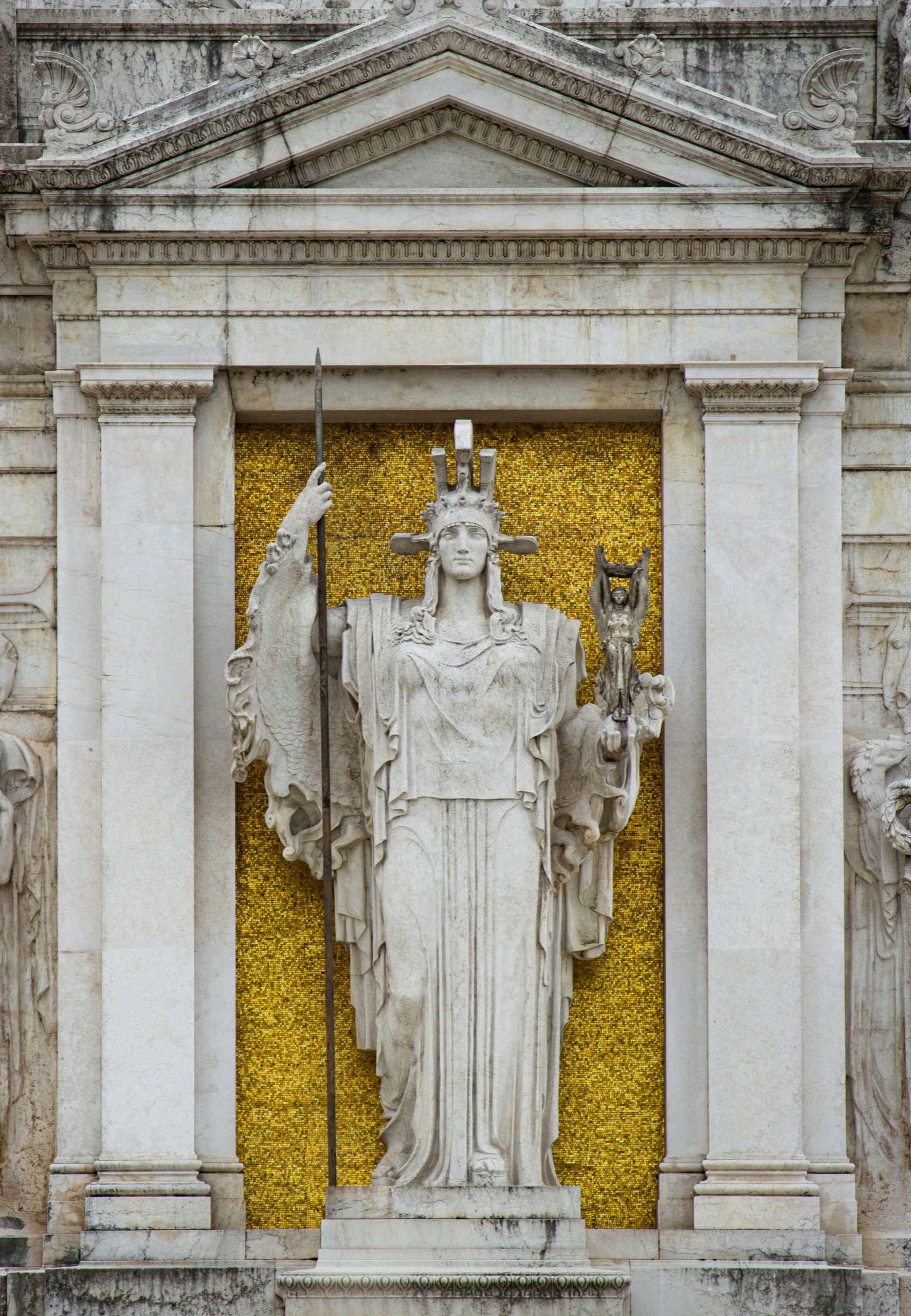
The Vittoriano is often perceived simply as a grand white structure dominating Piazza Venezia, yet its architecture is designed as a narrative of Italy’s identity.
Moreover, every line, material and sculptural group serves a symbolic function. Understanding these elements allows you to approach the monument with a more attentive, almost curatorial perspective.
The entire complex is built in Botticino marble, chosen for its brightness and ability to capture sunlight throughout the day.
As a result, the monument shifts in tone—warm, sharp or soft—depending on the hour, reinforcing its presence as a civic beacon.
The broad staircase forms the first chapter of the experience.
It creates a ceremonial ascent, guiding visitors toward a series of allegorical figures that represent regions, virtues and ideals connected to the newly unified nation.
Furthermore, the monumental portico with Corinthian columns frames the sky, functioning as a symbolic gateway between past and present.
Sculptural groups play a central role.
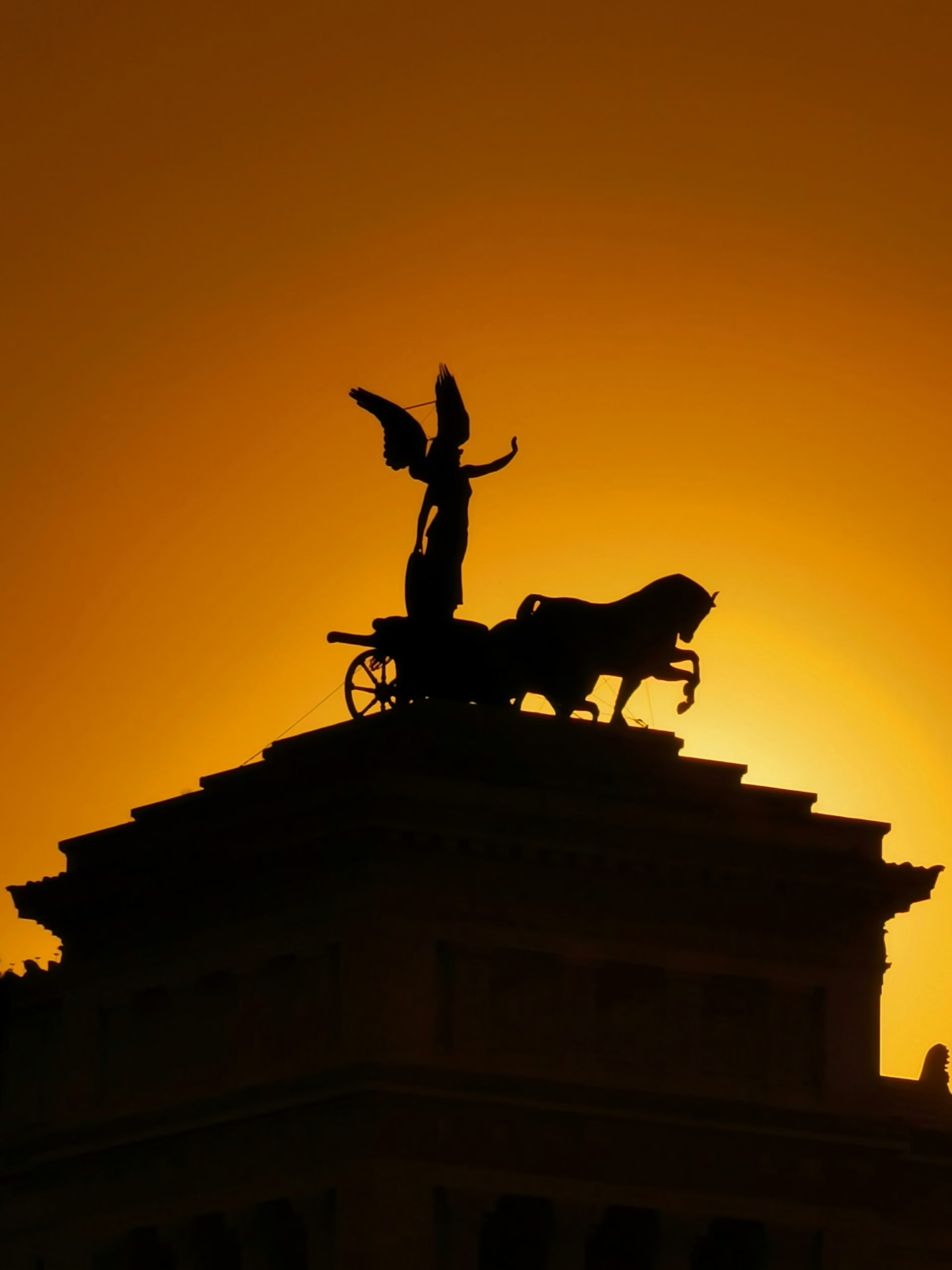
The chariots driven by winged Victories, placed at the top of the monument, celebrate unity and freedom. Meanwhile, the lower reliefs depict agriculture, industry, and other forces shaping the country’s modern identity.
Consequently, the Vittoriano becomes a visual map of Italy’s transformation.
Each element contributes to a coherent story of ambition, unification and national hope—an approach that transforms a simple visit into a deeper cultural experience.
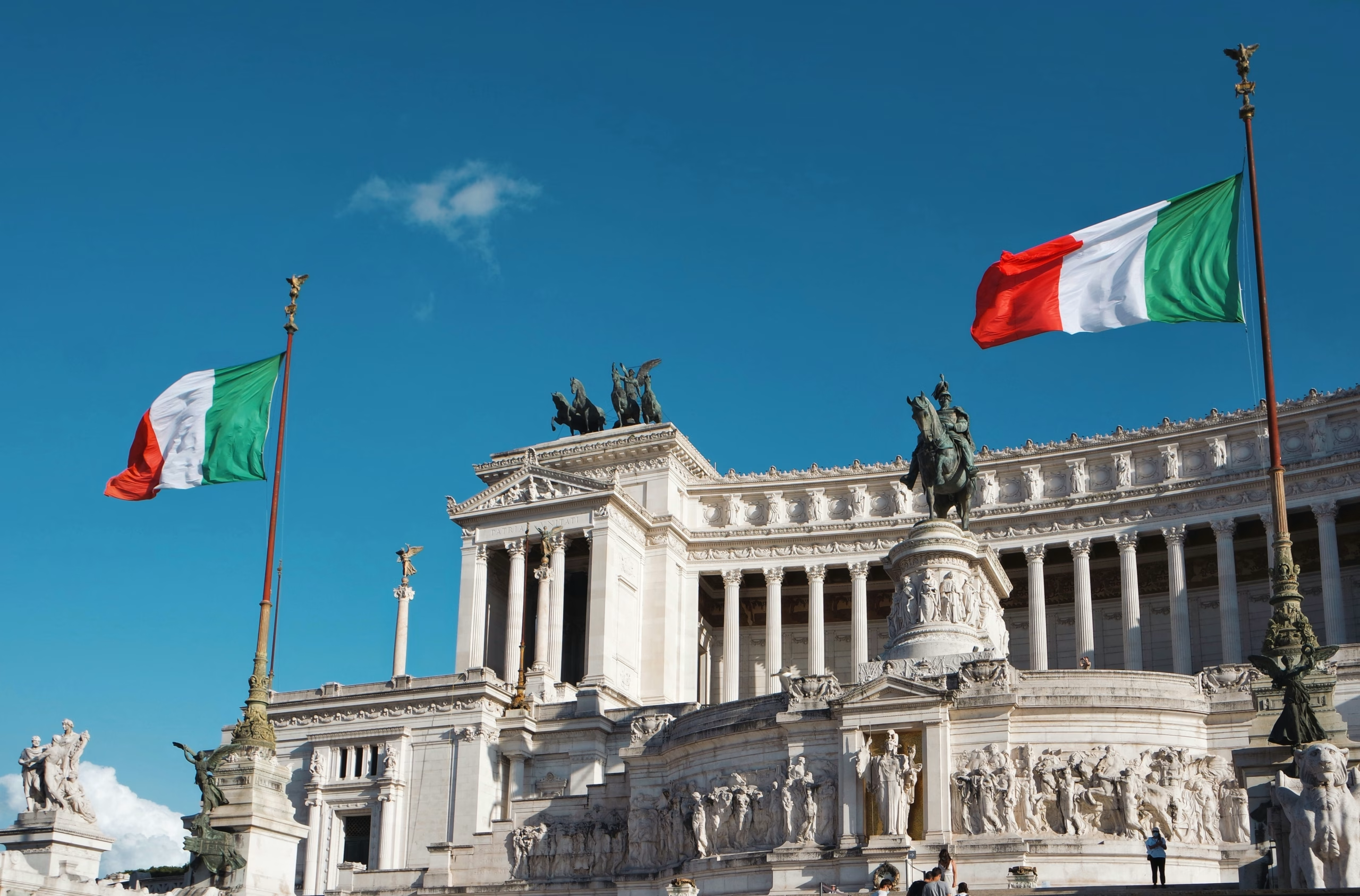
At the heart of the Altare della Patria lies one of Italy’s most significant memorials: the Tomb of the Unknown Soldier.
Installed in 1921, it honors all soldiers who died without recognition, representing a collective story of sacrifice rather than an individual one.
Moreover, its location at the center of the monument transforms the Vittoriano from a celebration of unification into a space of national reflection.
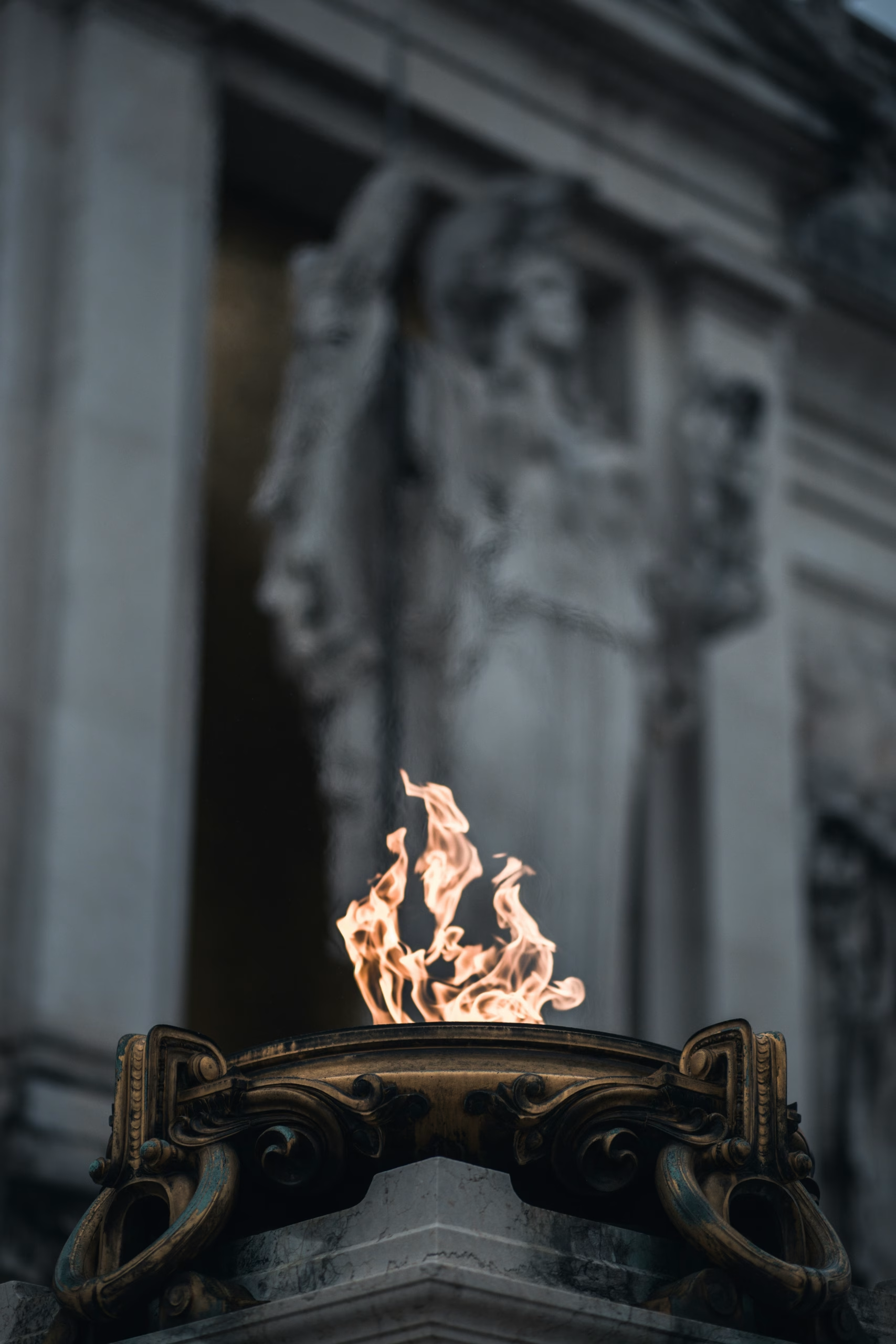
The eternal flame that burns beside the tomb symbolizes continuity and remembrance.
As a result, the area maintains a solemn tone, reinforced by the constant presence of the military guard. Visitors naturally slow their pace here, responding to an atmosphere that encourages silence and awareness.
This emotional shift contrasts with the monument’s monumental exterior and forms a crucial layer of the experience.
The surrounding sculptural program also contributes to the memorial’s meaning.
Figures representing values such as sacrifice, duty and unity frame the space, guiding the eye toward the tomb.
Furthermore, the positioning of the memorial at the intersection of major urban axes—between the Capitoline Hill, the Roman Forum and Piazza Venezia—underscores its symbolic role within the city.
Approaching the tomb with respect enhances your visit.
Photography is allowed, but discretion is appreciated, especially during ceremonial moments.
Consequently, this part of the Vittoriano becomes not only a place to observe, but also a place to pause, acknowledge and understand the emotional dimension of Italy’s history.
Although many visitors stop at the terraces or the Altare della Patria itself, the Vittoriano also houses several museums and exhibition spaces that reveal a deeper layer of Italy’s modern history.
Moreover, these areas are often quieter than the monument’s exterior, offering a more reflective rhythm to your visit.
The Museo Centrale del Risorgimento presents documents, photographs and objects that trace the path toward Italy’s unification. Rather than overwhelming you with dense displays, it offers a clear narrative that links political events with the personal stories behind them.
As a result, the museum becomes an essential complement to the monument’s symbolic architecture.
Nearby, the Sacrario delle Bandiere preserves regimental flags from different branches of the Italian armed forces. The room carries a solemn atmosphere, enhanced by soft lighting and the careful arrangement of the banners.
Furthermore, the space illustrates how the nation’s identity has been shaped not only by political milestones but also by collective service and sacrifice.
Temporary exhibition halls within the complex occasionally host art or photography shows, adding a contemporary dimension to the visit.
These smaller displays create a dialogue between present and past, allowing the Vittoriano to function not only as a historic monument but also as an active cultural venue.
Exploring these spaces provides a fuller understanding of how Italy narrates its modern identity.
Consequently, a visit inside the Vittoriano becomes more than an architectural experience — it becomes a journey through memory, history and civic symbolism.
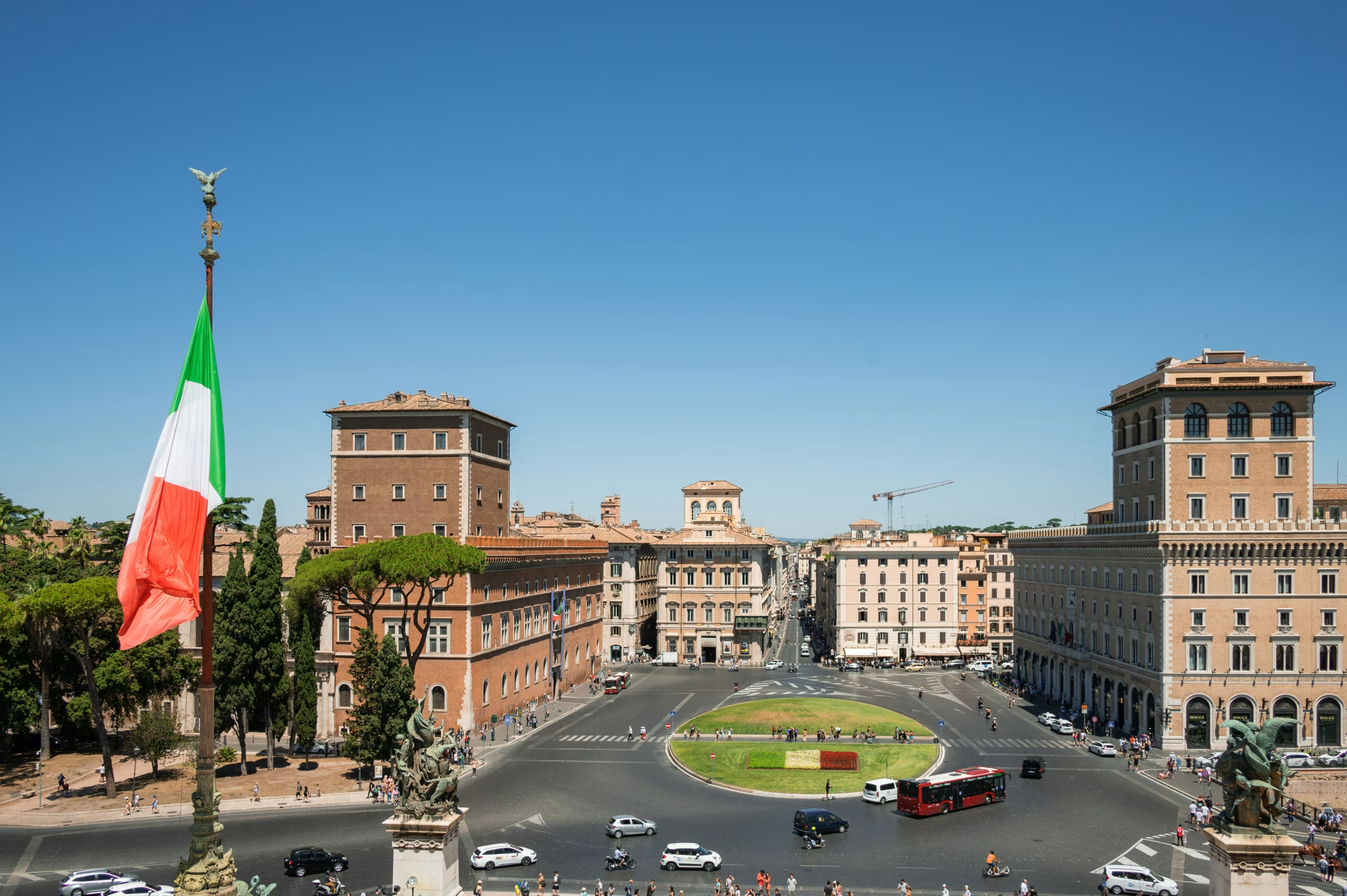
The Vittoriano offers some of the most striking panoramic views in Rome, thanks to the terraces located at the top of the monument.
Moreover, reaching these viewpoints is part of the experience, as the path gradually reveals different perspectives of the city’s historic core.
The main access point is the glass elevator at the back of the monument.
It brings visitors directly to the upper terraces, where the view opens toward the Roman Forum, the Capitoline Hill, and the long axis of Via del Corso.
As a result, the panorama feels both expansive and structured, framed by the city’s architecture rather than detached from it.
Once at the top, you can walk between the two monumental chariots, each driven by a winged Victory.
These sculptures create a dramatic backdrop for the terraces and form one of the most iconic silhouettes of the Roman skyline.
Furthermore, the height allows you to observe the dialogue between ancient, medieval and modern layers in a single glance.
The terraces are impressive at any time of day, yet early mornings and late afternoons offer the most balanced light for photography.
Consequently, many visitors choose these hours to enjoy a quieter and more atmospheric experience.
Even without the elevator, several intermediate platforms provide beautiful views over Piazza Venezia and the surrounding districts.
Planning your visit to the Altare della Patria becomes much easier with a few practical considerations.
First, early mornings and late afternoons are the best moments to enjoy the monument with a calmer atmosphere and softer light. Moreover, these hours help you experience both the terraces and the symbolic areas without the midday rush.
Access to most parts of the Vittoriano is free, including the main staircases, the Altare della Patria and several intermediate terraces.
However, the glass elevator to the upper panoramic level requires a ticket. Buying it on-site is simple, although queues may form during busy weekends.
As a result, choosing off-peak times ensures a smoother experience.
Security checks are in place at the main entrance.
Bags may be inspected, and large backpacks or bulky items are usually not allowed.
Furthermore, because the Altare della Patria houses the Tomb of the Unknown Soldier, respectful behavior is expected in this area: keep your voice low and avoid standing directly in front of ceremonial spaces during guard changes.
Comfortable shoes are essential, as the monument involves stairs, platforms and long viewpoints. Checking the weather before you go is also useful, since wind conditions on the upper terraces can change quickly.
Finally, exhibition schedules and museum hours may vary throughout the year, so verifying details through official channels ensures your visit aligns with current openings.
Is the Altare della Patria the same as the Vittoriano?
They are part of the same complex. The Vittoriano is the full monument, while the Altare della Patria is its symbolic heart, home to the Tomb of the Unknown Soldier.
Do I need a ticket to visit the Altare della Patria?
Most areas are free. The only paid section is the glass elevator to the upper panoramic terraces.
How long does a full visit take?
A complete visit takes about 60–90 minutes, including the terraces and the interior museums. Moreover, the route can be adapted to your pace.
What is the best time to visit the Vittoriano?
Early mornings and late afternoons offer softer light and fewer crowds. As a result, these are the most atmospheric moments for photography and views.
Can I visit the museums inside the monument?
Yes. The Museo Centrale del Risorgimento and the Sacrario delle Bandiere are open to visitors and offer a deeper understanding of Italy’s modern history.
Is respectful behavior required at the Tomb of the Unknown Soldier?
Absolutely. The area is a ceremonial space with an eternal flame and a military guard. Keep your voice low and avoid blocking the central path.
Semi-private tours with expert guides — Colosseum, Vatican, Baroque Rome and more. Maximum 8 people per group.
Book Your Experience →